Ajanta Caves Travel Guide: Exploring India’s Timeless Buddhist Masterpieces
Introduction
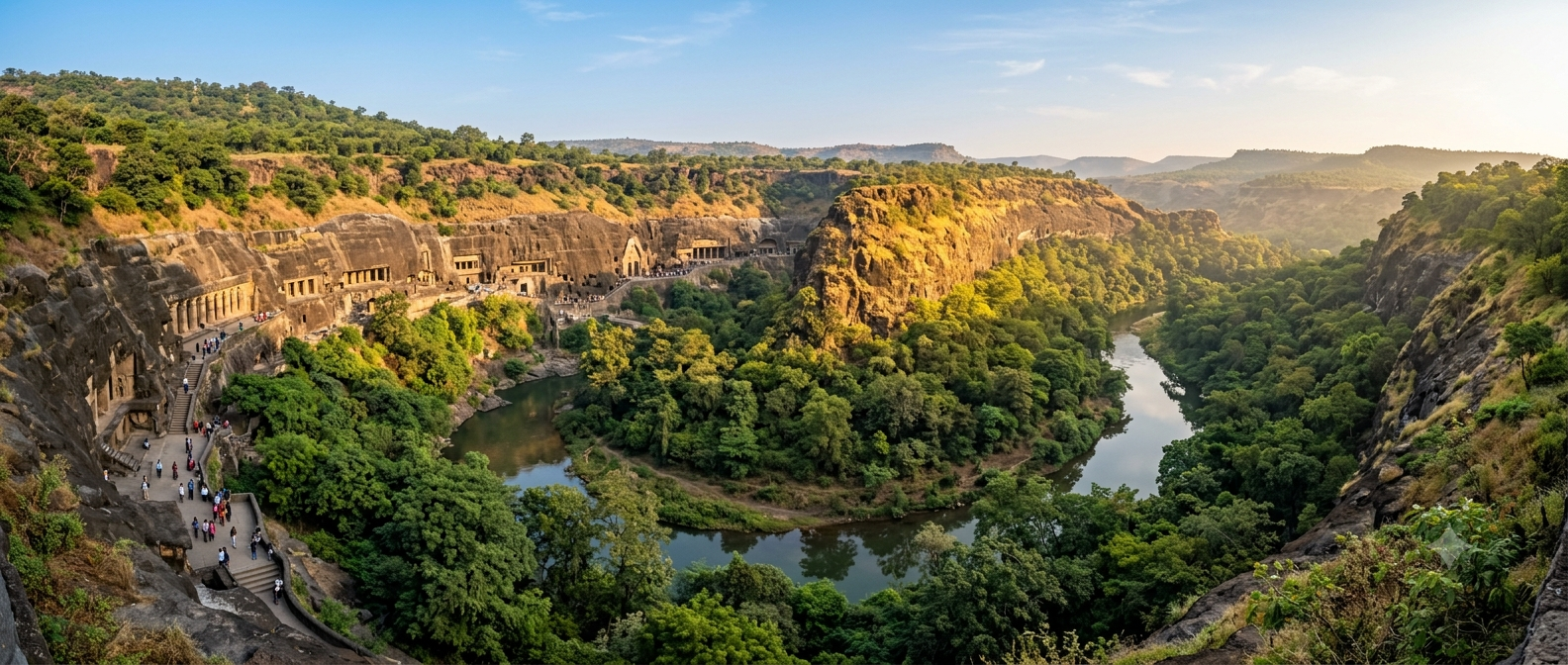
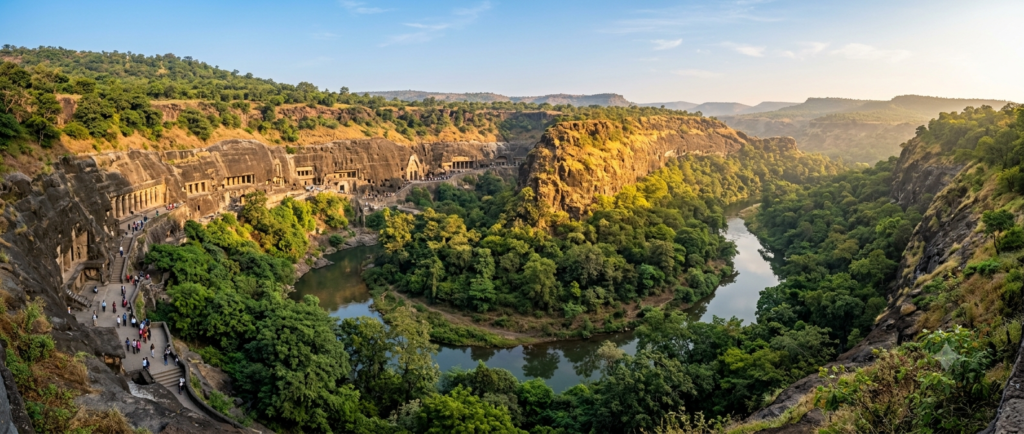
The Ajanta Caves Travel Guide takes you to one of India’s greatest cultural treasures, where art, spirituality, and history come together in a breathtaking collection of ancient Buddhist rock-cut caves. Hidden within a horseshoe-shaped gorge overlooking the Waghora River in Maharashtra, the Ajanta Caves have fascinated historians, archaeologists, artists, and travelers for centuries.
Carved directly into basalt cliffs between the 2nd century BCE and the 6th century CE, these remarkable caves served as monasteries, prayer halls, and centers of Buddhist learning during some of India’s most influential historical periods. Today, they are celebrated worldwide for their exquisite murals, intricate sculptures, and architectural brilliance, earning recognition as a UNESCO World Heritage Site.
Unlike many archaeological monuments that have lost their artistic details over time, the Ajanta Caves preserve some of the world’s oldest surviving paintings. Their vibrant murals portray the life of Buddha, Jataka tales, royal courts, merchants, celestial beings, and everyday life, offering an extraordinary glimpse into ancient Indian civilization.
Whether you’re passionate about history, fascinated by Buddhist philosophy, interested in ancient architecture, or simply looking for one of India’s most inspiring cultural destinations, the Ajanta Caves promise an unforgettable journey through nearly two thousand years of heritage.
This comprehensive guide covers everything you need to know, including the caves’ fascinating history, artistic significance, UNESCO recognition, must-visit caves, travel tips, visitor information, and the best time to experience this timeless masterpiece.
Why the Ajanta Caves Are One of India’s Greatest Heritage Sites
The Ajanta Caves represent one of the finest achievements of ancient Indian civilization. Their extraordinary combination of architecture, sculpture, painting, and spiritual significance makes them one of the most celebrated cultural landmarks in Asia.
Unlike monuments built above ground, every cave at Ajanta was painstakingly carved by hand into solid volcanic rock, demonstrating remarkable engineering skills and artistic vision.
Today, visitors from across the globe travel to Maharashtra to witness these timeless masterpieces that continue to inspire scholars, artists, and travelers alike.
A UNESCO World Heritage Treasure
In 1983, UNESCO recognized the Ajanta Caves as a World Heritage Site, acknowledging their exceptional universal value.
The caves are celebrated for:
- Ancient Buddhist architecture
- Remarkably preserved murals
- Intricate rock-cut sculptures
- Historic monasteries
- Outstanding artistic achievements
Their inclusion on the UNESCO list ensures continued efforts toward conservation and global recognition.
A Journey Through Ancient Buddhist Civilization
The Ajanta Caves served as thriving centers of Buddhist education, meditation, and worship for several centuries.
Monks, scholars, merchants, and pilgrims gathered here to:
- Study Buddhist teachings
- Practice meditation
- Preserve sacred texts
- Create artistic masterpieces
The caves played an important role in spreading Buddhist philosophy across Asia.
Where Spirituality Meets Art
What makes Ajanta truly extraordinary is the seamless fusion of spirituality and artistic excellence.
Every pillar, sculpture, mural, and prayer hall reflects deep devotion while showcasing the exceptional craftsmanship of ancient Indian artisans.
The Fascinating History of the Ajanta Caves
The history of Ajanta spans nearly 800 years and reflects the evolution of Buddhism in India.
Construction began during the Satavahana Dynasty around the 2nd century BCE, when the earliest prayer halls and monasteries were carved into the cliffs.
Several centuries later, during the Vakataka Dynasty in the 5th century CE, Ajanta experienced a remarkable artistic renaissance. Wealthy patrons, kings, merchants, and monks funded the creation of elaborate caves adorned with magnificent paintings and sculptures.
Following the decline of Buddhism in the region, the caves were gradually abandoned and hidden beneath dense forests for many centuries.
Rediscovery of Ajanta
The Ajanta Caves remained largely forgotten until 1819, when British army officer John Smith accidentally discovered them while hunting in the surrounding forests.
His unexpected discovery brought international attention to one of India’s greatest archaeological treasures.
Since then, conservation efforts have helped preserve the caves for future generations.
Royal Patronage
The artistic development of Ajanta flourished under royal patronage.
Important supporters included:
- Satavahana rulers
- Vakataka kings
- Wealthy merchants
- Buddhist monks
- Noble families
Their contributions transformed Ajanta into one of the most important Buddhist centers of the ancient world.
Architecture of the Ajanta Caves
The Ajanta Caves demonstrate extraordinary architectural planning and engineering.
Rather than constructing buildings, ancient craftsmen removed enormous quantities of rock to create spacious interiors featuring:
- Prayer halls
- Monasteries
- Meditation chambers
- Sculptured pillars
- Stone staircases
- Decorative ceilings
Every cave was carefully designed to maximize natural light while maintaining peaceful spaces for meditation and worship.
Chaitya Halls
Chaityas are Buddhist prayer halls featuring:
- High vaulted ceilings
- Large stone stupas
- Symmetrical pillars
- Spacious interiors
These halls served as places for communal worship and religious ceremonies.
Viharas
Viharas functioned as monasteries where monks lived and studied.
Typical features include:
- Residential cells
- Meditation rooms
- Assembly halls
- Shrines dedicated to Buddha
Many of these monasteries display remarkable decorative carvings and paintings.
Rock-Cut Engineering
The caves were carved entirely by hand using simple tools such as hammers and chisels.
Despite limited technology, ancient craftsmen achieved:
- Perfect symmetry
- Intricate detailing
- Smooth stone finishes
- Long-lasting structural stability
Their engineering achievements continue to astonish modern architects.
The Famous Paintings of Ajanta
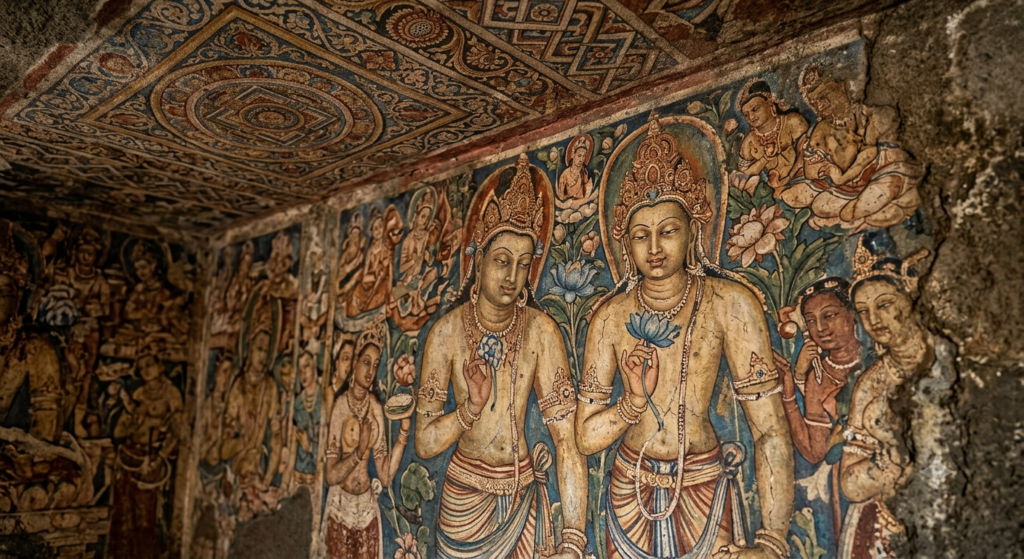
The Ajanta Caves contain some of the oldest surviving wall paintings in the world.
These murals are internationally admired for their artistic sophistication, expressive human figures, and vibrant natural pigments.
Unlike decorative artwork, every painting conveys stories of morality, compassion, wisdom, and Buddhist philosophy.
Jataka Tales
Many murals illustrate the Jataka Tales, stories describing the previous lives of Lord Buddha.
These narratives emphasize:
- Kindness
- Sacrifice
- Compassion
- Wisdom
- Moral leadership
Each painting served as both artistic expression and spiritual teaching.
Royal Courts and Daily Life
The murals also provide valuable historical insight into ancient Indian society.
Visitors can observe scenes depicting:
- Royal processions
- Palace life
- Merchants
- Musicians
- Dancers
- Everyday village activities
These paintings act as visual records of India’s cultural heritage over 1,500 years ago.
Natural Pigments and Timeless Colors
Artists created the murals using pigments derived from natural minerals and plants.
Even after centuries, many paintings retain remarkable color and detail, showcasing the extraordinary skill of ancient Indian painters.
The Spiritual Significance of the Ajanta Caves
Beyond their artistic brilliance, the Ajanta Caves remain one of the most important Buddhist spiritual sites in India.
For centuries, monks sought peace, meditation, and enlightenment within these rock-cut sanctuaries. The serene atmosphere, rhythmic architecture, and sacred imagery continue to inspire visitors from around the world.
Each cave reflects the Buddhist ideals of compassion, mindfulness, and inner transformation, making Ajanta not only an archaeological wonder but also a timeless place of spiritual reflection.
Must-Visit Caves at Ajanta
Although the Ajanta complex consists of 30 rock-cut caves, each cave has its own architectural style, artistic importance, and historical significance. Some caves are renowned for magnificent murals, while others are celebrated for impressive sculptures and grand prayer halls.
Exploring the highlights ensures visitors experience the very best of this UNESCO World Heritage Site.
Cave 1 – The Finest Buddhist Paintings
Cave 1 is often considered the most famous cave in the entire complex.
Highlights include:
- Magnificent Bodhisattva Padmapani painting
- Bodhisattva Vajrapani mural
- Beautiful decorative ceilings
- Detailed frescoes depicting Buddha’s life
- Intricate carvings around the shrine
The paintings inside Cave 1 are regarded as masterpieces of ancient Indian art.
Cave 2 – Decorative Masterpiece
Cave 2 is renowned for its colorful ceiling paintings and elaborate architectural details.
Visitors can admire:
- Floral motifs
- Geometric ceiling designs
- Sculpted pillars
- Scenes from Jataka Tales
- Exquisitely preserved wall paintings
The decorative artistry here is among the finest in the Ajanta complex.
Cave 16 – The Great Monastery
Cave 16 is one of the largest monasteries at Ajanta.
It contains:
- Spacious prayer halls
- Large Buddha sculptures
- Beautiful narrative murals
- Important inscriptions
- Excellent examples of Vakataka architecture
This cave offers deep insight into monastic life during ancient India.
Cave 17 – The Picture Gallery
Often referred to as the “Picture Gallery,” Cave 17 houses one of the richest collections of Ajanta paintings.
Its murals depict:
- Royal processions
- Court life
- Buddhist legends
- Jataka Tales
- Everyday life in ancient India
Many historians consider Cave 17 one of the greatest surviving examples of classical Indian painting.
Cave 19 – Grand Chaitya Hall
Cave 19 is famous for its spectacular Buddhist prayer hall.
Features include:
- Magnificent stone stupa
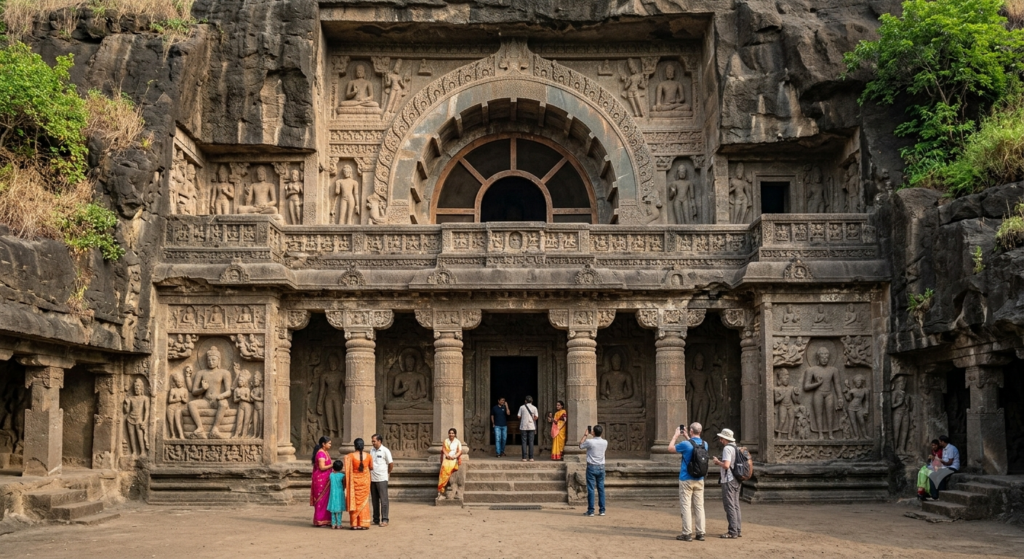
- Ornately carved entrance
- Elegant columns
- Standing Buddha sculptures
- Detailed façade carvings
Its architecture represents the mature phase of Buddhist rock-cut design.
Cave 26 – The Reclining Buddha
Cave 26 is one of the most spiritually moving caves in the complex.
Its highlight is the massive sculpture of the Reclining Buddha, symbolizing Mahaparinirvana, the final liberation of Lord Buddha.
Other attractions include:
- Detailed relief carvings
- Meditation chambers
- Sculpted pillars
- Narrative Buddhist panels
Artistic Highlights of the Ajanta Caves
The Ajanta Caves are celebrated not only for their architecture but also for their extraordinary artistic achievements.
Ancient Murals
The murals remain among the oldest surviving paintings in Asia.
They portray:
- Buddha’s previous lives
- Royal families
- Monks
- Merchants
- Celestial beings
- Musicians
- Dancers
Each painting combines graceful expressions with remarkable storytelling.
Intricate Stone Sculptures
Master craftsmen transformed solid rock into stunning sculptures featuring:
- Buddha statues
- Bodhisattvas
- Lotus motifs
- Guardian figures
- Decorative arches
The precision of these carvings continues to amaze archaeologists today.
Architectural Symmetry
Despite being carved entirely by hand, the caves display remarkable symmetry.
Visitors will notice:
- Perfectly aligned columns
- Balanced layouts
- Harmonious proportions
- Exceptional engineering
The architectural sophistication remains impressive even by modern standards.
Best Time to Visit the Ajanta Caves
Choosing the right season allows visitors to comfortably explore the caves while enjoying Maharashtra’s pleasant weather.
Winter (October – March)
Winter is considered the ideal season.
Weather:
- Pleasant temperatures
- Comfortable sightseeing
- Clear skies
- Excellent photography conditions
This is also the peak tourism season.
Monsoon (July – September)
The surrounding hills become lush green, making the landscape particularly scenic.
Advantages:
- Beautiful waterfalls
- Fresh greenery
- Dramatic photography
- Cooler climate
Visitors should carry umbrellas and wear comfortable footwear due to occasional rain.
Summer (April – June)
Summers can become quite hot.
Temperatures may exceed 40°C, making afternoon exploration challenging.
Morning visits are recommended during this season.
Best Time for Photography
For the best natural lighting around the cave complex:
- Early Morning
- Late Afternoon
These hours provide softer sunlight and fewer crowds.
Entry Fees & Visiting Timings
Before planning your visit, it’s useful to know the official timings and ticket information.
Timings
- Opening: 9:00 AM
- Closing: 5:00 PM
- Closed every Monday
(Visitors should verify timings on the Archaeological Survey of India website before travel, as schedules may change.)
Entry Fee
Typical entry fees (subject to revision):
- Indian Citizens
- Foreign Nationals
- Children below prescribed age (where applicable)
Separate charges may apply for parking, cameras, or shuttle services where applicable.
How to Reach the Ajanta Caves
The Ajanta Caves are well connected by air, rail, and road.
By Air
Nearest Airport:
Chhatrapati Sambhajinagar (Aurangabad) Airport
Distance:
Approximately 100 km
The airport is connected with major Indian cities including:
- Mumbai
- Delhi
- Hyderabad
- Bengaluru
By Train
Nearest Railway Stations:
- Jalgaon
- Chhatrapati Sambhajinagar (Aurangabad)
Regular trains connect these stations to major Indian cities.
By Road
Ajanta is easily accessible via well-maintained highways.
Private taxis, state transport buses, and tour operators regularly operate from:
- Aurangabad
- Jalgaon
- Nashik
- Pune
- Mumbai
Suggested One-Day Heritage Itinerary
For travelers with limited time, this itinerary offers an enriching experience of the Ajanta Caves.
Morning
- Arrive early at the visitor center.
- Take the shuttle bus to the cave entrance.
- Explore Caves 1, 2, and 16 before crowds increase.
Midday
Continue exploring:
- Cave 17
- Cave 19
- Cave 26
Take breaks to appreciate the murals and sculptures.
Afternoon
Visit the scenic viewpoints overlooking the horseshoe-shaped gorge.
Enjoy photography of:
- Cave panorama
- Waghora River
- Forest landscape
Evening
Return to Aurangabad or continue your journey toward Ellora Caves for a complete UNESCO heritage circuit.
Photography Tips
The Ajanta Caves provide incredible opportunities for heritage photography.
For the best results:
- Use available natural light wherever permitted.
- Respect photography rules inside the caves.
- Avoid flash photography, as it can damage ancient paintings.
- Capture wide-angle shots of the cave façades.
- Photograph architectural details, pillars, and sculptures where allowed.
Preserving these priceless artworks is more important than obtaining the perfect photograph.
Visitor Tips
Make the most of your visit by keeping these practical suggestions in mind:
- Arrive early to avoid crowds.
- Wear comfortable walking shoes.
- Carry drinking water.
- Respect heritage regulations.
- Do not touch paintings or sculptures.
- Maintain silence inside prayer halls.
- Allocate at least 5–6 hours to explore the caves thoroughly.
- Combine Ajanta with Ellora for a richer cultural experience if time permits.
Responsible Heritage Tourism
Visiting the Ajanta Caves, a UNESCO World Heritage Site, is both a privilege and a responsibility. These ancient Buddhist monuments have survived for over two millennia, and preserving them requires the cooperation of every visitor.
Practicing responsible heritage tourism ensures that future generations can continue to admire the remarkable architecture, sculptures, and paintings that define this extraordinary cultural landmark.
Help Preserve Ancient Paintings
The murals inside the Ajanta Caves are among the oldest surviving paintings in the world.
To protect them:
- Never touch the painted surfaces.
- Avoid leaning against walls or pillars.
- Follow all photography restrictions.
- Refrain from using flash photography where prohibited.
These priceless artworks are extremely delicate and require careful preservation.
Respect the Sacred Atmosphere
Although Ajanta is an archaeological monument today, it was originally a place of meditation, learning, and worship.
Visitors are encouraged to:
- Maintain a quiet atmosphere.
- Avoid loud conversations.
- Respect designated pathways.
- Appreciate the site’s spiritual significance.
Protect the Heritage Site
Help conserve the monument by:
- Avoiding littering.
- Using designated waste bins.
- Staying within marked visitor areas.
- Not climbing on sculptures or rock surfaces.
Responsible behavior contributes directly to the long-term protection of this UNESCO treasure.
Support Local Communities
Enhance your visit by supporting the surrounding communities.
You can:
- Purchase locally made handicrafts.
- Hire licensed local guides.
- Enjoy regional Maharashtrian cuisine.
- Support responsible tourism businesses.
This helps preserve both cultural traditions and local livelihoods.
Packing Checklist
Being well prepared makes your visit to Ajanta more comfortable, especially if you plan to explore the caves thoroughly.
Clothing
✔ Lightweight breathable clothing
✔ Comfortable walking shoes
✔ Sun hat or cap
✔ Sunglasses
✔ Light jacket during winter mornings
Travel Essentials
✔ Government-issued ID
✔ Entry tickets (if booked online)
✔ Mobile charger
✔ Power bank
✔ Reusable water bottle
✔ Small backpack
✔ Personal medications
Photography Gear
✔ DSLR or Mirrorless Camera
✔ Wide-angle lens
✔ Telephoto lens (optional)
✔ Extra batteries
✔ Memory cards
✔ Lens cleaning cloth
Other Essentials
✔ Umbrella (during monsoon)
✔ Wet wipes
✔ Notebook for heritage enthusiasts
✔ Binoculars (optional for panoramic viewpoints)
✔ Cash for local purchases
Frequently Asked Questions (FAQs)
Is the Ajanta Caves a UNESCO World Heritage Site?
Yes.
The Ajanta Caves were inscribed as a UNESCO World Heritage Site in 1983 due to their outstanding artistic, architectural, and cultural significance.
How many caves are there?
The Ajanta complex consists of 30 rock-cut Buddhist caves, including monasteries (Viharas) and prayer halls (Chaityas).
How much time is required to explore Ajanta?
A full visit typically takes 5–6 hours, allowing enough time to appreciate the major caves, paintings, sculptures, and viewpoints.
Can Ajanta and Ellora be visited together?
Yes.
Many travelers combine Ajanta Caves and Ellora Caves in a two-day itinerary, as both are among Maharashtra’s most celebrated UNESCO heritage attractions.
Is photography allowed?
Photography is generally permitted in designated areas, but flash photography and tripods may be restricted inside the caves to protect the ancient murals.
Visitors should always follow the latest guidelines issued by the Archaeological Survey of India (ASI).
Which cave is the most famous?
Among the most popular are:
- Cave 1
- Cave 2
- Cave 16
- Cave 17
- Cave 19
- Cave 26
Each offers unique artistic and architectural highlights.
Conclusion
The Ajanta Caves Travel Guide offers more than a journey through ancient rock-cut architecture—it invites travelers into the heart of one of the world’s greatest artistic and spiritual legacies. Every cave tells a story through its magnificent sculptures, serene monasteries, and timeless murals that have survived for nearly two thousand years.
From the graceful Bodhisattva paintings of Cave 1 to the awe-inspiring Reclining Buddha in Cave 26, Ajanta stands as a testament to India’s rich Buddhist heritage and extraordinary artistic achievements.
Whether you’re a history enthusiast, architecture admirer, photographer, student, or cultural explorer, the Ajanta Caves promise an unforgettable experience that deepens your appreciation of India’s remarkable past.
A visit here is not simply sightseeing—it’s an inspiring encounter with a civilization whose creativity and devotion continue to captivate the world.
🌍 Explore More
“Every ancient monument preserves a timeless story. Travel with curiosity, respect every heritage site, and let history inspire your next journey.”
🌍 Explore More: BlueJay Explorations
📖 Read more travel stories: TravelAnecdotes.com
📸 Follow the journey on Instagram
👍 Follow us on Facebook
🎥 Watch cinematic travel stories on YouTube