Mysore Palace Travel Guide: Experience India’s Royal Grandeur
Discover the royal history, magnificent architecture, ornate interiors and cultural traditions of Mysuru’s most celebrated landmark with this complete Mysore Palace travel guide.
Introduction: Step Into the Royal World of Mysuru
Some destinations impress you with their natural beauty. Others capture your imagination through the stories they preserve. Mysore Palace does both, welcoming visitors into a world of royal traditions, extraordinary craftsmanship and architectural grandeur.
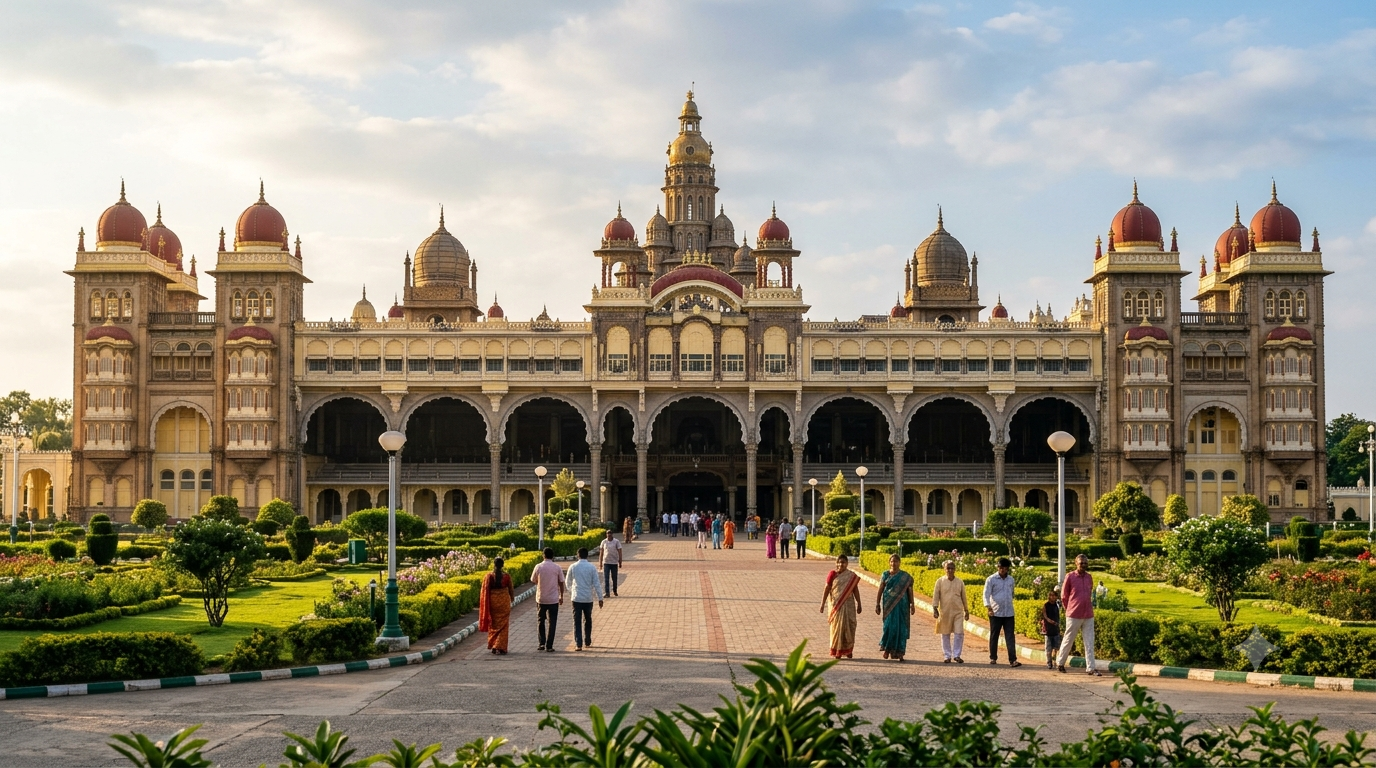
Located in Mysuru, Karnataka, this magnificent palace is among India’s most recognisable historical landmarks. Its imposing façade, elegant domes, ornamental arches and richly decorated interiors reflect the artistic ambitions of the Wadiyar dynasty, which played an important role in shaping the region’s history.
The palace is more than an architectural attraction. It offers a glimpse into the ceremonial life of a royal court, the cultural traditions of the former Kingdom of Mysore and the celebrations that continue to define the city today.
Whether you love history, admire architecture, enjoy photography or simply want to understand India’s cultural heritage more deeply, a visit to Mysore Palace can become one of the highlights of your Karnataka journey.
This Mysore Palace travel guide explores the palace’s history, architectural features, interior highlights, Dasara celebrations, illumination, nearby attractions and essential visitor tips to help you plan a memorable experience.
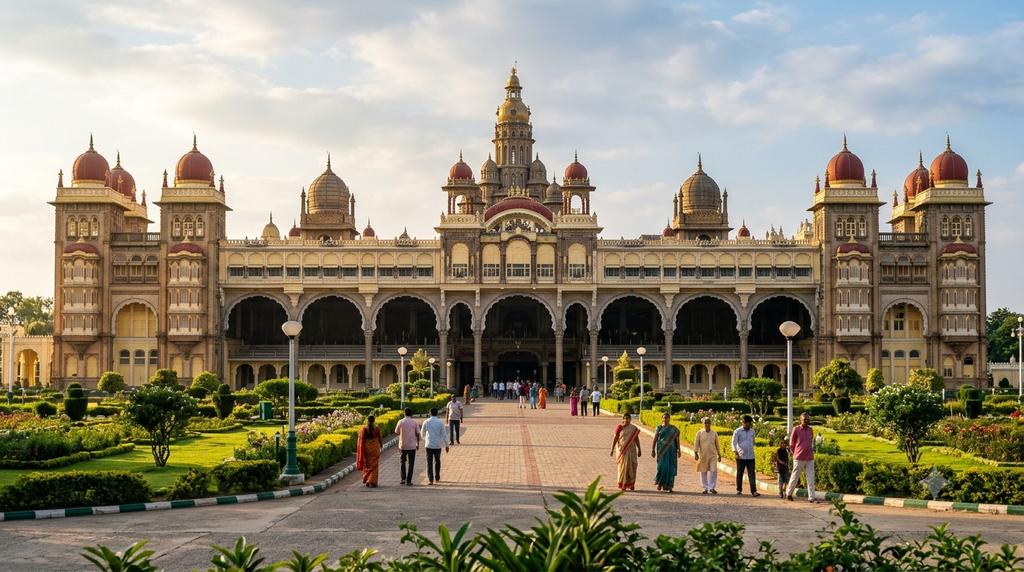
Discover the Royal History of Mysore Palace
To appreciate Mysore Palace fully, begin with the royal legacy that shaped it.
The palace is closely associated with the Wadiyar dynasty, which ruled the Kingdom of Mysore for much of its history. Under successive rulers, Mysuru developed into an important centre of administration, culture, art and royal patronage.
The royal residence evolved over time, reflecting changes in the kingdom and the tastes of its rulers. The present palace, however, is not the same structure that stood on the site centuries ago.
The Wadiyar Dynasty and Mysuru’s Royal Legacy
The Wadiyars became closely associated with Mysuru from the late medieval period. Their influence extended beyond political administration into music, art, architecture, education and cultural life.
During the later years of the kingdom, Mysuru became particularly well known for its royal patronage and elaborate ceremonies. The palace served as a setting for important court functions and celebrations, helping establish the city’s reputation as a centre of South Indian royal culture.
The Wadiyar legacy remains visible throughout Mysuru. From historic buildings and traditional celebrations to cultural institutions and artistic traditions, the city’s identity continues to reflect its royal past.
Walking through Mysore Palace allows visitors to connect these broader historical stories with the physical setting in which royal life unfolded.
From an Earlier Royal Residence to the Present Palace
The history of the palace site stretches back much further than the building visible today.
An earlier wooden palace was destroyed in a fire in 1897. The present palace was subsequently commissioned under Maharaja Krishnaraja Wadiyar IV, during the regency of Maharani Kempananjammanni Devi.
Designed by British architect Henry Irwin, the new palace was constructed over several years and completed in the early twentieth century. Its design reflected a distinctive blend of architectural influences, creating the grand structure that has become synonymous with Mysuru.
This history is worth remembering when you visit. The palace is not simply an old royal building preserved unchanged through time; it is also a reflection of a particular period in India’s architectural and political history.
Mysore Palace and Karnataka’s Cultural Identity
Mysore Palace has become an enduring symbol of Mysuru and one of Karnataka’s most prominent heritage attractions.
Its significance extends beyond its visual appeal. The palace represents royal patronage, artistic craftsmanship and the ceremonial traditions associated with Mysuru Dasara.
For travellers interested in cultural tourism, it offers an opportunity to explore how architecture, history and living traditions come together to shape a destination.
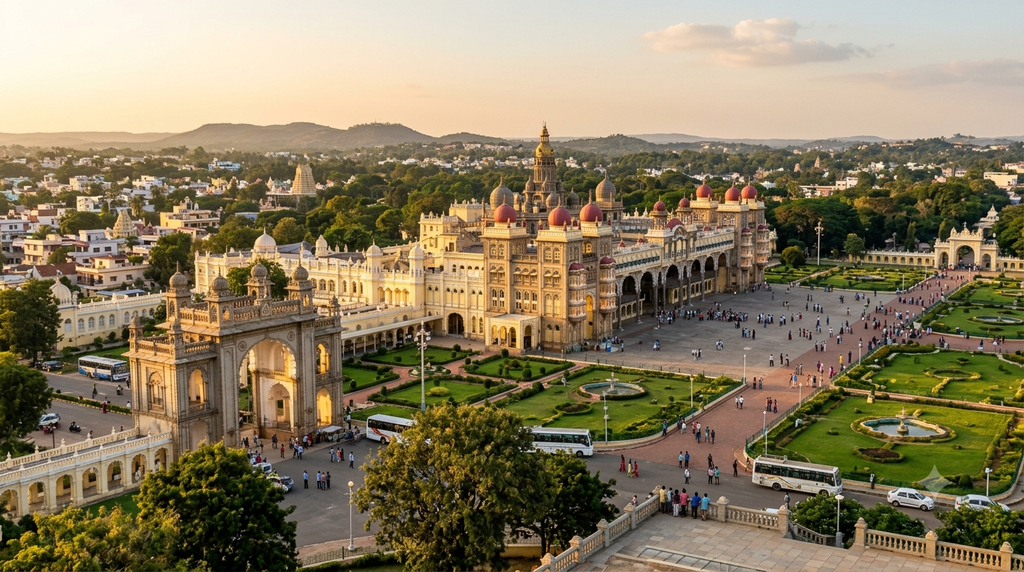
Explore the Magnificent Architecture of Mysore Palace
One of the strongest reasons to visit Mysore Palace is its remarkable architectural character.
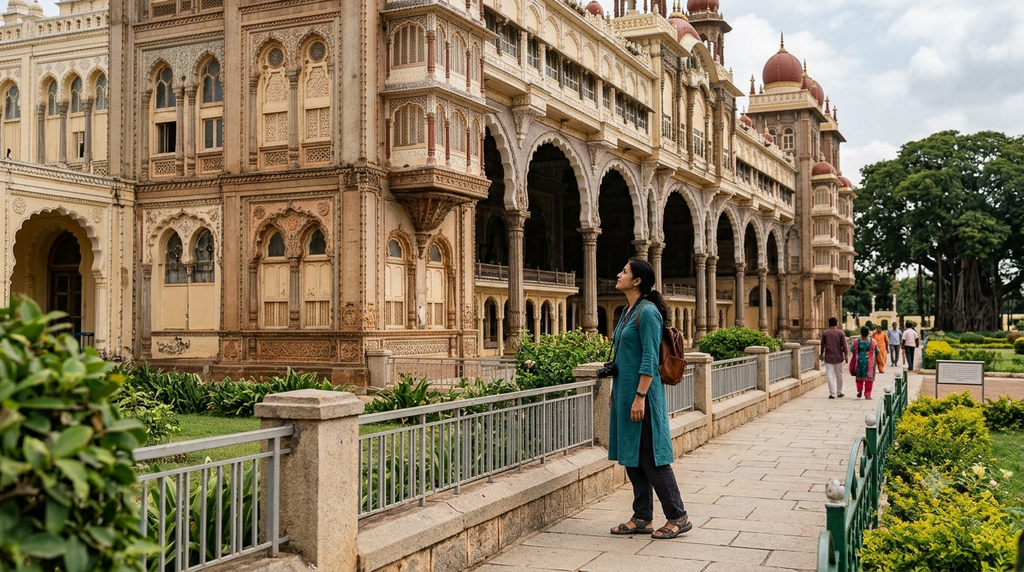
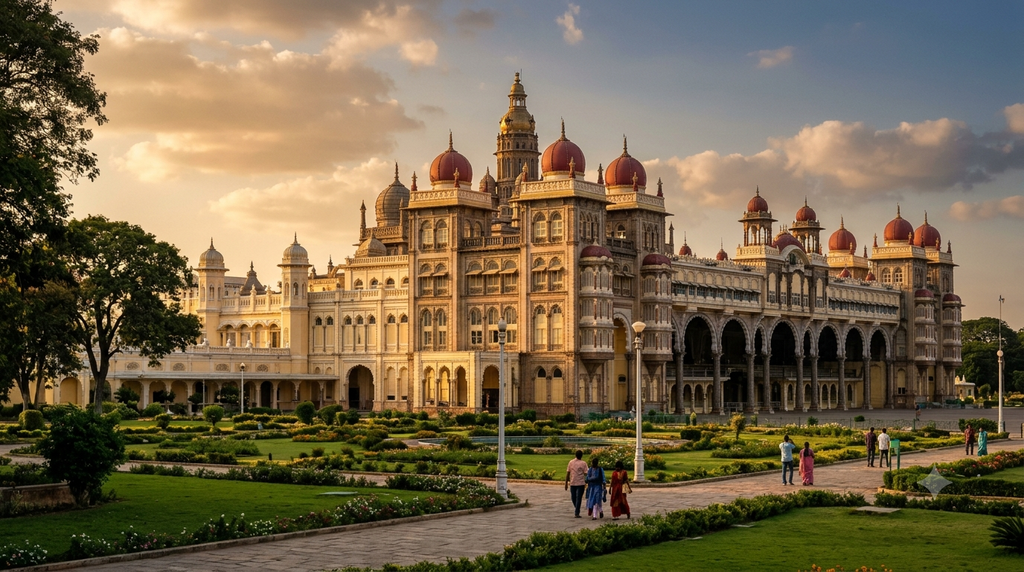
The building combines multiple design traditions in a composition that is visually impressive without losing its individual details. From a distance, the domes and towers create a distinctive skyline. Up close, the decorative elements reveal the careful planning and craftsmanship that went into the palace.
Indo-Saracenic Architecture: A Blend of Traditions
The present Mysore Palace is widely associated with the Indo-Saracenic architectural style.
This style brought together elements drawn from Indian and European architectural traditions, including features associated with Hindu, Islamic, Rajput and Gothic design.
At Mysore Palace, this combination can be seen in its domes, arches, towers, ornamental details and overall composition. The result is a building with a distinctive visual identity that differs from many traditional South Indian temple complexes and other historic palaces.
Rather than viewing the palace only as a single grand structure, take time to notice how its different architectural elements work together.
Grand Domes, Arches and Ornamental Details
The palace’s exterior is one of its most recognisable features.
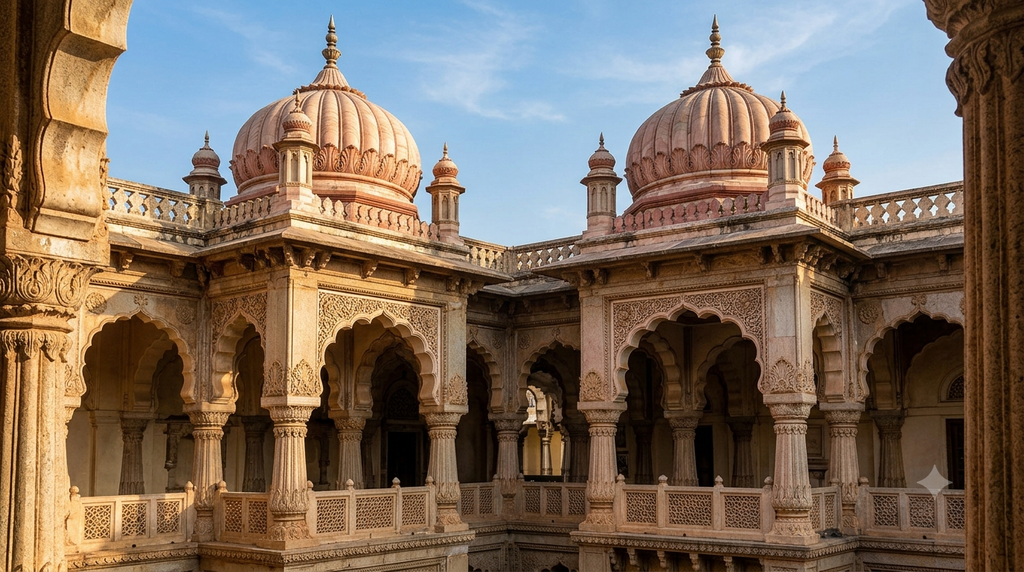
Its domes rise above the building, while arches and decorative columns contribute to the sense of scale. Carefully arranged windows, balconies and ornamental details add depth to the façade.
The palace is especially rewarding for visitors who enjoy architectural photography. A wide view captures the building’s overall grandeur, while closer compositions reveal the textures and patterns that might otherwise go unnoticed.
Look beyond the central façade, too. Different sections of the palace offer varied perspectives, making it worthwhile to slow down rather than rushing from one viewpoint to another.
Intricate Craftsmanship and Artistic Details
The palace’s beauty also lies in the details.
Decorative motifs, ornamental metalwork, painted surfaces, stained glass and carefully designed interior features contribute to its rich visual character. These details demonstrate how architecture can communicate ideas about power, taste, ceremony and cultural identity.
For heritage travellers, the experience becomes more meaningful when the focus shifts from simply admiring the building to observing how its individual elements contribute to the whole.
Inside Mysore Palace: Highlights You Should Not Miss
The palace’s exterior provides an unforgettable introduction, but its interiors offer another perspective on royal life.
The ceremonial halls, decorated ceilings, ornamental features and historic collections reveal how architecture was used to create impressive spaces for court functions and important occasions.
Access to individual areas and displays can depend on current visitor arrangements, so follow the instructions provided by palace authorities.
The Grand Durbar Hall
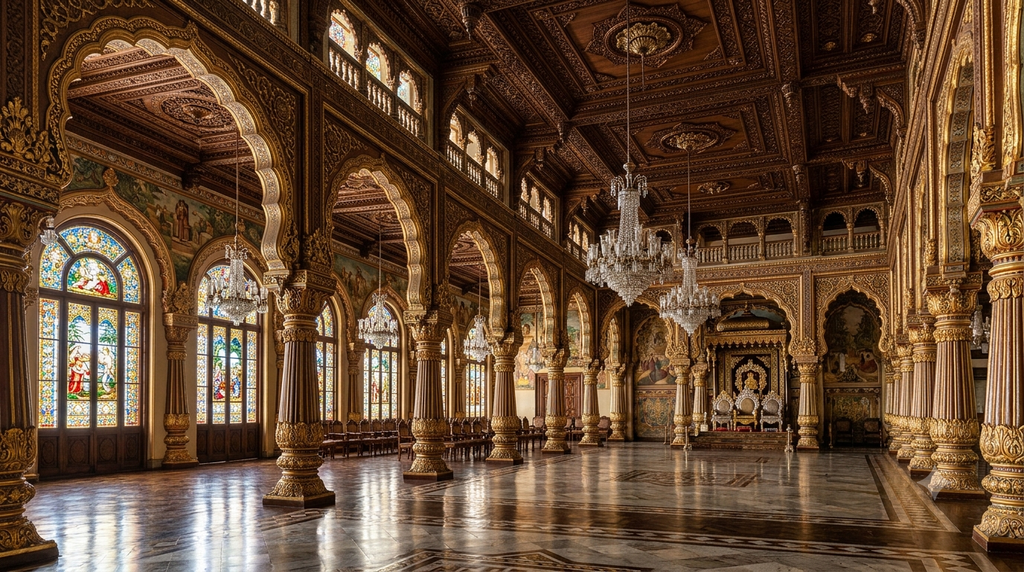
The Durbar Hall is among the palace’s most striking ceremonial spaces.
Durbar halls traditionally served as settings for royal audiences, formal gatherings and court proceedings. Their architecture was designed to communicate dignity and authority, often through impressive proportions and elaborate decoration.
At Mysore Palace, the hall’s visual character reflects the importance of ceremony in royal life. Look at the arrangement of the space, its decorative elements and the way architectural details work together to create a sense of grandeur.
Even without knowing every historical detail, visitors can appreciate how the hall was designed to make formal occasions memorable.
The Kalyana Mantapa
The Kalyana Mantapa, or marriage pavilion, is another celebrated feature of the palace.
Its design includes elaborate decorative elements, stained-glass features and an impressive interior composition. The pavilion demonstrates how ceremonial spaces could combine practical functions with artistic expression.
Pay attention to the ceiling, decorative patterns and the relationship between colour and light. These details help distinguish the pavilion from the larger public-facing areas of the palace.
For visitors interested in craftsmanship, this is a reminder that historic architecture often rewards close observation as much as it does admiration from a distance.
Royal Chambers, Galleries and Decorative Interiors
Other interior areas provide additional glimpses into the palace’s historical and artistic significance.
Depending on the spaces open to visitors, you may encounter decorated rooms, displays of historical objects, paintings and furnishings associated with the royal residence.
These features help bring the palace’s history into focus. They offer a sense of how ceremonial life, artistic patronage and royal identity were represented within the residence.
Take your time, read the available interpretive information and avoid assuming that every room or collection is accessible during every visit.
The Palace’s Artistic Details and Royal Collections
The palace’s decorative interiors are especially rewarding for visitors who enjoy art and design.
Paintings, ornamental surfaces and historic objects can provide insight into the artistic tastes and ceremonial traditions of the royal court. Their significance is often easier to appreciate when considered alongside the architecture surrounding them.
Photography may be restricted in particular areas. Always follow posted rules and instructions from palace staff.
Mysore Palace and the Celebration of Dasara
Mysuru’s relationship with Dasara is one of the most important reasons the city attracts visitors interested in culture and tradition.
The festival is associated with the worship of Goddess Chamundeshwari and the city’s royal ceremonial heritage. Mysuru Dasara has developed into a major public celebration, bringing together religious observances, cultural programmes and festive activity.
Mysore Palace occupies a central place in the city’s identity during this period.
The Royal Traditions Behind Mysuru Dasara
Historically, Dasara was an important occasion for royal ceremonies and public celebrations in Mysuru.
The festival reflects a combination of religious significance and royal tradition. Its association with the Wadiyar dynasty helped shape the distinctive character of the city’s celebrations.
Today, the broader festival programme can include cultural performances, processions, decorations and other public events. Specific activities vary by year, so travellers should consult current official announcements before planning their visit.
The Palace During the Festive Season
During Dasara, Mysuru takes on a particularly lively atmosphere.
The palace and surrounding areas may feature special decorations, while the city hosts a range of festival-related activities. For visitors interested in cultural heritage, this can provide a richer context for understanding the palace’s continuing importance.
However, the festive period can also bring larger crowds, traffic changes, higher accommodation demand and special access arrangements.
A little planning makes a significant difference. Reserve accommodation early when possible, allow extra travel time and check official information for the year’s programme.
Planning a Visit During Dasara
A Dasara visit can be memorable, but it is important to plan around the festival rather than assuming that normal sightseeing arrangements will apply.
Before travelling, confirm the dates, event schedule, palace access arrangements and any restrictions affecting nearby roads or public areas.
If you prefer a quieter visit focused on architecture and interiors, consider travelling outside the busiest festival dates.
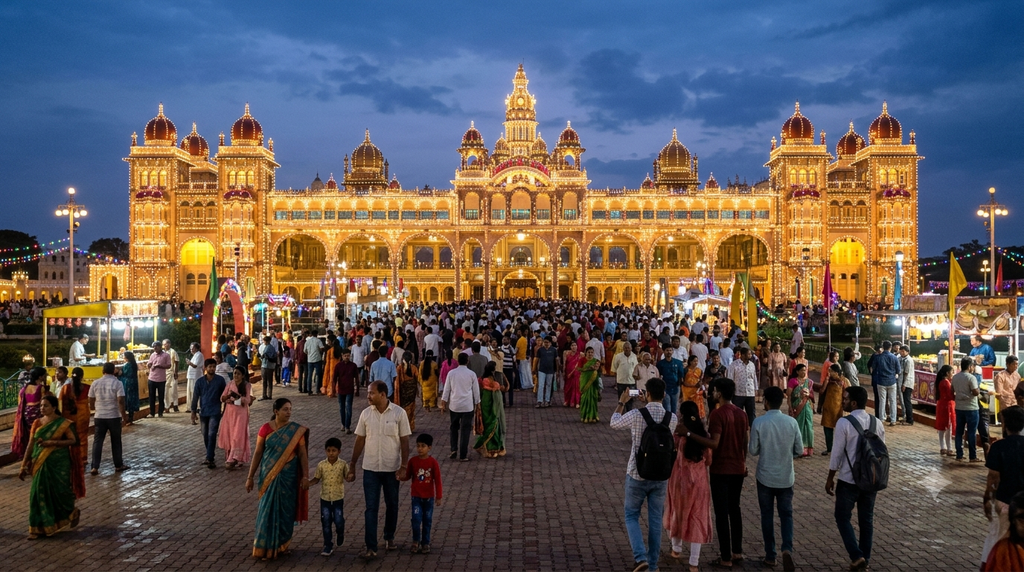
Mysore Palace Illumination: A Different View of Royal Grandeur
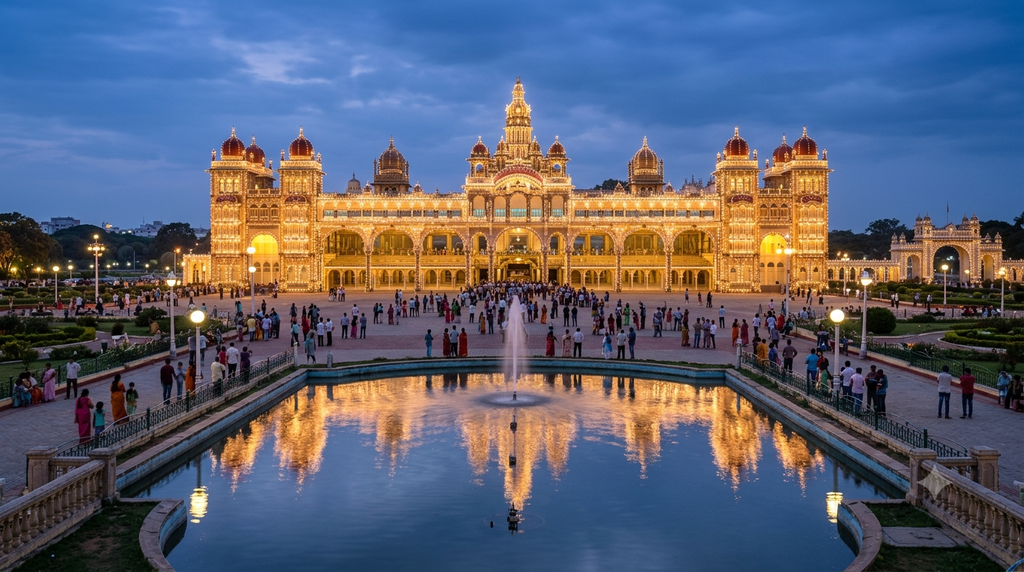
Mysore Palace has a distinctive visual appeal after dark, when scheduled illumination can emphasise its domes, towers and ornamental façade.
For many visitors, seeing the palace illuminated is a highlight of a trip to Mysuru. The lighting creates a different experience from daytime sightseeing, revealing the building’s overall shape and architectural details against the evening sky.
What Makes the Illuminated Palace Special?
During illumination, the palace’s architectural composition becomes especially prominent.
The lighting highlights its symmetrical arrangement, domes and ornamental features, creating an impressive view from outside. It can also provide a different perspective for photographers who have already explored the building during the day.
The experience is best approached with patience. Crowds may gather around popular viewing areas, particularly during weekends, festivals and special occasions.
When Can You See Mysore Palace Illuminated?
Illumination schedules may vary. The palace is not necessarily illuminated on every evening, and arrangements can differ during festivals, public holidays and special events.
Check current official palace information before planning your visit around the illumination. Avoid relying on old travel blogs or social media posts for a guaranteed schedule.
If seeing the illuminated palace is important to you, confirm the arrangements shortly before travelling.
Tips for Enjoying the Evening Experience
- Check the official illumination schedule in advance.
- Arrive with sufficient time to find a suitable viewing area.
- Expect larger crowds during major celebrations.
- Follow security instructions and respect designated viewing areas.
- Check photography restrictions before taking pictures.
- Plan your return transport, particularly if you are staying outside the city centre.
Best Time to Visit Mysore Palace
Mysuru can be visited throughout much of the year, but your ideal travel period depends on the weather, crowd levels and the kind of experience you want.
Visiting During the Cooler Months
The cooler months are often comfortable for exploring Mysuru’s heritage attractions.
Pleasant daytime conditions can make it easier to combine a palace visit with other city landmarks, markets and cultural experiences. Nevertheless, temperatures and rainfall vary, so check the forecast before departure.
Weekends and public holidays may be busier than ordinary weekdays.
Visiting During Mysuru Dasara
Dasara offers a special opportunity to experience Mysuru’s cultural traditions and festive atmosphere.
The city can be particularly vibrant, and the palace may feature special decorations or festival-related activities. However, this is also one of the periods when crowd levels and accommodation demand can increase significantly.
Choose this period if the festival is an important part of your travel plans. If your main interest is a relaxed architectural visit, an ordinary day outside the busiest celebrations may suit you better.
Morning, Afternoon or Evening?
Daytime visits are generally best for observing architectural details and exploring the areas open to visitors.
An evening visit may provide an opportunity to see the illuminated palace if it is scheduled for that date. These are different experiences, so consider whether your itinerary allows time for both.
Allow additional time for queues, security screening and travel between attractions.
Mysore Palace Timings, Tickets and Essential Visitor Information
Planning ahead can help you make the most of your visit.
Because visitor policies and schedules may change, treat the following as general guidance rather than a substitute for current official information.
Mysore Palace Timings
Check the official visitor schedule before travelling. Opening arrangements may be affected by public holidays, special ceremonies, maintenance or festival-related activities.
If you intend to visit multiple attractions on the same day, confirm their individual opening hours and allow enough time for travel.
Mysore Palace Entry Fee and Ticket Information
Admission charges can vary by visitor category and may be updated periodically.
Before your trip, verify the current entry fee, concessions, ticketing arrangements and accepted payment methods through official palace information. If online ticketing is available for your intended visit, review the terms carefully before purchasing.
Do not rely solely on older websites that may list outdated prices.
Photography, Security and Visitor Etiquette
Historic palaces require careful preservation, so visitor rules are important.
Follow instructions regarding photography, footwear, restricted areas and personal belongings. Security screening may be required, and some rooms or displays may have specific restrictions.
Be considerate of other visitors, avoid touching protected surfaces and respect the palace as a historic cultural site.
Accessibility and Planning Your Visit
If you are travelling with young children, older family members or someone with mobility requirements, check available facilities before your visit.
Confirm the accessibility of the spaces you intend to explore and whether assistance or special arrangements are available. Comfortable footwear and a flexible itinerary can also make the experience more enjoyable.
How to Reach Mysore Palace
Mysuru is well connected to other parts of Karnataka, making the palace a practical destination for a weekend trip or a longer heritage holiday.
Reaching Mysuru by Train
Mysuru is connected by rail to Bengaluru and other cities. Travelling by train can be a convenient option for visitors who want to avoid driving.
From the railway station, you can continue to the palace by local transport or a taxi. Check the onward journey time when planning your itinerary.
Travelling to Mysuru by Road
Road travel is another popular option, particularly for visitors travelling from Bengaluru or exploring several Karnataka destinations in one trip.
Travel times depend on your starting point, traffic and road conditions. If you are planning a day trip, allow enough time for the journey in both directions rather than allocating the entire day to sightseeing.
Reaching Mysuru by Air
Travellers arriving by air may need to use an airport serving the wider region and continue to Mysuru by road or rail.
Check the available flights, airport location and onward transport options when comparing routes. The most practical choice will depend on where you are travelling from.
Getting Around the City
Taxis, auto-rickshaws and other local transport options can help you move between Mysuru’s attractions.
If you intend to visit several landmarks in one day, group nearby places together to reduce unnecessary travel. During major festivals, allow extra time for congestion and temporary traffic restrictions.
Places to Visit Near Mysore Palace
Although the palace deserves plenty of attention, Mysuru has several other attractions that can enrich a heritage-focused itinerary.
Devaraja Market
Devaraja Market offers a lively introduction to Mysuru’s everyday culture.
Its stalls, produce, flowers, spices and traditional goods create a very different atmosphere from the palace’s formal interiors. It is a useful place to observe local commerce and discover details of daily life.
Visit respectfully, ask permission before photographing individuals and be mindful of busy walkways.
Chamundi Hills and Chamundeshwari Temple
Chamundi Hills is an important spiritual and cultural destination overlooking Mysuru.
The hill is associated with Chamundeshwari, the city’s presiding goddess, and has a prominent place in the region’s religious traditions.
Visitors should check current temple arrangements and local travel conditions, particularly during festival periods.
St. Philomena’s Church
St. Philomena’s Church is another well-known architectural landmark in Mysuru.
Its distinctive Gothic Revival design provides an interesting contrast with the palace’s Indo-Saracenic architecture. Visitors interested in religious architecture can appreciate how different building traditions contribute to the city’s historic character.
Jaganmohan Palace and Art Gallery
Jaganmohan Palace provides another opportunity to explore Mysuru’s artistic and royal heritage.
Its association with the city’s cultural history makes it a useful addition for travellers who want to look beyond a single palace. Check current opening arrangements and collection access before including it in your schedule.
Brindavan Gardens
Brindavan Gardens, near the Krishnaraja Sagar Dam, can be considered as an additional excursion for travellers with sufficient time.
The gardens are outside the immediate palace area, so plan for the extra journey. Confirm current opening arrangements and any fountain-show schedule before travelling.
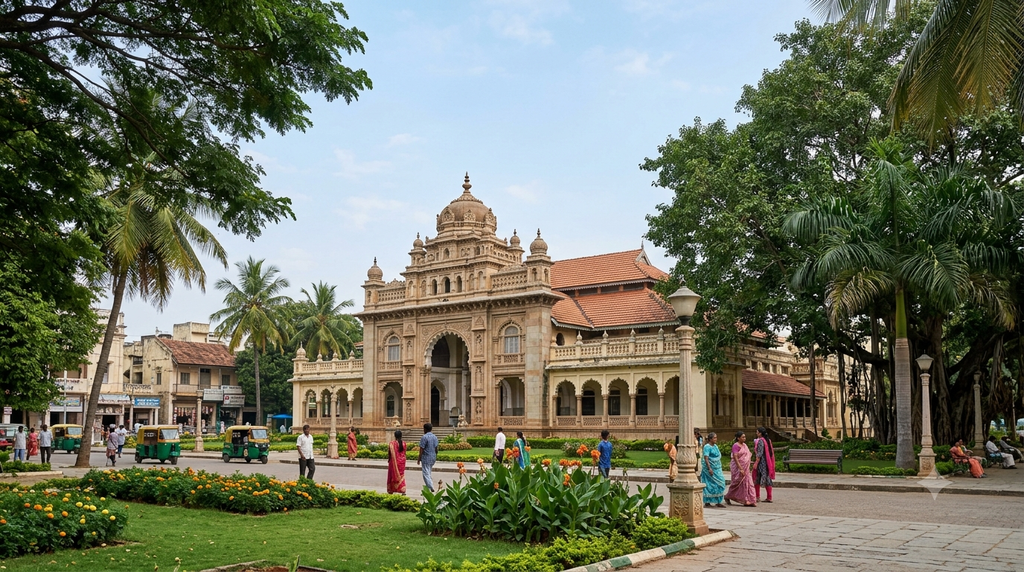
Suggested One-Day Mysuru Heritage Itinerary
If you have one day in Mysuru, a carefully planned route can help you experience the palace and several other attractions without rushing through everything.
Morning: Begin with Mysore Palace
Start your day at Mysore Palace, allowing enough time to appreciate its exterior and explore the areas open to visitors.
Pay attention to the architecture, ceremonial halls and decorative details. Reading the available historical information can help turn a sightseeing visit into a deeper cultural experience.
Check the current opening schedule before deciding on your arrival time.
Afternoon: Explore Mysuru’s Cultural Landmarks
After your palace visit, choose one or two attractions based on your interests.
You might explore Devaraja Market for a taste of local life, visit Jaganmohan Palace and Art Gallery for its artistic connections, or travel towards Chamundi Hills for a spiritual and scenic experience.
Avoid trying to cover every attraction in a single afternoon. Travel times, queues and individual opening schedules can make an overloaded itinerary difficult to enjoy.
Evening: Enjoy the City’s Atmosphere
Finish your day with a relaxed meal, a walk through an appropriate public area or an evening view of Mysore Palace if illumination is officially scheduled.
If you are staying overnight, you can explore the city at a more leisurely pace rather than travelling back immediately.
For a more complete cultural holiday, consider extending your stay and exploring additional destinations across Karnataka.
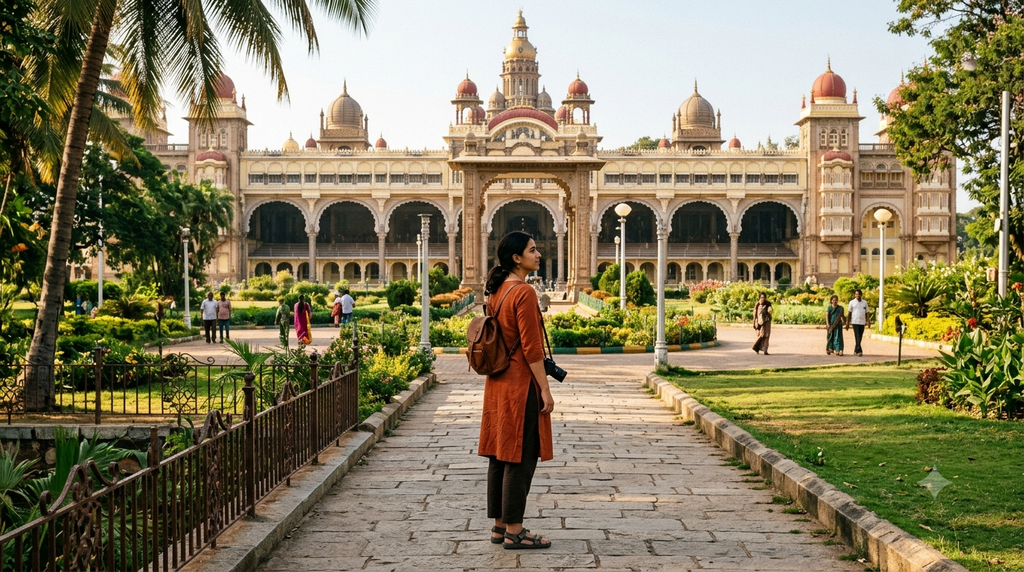
Travel Tips for Visiting Mysore Palace
Keep these practical points in mind before you leave:
- Verify visitor information: Check current opening hours, admission charges and restrictions through official sources.
- Plan around the weather: Review the forecast and carry suitable protection from sun or rain.
- Allow sufficient time: The palace’s architecture and interiors deserve more than a hurried stop.
- Check illumination arrangements: Evening lighting is schedule-dependent, so confirm before making plans around it.
- Expect crowds during festivals: Dasara and other busy periods can affect transport, queues and accommodation.
- Follow photography rules: Some areas may have restrictions, so look for signs and follow staff instructions.
- Wear comfortable footwear: You may spend considerable time walking and standing.
- Respect the heritage site: Avoid touching protected objects or entering restricted areas.
- Plan local transport: Consider journey times between the palace and attractions farther away.
- Keep your itinerary flexible: Allow time for unexpected delays and opportunities to explore.
Experience Karnataka’s Royal Heritage Beyond Mysore Palace
Mysore Palace is an excellent starting point for exploring Karnataka’s wider cultural landscape.
Beyond Mysuru, the state offers historic temple complexes, architectural landmarks, ancient settlements and places shaped by centuries of artistic and religious traditions.
For example, Pattadakal reveals a different chapter of Karnataka’s architectural history through its celebrated temple complex. Exploring multiple heritage destinations can help travellers understand the variety of artistic traditions that developed across the region.
A well-planned cultural journey is not only about reaching famous landmarks. It is also about understanding their stories, observing local traditions and making time to appreciate the details that give each destination its character.
If you would like to explore more of India’s cultural and heritage destinations, BlueJay Explorations offers a starting point for discovering curated travel experiences.
Explore travel opportunities at BlueJay Explorations and plan journeys that connect you with the history, culture and character of each destination.
Explore More. Travel Better. Live Deeper.
Why Mysore Palace Deserves a Place on Your Travel List
Mysore Palace brings together history, architecture and cultural identity in a way few destinations can.
Its connection with the Wadiyar dynasty offers insight into Mysuru’s royal past. Its Indo-Saracenic architecture rewards careful observation, while its ceremonial halls and decorative interiors reveal the artistic ambitions behind the building.
The palace’s relationship with Mysuru Dasara adds another dimension, connecting the historic residence with traditions that remain important to the city.
Whether you visit during a quieter period or plan your trip around a major celebration, the experience becomes richer when you take time to understand what you are seeing.
Look beyond the grand façade. Notice the craftsmanship, consider the stories behind the ceremonial spaces and explore the wider city that grew around this royal landmark.
Mysore Palace is not simply a building to photograph. It is a place through which you can begin to understand a significant chapter of Karnataka’s history.
For anyone interested in India’s royal heritage, a visit to Mysuru offers an opportunity to experience that history through architecture, culture and the atmosphere of the city itself.
Frequently Asked Question’s About Mysore Palace
1. Why is Mysore Palace famous?
Mysore Palace is famous for its royal history, distinctive Indo-Saracenic architecture, ornate interiors and association with the Wadiyar dynasty. It is also closely connected with Mysuru Dasara and is one of Karnataka’s best-known heritage attractions.
2. How much time should I spend at Mysore Palace?
Allow several hours if you want to explore the palace comfortably, including the areas open to visitors and time to appreciate the architecture. Your visit may take longer during busy periods or if you are particularly interested in history and decorative details.
3. What is the best time to visit Mysore Palace?
The cooler months are often comfortable for sightseeing. Visiting during Mysuru Dasara offers a special festive atmosphere but may involve larger crowds. The best time depends on whether you prefer a relaxed architectural visit or a festival-focused experience.
4. Can I see Mysore Palace illuminated at night?
You may be able to see the palace illuminated when lighting is officially scheduled. However, illumination is not guaranteed every evening. Confirm the current schedule through official palace information before planning your visit.
5. What are the main attractions inside Mysore Palace?
Highlights include the Grand Durbar Hall, Kalyana Mantapa and the palace’s decorative interiors and historic collections. Access to individual spaces may vary, and visitors should follow current rules and instructions.
6. Is Mysore Palace suitable for a family trip?
Yes. The palace can appeal to families interested in history, architecture and cultural experiences. Check visitor facilities, walking requirements, accessibility arrangements and current rules before travelling with young children or older family members.
7. What other places can I visit near Mysore Palace?
Popular additions to a Mysuru itinerary include Devaraja Market, Chamundi Hills and Chamundeshwari Temple, St. Philomena’s Church and Jaganmohan Palace and Art Gallery. Brindavan Gardens is another option if you have time for a longer excursion.
8. Is Mysore Palace worth visiting for architecture lovers?
Absolutely. Its Indo-Saracenic design, domes, arches, decorative details and ceremonial interiors make it an appealing destination for anyone interested in historic architecture and craftsmanship.
Final Thoughts: Discover the Royal Soul of Mysuru
Every historic landmark tells a story, but some make those stories feel remarkably close.
At Mysore Palace, the scale of the architecture introduces you to royal grandeur, while the decorative details reveal the craftsmanship and artistic vision behind it. Its history connects the building to the Wadiyar dynasty, and its cultural significance links the royal past with Mysuru’s continuing traditions.
Take your time, explore thoughtfully and allow the city to reveal more than its most famous landmark.
Whether Mysore Palace is your first introduction to Karnataka or one stop on a wider heritage journey, it offers a memorable opportunity to connect with India’s rich architectural and cultural past.
Continue discovering meaningful destinations with Travel Anecdotes and explore curated journeys with BlueJay Explorations.
✨Discover the magnificent Mysore Palace
“Step into the magnificent world of Mysore Palace, where royal elegance meets architectural brilliance and every corridor whispers stories of kings, queens, and a glorious past. From its grand domes and intricately carved arches to its dazzling interiors and colourful stained-glass windows, this iconic landmark invites you to experience the timeless splendour of India’s royal heritage.”
Explore Mysore. Discover Royal India
🌍 Explore More: BlueJay Explorations
📖 Read more travel stories: TravelAnecdotes.com
📸 Follow the journey on Instagram
👍 Follow us on Facebook
🎥 Watch cinematic travel stories on YouTube