Scuba Diving in the Andaman Islands: The Ultimate Underwater Adventure Guide
Introduction
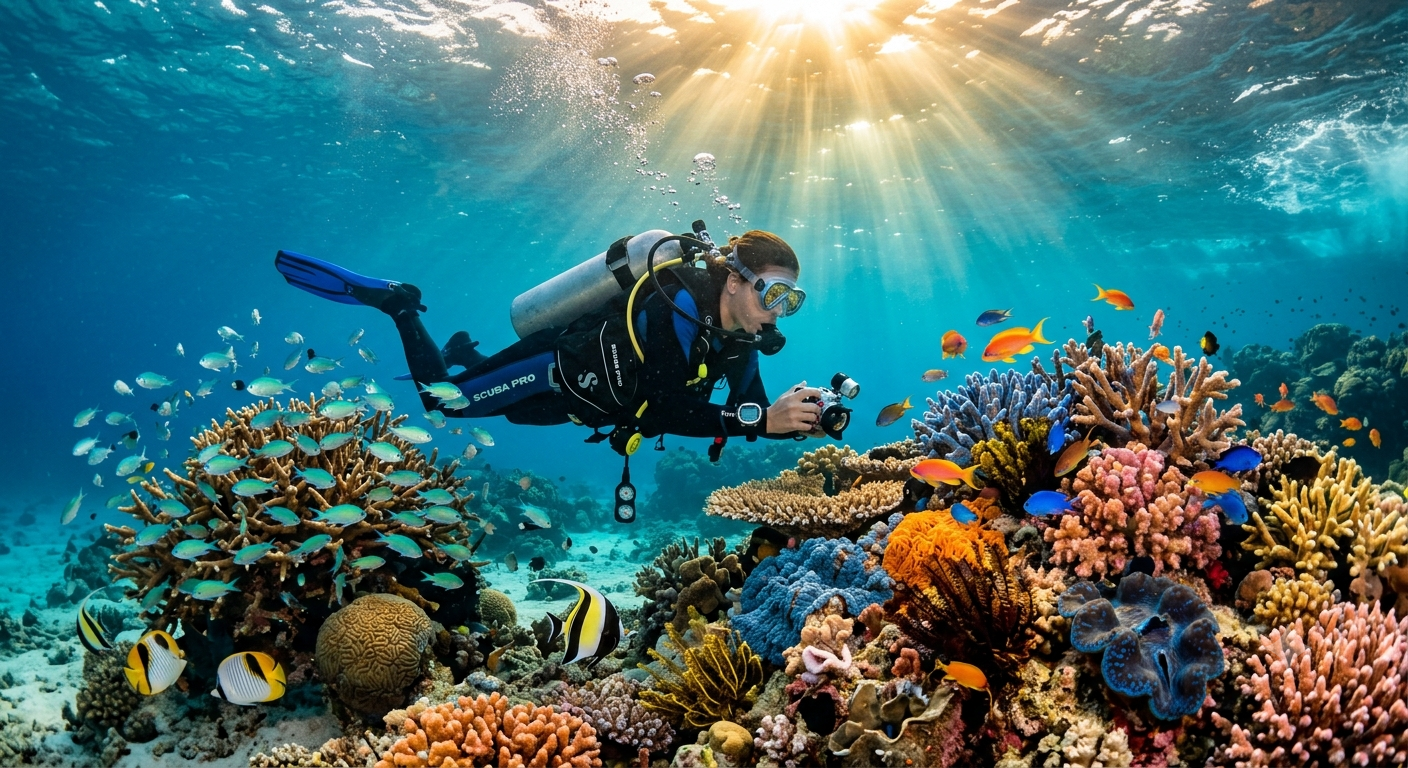
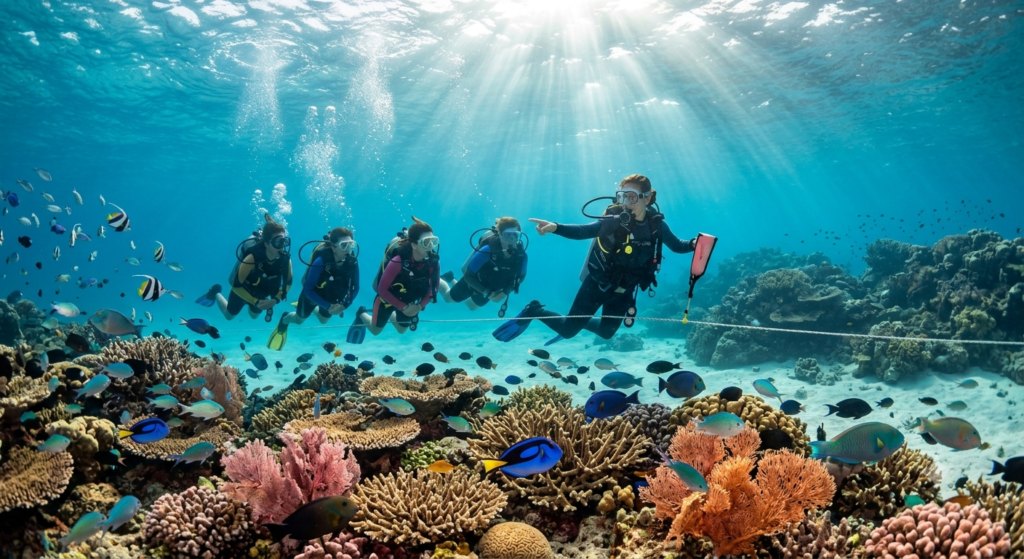
Scuba Diving in the Andaman Islands is one of the most extraordinary travel experiences in India, offering an unforgettable opportunity to explore a vibrant underwater world filled with colorful coral reefs, tropical fish, sea turtles, reef sharks, manta rays, and countless marine species. Surrounded by the crystal-clear waters of the Bay of Bengal, the Andaman Islands have earned a reputation as India’s premier scuba diving destination and one of Asia’s most rewarding underwater adventure hotspots.
Whether you’re taking your very first dive or you’re an experienced certified diver, the Andaman Islands offer something for everyone. Calm lagoons, shallow coral gardens, dramatic underwater cliffs, fascinating shipwrecks, and thriving marine ecosystems create an environment that’s both exciting and accessible.
The most popular diving destinations—Swaraj Dweep (formerly Havelock Island) and Shaheed Dweep (formerly Neil Island)—feature internationally recognized dive sites where visibility often exceeds 30 meters. Combined with warm tropical waters throughout the year, these conditions make diving enjoyable for beginners and professionals alike.
Beyond the adventure itself, scuba diving in the Andamans encourages a deeper appreciation for marine conservation. Every dive reveals the delicate beauty of coral reefs and highlights the importance of protecting one of India’s richest underwater ecosystems.
Whether you’re chasing your first underwater breath, earning a PADI certification, or photographing vibrant coral reefs, this guide covers everything you need—from dive sites and costs to safety tips, marine life, travel planning, and the best time to visit.
Why the Andaman Islands Are India’s Best Scuba Diving Destination
The Andaman Islands are widely regarded as India’s diving capital, attracting adventure enthusiasts and marine life lovers from around the world.
Unlike many coastal destinations, the Andamans remain relatively untouched, allowing coral reefs and marine ecosystems to flourish in remarkably healthy conditions. Excellent underwater visibility, warm water temperatures, and diverse dive sites make these islands suitable for divers of every skill level.
Every dive introduces a completely different underwater landscape—from colorful coral gardens and reef walls to mysterious shipwrecks and thriving marine habitats.
Crystal-Clear Tropical Waters
One of the biggest advantages of diving in the Andamans is exceptional water clarity.
Depending on weather conditions, underwater visibility typically ranges from 15 to 40 meters, allowing divers to fully appreciate the spectacular coral formations and marine life.
Warm water temperatures between 26°C and 30°C eliminate the need for thick wetsuits, making dives comfortable throughout most of the year.
Perfect for Beginners and Professionals
The Andamans cater to every level of diving experience.
Beginners can enjoy:
- Discover Scuba Diving
- Shallow reef dives
- Guided introductory experiences
Certified divers can explore:
- Deep reefs
- Drift dives
- Shipwrecks
- Night dives
- Advanced adventure dives
This versatility makes the islands one of the most complete diving destinations in Asia.
An Underwater Photographer’s Paradise
With colorful coral reefs, schools of tropical fish, graceful sea turtles, and dramatic underwater lighting, the Andaman Islands provide endless opportunities for underwater photography and videography.
Professional divers frequently rank these waters among the best underwater photography locations in India.
The Underwater World of the Andaman Islands
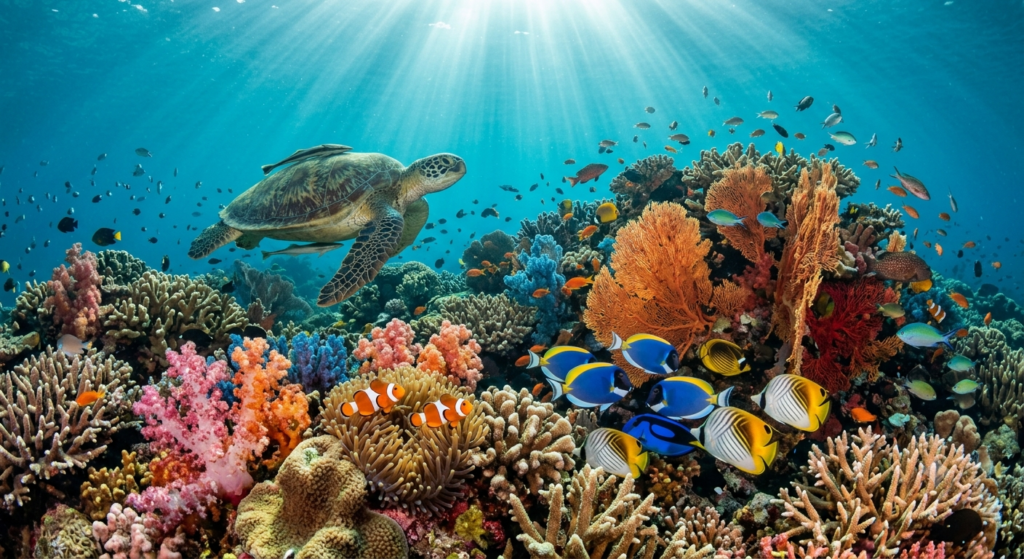
Beneath the surface lies a breathtaking marine ecosystem that supports an astonishing variety of life.
The coral reefs surrounding the islands are among the healthiest in the Indian Ocean region, providing shelter for hundreds of fish species and numerous endangered marine animals.
Each dive feels like entering a completely different world where vibrant colors, peaceful silence, and extraordinary biodiversity combine to create an unforgettable experience.
Colorful Coral Reefs
The reefs feature:
- Hard Corals
- Soft Corals
- Sea Fans
- Brain Corals
- Table Corals
- Staghorn Corals
These living reefs form the foundation of the islands’ rich marine ecosystem.
Tropical Fish
Divers commonly encounter:
- Clownfish
- Butterflyfish
- Angelfish
- Parrotfish
- Surgeonfish
- Bannerfish
- Lionfish
- Triggerfish
- Fusiliers
Large schools of reef fish create spectacular underwater scenes throughout the dive.
Sea Turtles
Several turtle species inhabit the Andaman waters, including:
- Green Sea Turtle
- Hawksbill Turtle
- Olive Ridley Turtle
Watching these gentle marine reptiles glide effortlessly across coral reefs is often the highlight of many dives.
Rays and Sharks
Although completely wild and unpredictable, divers may occasionally encounter:
- Eagle Rays
- Stingrays
- Reef Sharks
- Blacktip Reef Sharks
- Manta Rays (seasonal)
These encounters are carefully managed by experienced dive instructors to ensure both diver safety and marine conservation.
Other Marine Life
Depending on the dive site and season, visitors may also observe:
- Octopus
- Cuttlefish
- Moray Eels
- Sea Cucumbers
- Nudibranchs
- Giant Clams
- Reef Lobsters
- Dolphins (surface sightings)
Every dive offers a unique combination of marine life, making no two underwater adventures exactly alike.
Best Scuba Diving Sites in the Andaman Islands
The Andaman Islands offer numerous world-class dive sites, each with its own unique underwater landscape and marine biodiversity.
Elephant Beach (Swaraj Dweep)
Elephant Beach is one of the most popular beginner-friendly dive locations.
Highlights include:
- Shallow coral reefs
- Calm waters
- Excellent visibility
- Colorful tropical fish
Perfect for first-time divers and Discover Scuba Diving experiences.
Nemo Reef
Named after the famous clownfish, Nemo Reef is ideal for introductory dives.
Divers frequently encounter:
- Clownfish
- Sea Anemones
- Butterflyfish
- Vibrant coral gardens
Its calm conditions make it one of the safest dive sites for beginners.
Dixon’s Pinnacle
One of the Andaman’s most famous advanced dive sites.
Known for:
- Reef Sharks
- Barracudas
- Giant Trevallies
- Dense coral formations
Suitable for experienced certified divers.
The Wall
A dramatic underwater drop-off where coral-covered cliffs descend into deep blue waters.
This site attracts:
- Large pelagic fish
- Reef Sharks
- Schools of Snapper
- Groupers
Cinque Island
Often considered one of India’s finest dive destinations, Cinque Island features pristine coral reefs, exceptional visibility, and abundant marine biodiversity.
Its relatively remote location offers an unspoiled underwater experience for adventurous divers.
Best Time for Scuba Diving in the Andaman Islands
The Andaman Islands offer favorable diving conditions for much of the year, but choosing the right season can significantly enhance your underwater experience.
Peak Diving Season (October – May)
The period from October to May is widely regarded as the best time for scuba diving in the Andaman Islands.
Weather
- Air Temperature: 24°C–32°C
- Water Temperature: 26°C–30°C
- Calm Sea Conditions
- Excellent Underwater Visibility
Why Visit
This season offers:
- Crystal-clear waters
- Visibility up to 40 meters
- Calm ocean conditions
- Rich marine biodiversity
- Comfortable weather for island exploration
It is also the ideal period for underwater photography and first-time divers.
Summer (March – May)
Summer provides some of the clearest underwater visibility of the year.
Marine activity is at its peak, making it an excellent time to observe:
- Sea turtles
- Reef sharks
- Schools of tropical fish
- Vibrant coral reefs
Although daytime temperatures are warmer, underwater conditions remain exceptionally comfortable.
Monsoon Season (June – September)
The southwest monsoon brings rough seas and reduced visibility.
During this period:
- Many dive centers temporarily suspend operations.
- Boat access to dive sites becomes limited.
- Ocean currents become stronger.
Travelers planning scuba diving should generally avoid this season.
Best Months for Underwater Photography
For photographers seeking the best lighting and visibility, the months of November through April provide ideal conditions for capturing colorful coral reefs and marine life.
Scuba Diving for Beginners vs Certified Divers
One of the greatest advantages of diving in the Andaman Islands is that it welcomes everyone—from complete beginners to experienced professionals.
Discover Scuba Diving (For Beginners)
No swimming experience or certification is required for introductory dives.
During a Discover Scuba Diving session:
- Certified instructors provide basic training.
- Participants learn essential underwater communication signals.
- Safety procedures are explained.
- The instructor remains with the diver throughout the experience.
Typical dive depth:
6–12 meters
This program is ideal for travelers experiencing scuba diving for the first time.
Fun Dives (Certified Divers)
Certified divers can explore deeper and more challenging dive sites featuring:
- Coral walls
- Shipwrecks
- Drift dives
- Advanced reef systems
Depending on certification level, dives may reach depths of 18–30 meters or more.
PADI & SSI Certification Courses
The Andaman Islands are one of India’s most popular destinations for earning internationally recognized scuba certifications.
PADI Open Water Diver
Suitable for complete beginners.
The course includes:
- Classroom instruction
- Confined water training
- Open water dives
Upon completion, divers receive an internationally recognized certification allowing them to dive independently with a buddy.
Advanced Open Water Diver
Designed for certified divers wishing to improve their skills.
Training typically includes:
- Deep Diving
- Underwater Navigation
- Peak Performance Buoyancy
- Night Diving
- Adventure Specialties
Specialty Courses
Experienced divers may also pursue:
- Underwater Photography
- Wreck Diving
- Nitrox Certification
- Rescue Diver
- Dive Master Programs
Essential Safety Guidelines
Scuba diving is extremely safe when conducted responsibly under trained professionals.
Always Dive with Certified Operators
Choose dive centers that employ:
- Certified instructors
- Well-maintained equipment
- International safety standards
Never compromise on operator quality when selecting a dive school.
Listen Carefully During Briefings
Every dive begins with an important safety briefing covering:
- Equipment usage
- Hand signals
- Emergency procedures
- Marine conservation rules
Understanding these instructions is essential for a safe and enjoyable experience.
Equalize Frequently
As you descend, equalize ear pressure regularly to avoid discomfort.
Your instructor will demonstrate proper equalization techniques before entering the water.
Never Touch Marine Life
Although coral reefs appear sturdy, they are extremely delicate ecosystems.
Avoid touching:
- Corals
- Sea turtles
- Fish
- Rays
- Sea stars
Observing wildlife respectfully protects both divers and marine habitats.
Follow Your Instructor
Maintain visual contact with your instructor throughout the dive and avoid swimming away from the group.
Scuba Diving Equipment
Most dive packages include complete scuba equipment.
Typical gear includes:
Mask
Provides clear underwater vision.
Snorkel
Used at the surface before and after dives.
Fins
Improve underwater movement with minimal effort.
Buoyancy Control Device (BCD)
Allows divers to control buoyancy during the dive.
Regulator
Delivers breathable compressed air from the scuba cylinder.
Dive Cylinder
Contains compressed breathing air.
Wetsuit
Provides thermal protection and comfort.
Weight Belt
Helps achieve neutral buoyancy underwater.
Cost of Scuba Diving in the Andaman Islands
Prices vary depending on the dive center, certification level, and dive location.
Approximate pricing:
| Experience | Estimated Cost (INR) |
|---|---|
| Discover Scuba Diving | ₹3,500 – ₹6,500 |
| Fun Dive (Certified) | ₹3,000 – ₹5,500 per dive |
| PADI Open Water Course | ₹24,000 – ₹35,000 |
| Advanced Open Water | ₹20,000 – ₹30,000 |
| Underwater Photography | Additional charges may apply |
Prices generally include:
- Equipment
- Instructor
- Boat transfers
- Basic refreshments
Suggested 4-Day Scuba Diving Itinerary
Day 1
Arrival at Swaraj Dweep (Havelock Island)
Check-in
Orientation session
Beach relaxation
Sunset photography
Day 2
Morning:
Discover Scuba Diving
Afternoon:
Beach exploration
Evening:
Local seafood dinner
Day 3
Certified Fun Dive or Advanced Dive
Visit:
- Elephant Beach
- Radhanagar Beach
Sunset photography
Day 4
Transfer to Shaheed Dweep (Neil Island)
Morning dive
Snorkeling
Island sightseeing
Departure
How to Reach the Dive Locations
The primary diving hubs are easily accessible from Port Blair.
Reach Port Blair
Fly into Veer Savarkar International Airport, Port Blair.
Direct flights are available from:
- Chennai
- Kolkata
- Bengaluru
- Delhi
- Hyderabad (seasonal/direct or via connections)
Ferry to Swaraj Dweep
Government and private ferries connect Port Blair with Swaraj Dweep.
Travel time:
Approximately 90 minutes to 2.5 hours, depending on the ferry service.
Ferry to Shaheed Dweep
Regular ferry services operate between Swaraj Dweep and Shaheed Dweep, making it convenient to combine both islands in one diving itinerary.
Travel Tips for Scuba Divers
- Book dive slots well in advance during the peak season.
- Avoid alcohol before diving.
- Stay well hydrated.
- Do not fly immediately after scuba diving (observe the recommended no-fly interval, typically 18–24 hours after multiple dives).
- Carry reef-safe sunscreen to help protect marine ecosystems.
- Bring an underwater camera if available, or check if your dive operator offers underwater photography packages.
- Listen carefully to your dive instructor and never exceed your certification limits.
- Respect marine life and leave only bubbles behind.
Responsible Marine Tourism
Scuba diving offers a rare opportunity to witness one of the planet’s most delicate ecosystems. Every diver plays an important role in protecting the coral reefs and marine biodiversity of the Andaman Islands for future generations.
Practicing responsible marine tourism ensures that these underwater habitats remain healthy, vibrant, and accessible for years to come.
Protect the Coral Reefs
Corals are living organisms that grow extremely slowly. Even a light touch can damage them.
While diving:
- Maintain proper buoyancy.
- Avoid standing or kneeling on coral reefs.
- Never break or collect coral.
- Keep fins away from reef formations.
Healthy coral reefs support thousands of marine species and are essential to the ocean ecosystem.
Respect Marine Life
The Andaman Islands are home to a wide variety of marine animals.
Observe them respectfully:
- Do not chase turtles or rays.
- Never feed fish.
- Avoid touching sea stars, octopuses, or other marine creatures.
- Maintain a safe viewing distance.
Natural behavior is best appreciated when wildlife remains undisturbed.
Use Reef-Safe Products
Choose environmentally friendly sunscreen that is free from harmful chemicals known to damage coral reefs.
Whenever possible:
- Use biodegradable personal care products.
- Avoid single-use plastics during your island stay.
- Dispose of waste responsibly.
Support Eco-Friendly Dive Operators
Select dive centers that:
- Follow PADI or SSI environmental guidelines.
- Conduct reef-cleaning initiatives.
- Promote responsible diving practices.
- Educate divers about marine conservation.
Supporting responsible operators contributes directly to the long-term preservation of the Andaman marine ecosystem.
Packing Checklist
Packing the right gear ensures a comfortable and enjoyable diving experience.
Clothing
✔ Lightweight cotton clothing
✔ Swimwear
✔ Rash guard
✔ Flip-flops
✔ Comfortable walking shoes
✔ Light evening wear
Travel Essentials
✔ Government-issued ID
✔ Flight tickets
✔ Hotel confirmations
✔ Waterproof phone pouch
✔ Power bank
✔ Mobile charger
✔ Sunglasses
✔ Wide-brimmed hat
Dive Essentials
✔ Underwater camera (optional)
✔ Dry bag
✔ Reusable water bottle
✔ Reef-safe sunscreen
✔ Personal medications
✔ Motion sickness tablets (if required)
✔ Towel
✔ Small backpack
Photography Gear
✔ GoPro or underwater camera
✔ Extra batteries
✔ Memory cards
✔ Lens cleaning cloth
Frequently Asked Questions (FAQs)
Is scuba diving in the Andaman Islands safe?
Yes.
When conducted through certified dive centers under professional supervision, scuba diving is considered a very safe adventure activity.
Do I need to know swimming?
Not necessarily.
Most Discover Scuba Diving programs are designed for beginners, and instructors remain with participants throughout the dive. However, swimming ability can enhance overall comfort and confidence in the water.
What is the minimum age for scuba diving?
Most introductory scuba programs begin at 10 years of age, depending on the certification agency and dive operator.
Can non-certified divers experience scuba diving?
Yes.
Discover Scuba Diving allows beginners to explore the underwater world without obtaining a full certification.
What marine life can I expect to see?
Divers commonly encounter:
- Sea turtles
- Clownfish
- Butterflyfish
- Angelfish
- Parrotfish
- Reef sharks
- Eagle rays
- Moray eels
- Colorful coral reefs
- Numerous tropical reef species
Marine sightings vary depending on weather, season, and dive site.
How many days should I plan?
A 4–5 day itinerary is ideal for enjoying multiple dives, relaxing between sessions, exploring the islands, and completing certification courses if desired.
Conclusion
Scuba Diving in the Andaman Islands is far more than an adventure activity—it is an immersive journey into one of India’s most spectacular natural environments. Every descent beneath the turquoise waters reveals an extraordinary world filled with vibrant coral gardens, graceful sea turtles, schools of tropical fish, and breathtaking underwater landscapes that few experiences can rival.
Whether you’re taking your very first underwater breath through a Discover Scuba Diving session or pursuing advanced certifications to explore deeper reefs, the Andaman Islands provide exceptional opportunities for every level of diver.
Beyond the excitement, scuba diving fosters a profound appreciation for marine conservation and reminds us of the importance of protecting our oceans for future generations.
If you’re searching for an unforgettable travel experience that combines adventure, natural beauty, and lifelong memories, the Andaman Islands deserve a place at the very top of your travel bucket list.
🌍 Explore More
“The greatest adventures begin where the land ends. Dive beneath the waves, discover hidden worlds, and let every journey deepen your connection with nature.”
🌍 Explore More: BlueJay Explorations
📖 Read more travel stories: TravelAnecdotes
📸 Follow the journey on Instagram
👍 Follow us on Facebook
🎥 Watch cinematic travel stories on YouTube