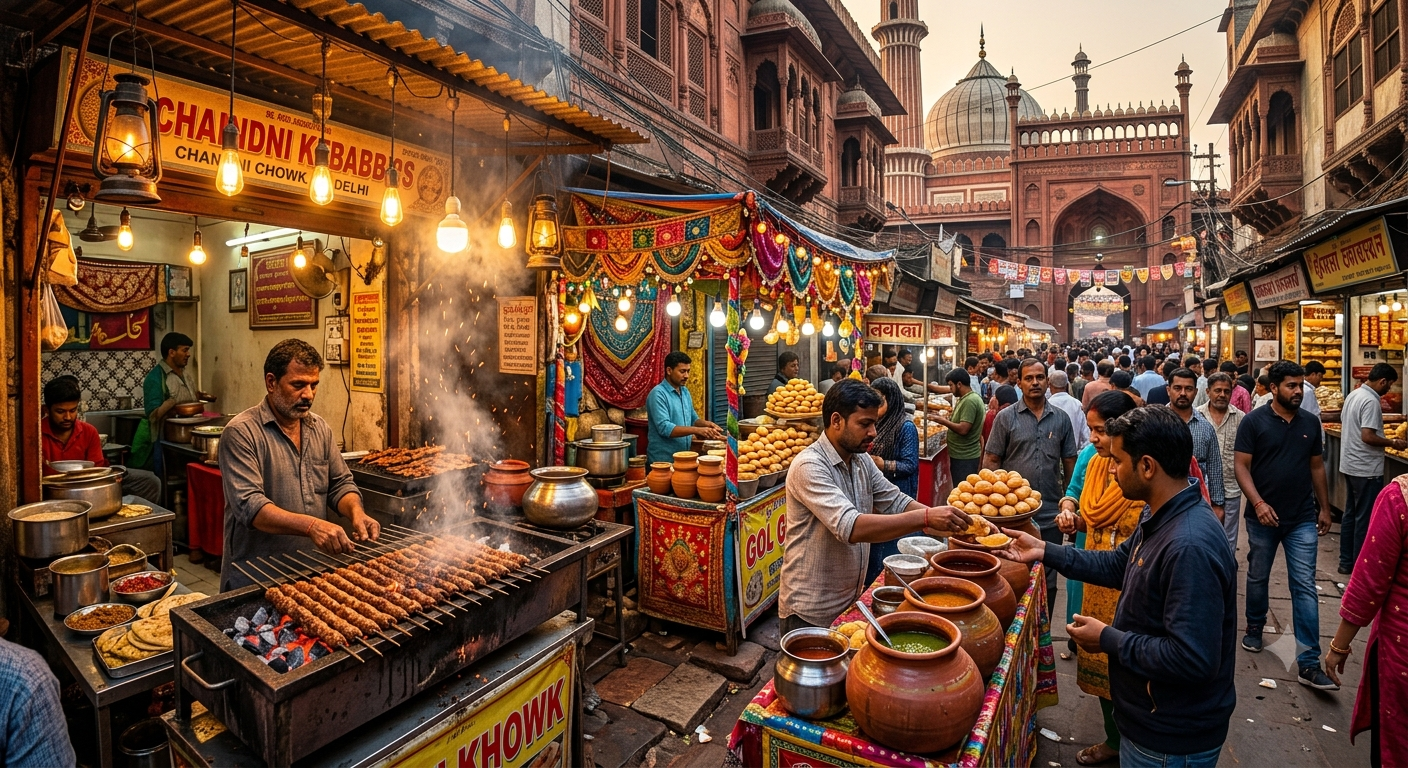
Delhi Street Food Guide: A Culinary Journey Through India’s Flavor Capital
Introduction
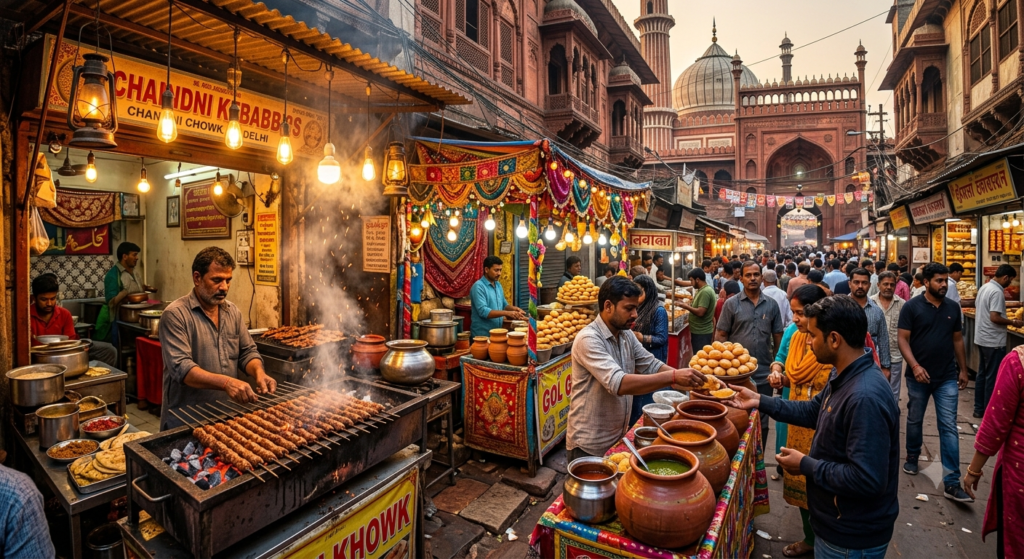
Delhi is more than India’s capital—it is a living museum of flavors where centuries of history are served on every plate. From the bustling lanes of Old Delhi to modern food districts across the city, Delhi offers one of the world’s most exciting street food cultures, attracting food lovers from every corner of the globe.
Every neighborhood tells its own culinary story. The aroma of freshly fried kachoris, sizzling seekh kebabs, buttery parathas, spicy chaat, rich nihari, and syrup-soaked jalebis fills the air as generations-old eateries continue to serve recipes passed down through families for decades, and in some cases, centuries.
The city’s food reflects the influence of Mughal emperors, Punjabi refugees, Old Delhi merchants, and communities from across India who have made Delhi their home. This incredible blend of cultures has created a food scene unlike any other—where humble street vendors stand alongside legendary establishments that have become culinary landmarks.
Whether you’re wandering through the historic alleys of Chandni Chowk, enjoying authentic Mughlai delicacies near Jama Masjid, or discovering modern cafés and food markets, every bite reveals another chapter of Delhi’s fascinating history.
This Delhi Street Food Guide takes you through the city’s most iconic food streets, legendary eateries, must-try dishes, travel tips, and suggested food trails, helping you experience the authentic flavors that make Delhi one of Asia’s greatest culinary destinations.
Why Delhi is India’s Street Food Capital
Few cities in the world can rival Delhi when it comes to the diversity, history, and authenticity of its street food. Every neighborhood offers a distinct culinary identity, from royal Mughlai feasts to simple vegetarian snacks that have delighted locals for generations.
Delhi’s street food culture is deeply woven into everyday life, making food an essential part of exploring the city.
A City Built on Flavors
Over the centuries, Delhi has welcomed emperors, traders, migrants, and travelers from across India and beyond.
Each community contributed its own recipes, cooking styles, and ingredients, creating an extraordinary culinary landscape where:
- Mughlai cuisine meets Punjabi comfort food.
- Traditional North Indian snacks coexist with regional specialties.
- Ancient recipes continue alongside modern culinary innovations.
This diversity is what makes Delhi one of the world’s most exciting food destinations.
Food Beyond Restaurants
One of Delhi’s greatest culinary strengths lies in its street vendors.
Many of the city’s most celebrated dishes are served not in luxury restaurants but in tiny family-run stalls that have perfected their recipes over generations.
These humble establishments often have loyal customers who have been returning for decades.
Why Every Food Lover Should Visit Delhi
A culinary journey through Delhi offers:
- Historic food streets
- Legendary family-run eateries
- Authentic Mughlai cuisine
- Famous vegetarian delicacies
- Vibrant dessert culture
- Rich cultural experiences
- Affordable gourmet dining
Every meal becomes part of the city’s fascinating story.
The History of Delhi’s Culinary Heritage
Delhi’s food history spans more than a thousand years, shaped by successive dynasties, royal kitchens, bustling marketplaces, and diverse communities.
The arrival of the Mughal Empire introduced sophisticated cooking techniques, fragrant spices, slow-cooked meats, and elaborate feasts that continue to influence Delhi’s cuisine today.
Later, the influx of Punjabi refugees following India’s Partition in 1947 brought robust flavors, tandoori cooking, butter-rich curries, and iconic North Indian dishes that became synonymous with Delhi.
Mughal Influence
The Mughal emperors transformed Delhi into one of the world’s great culinary capitals.
Royal kitchens developed dishes such as:
- Kebabs
- Nihari
- Korma
- Biryani
- Sheermal
- Rich gravies
Many of these recipes continue to be prepared using traditional techniques in Old Delhi today.
Punjabi Legacy
Partition dramatically reshaped Delhi’s food culture.
Punjabi families established restaurants and street food stalls that popularized dishes like:
- Chole Bhature
- Butter Chicken
- Paneer Tikka
- Tandoori Chicken
- Lassi
Their influence remains central to Delhi’s modern food identity.
Old Delhi – Where Every Lane Tells a Culinary Story
At the heart of Delhi’s food culture lies Old Delhi, a vibrant maze of narrow streets, historic bazaars, spice markets, and legendary eateries.
Walking through Chandni Chowk is a feast for the senses. The aroma of freshly baked breads, simmering curries, roasted spices, and sweet desserts fills the air while vendors passionately prepare dishes that have remained unchanged for generations.
Every lane offers something unique, encouraging visitors to explore slowly and discover hidden culinary treasures.
Chandni Chowk
Established in the 17th century by Jahanara Begum, Chandni Chowk remains one of India’s most famous food destinations.
Highlights include:
- Chaat
- Jalebi
- Parathas
- Kulfi
- Rabri
- Lassi
- Kachori
- Street-side sweets
It is impossible to experience Delhi’s food culture without spending time here.
Jama Masjid Food Streets
The streets surrounding Jama Masjid are renowned for authentic Mughlai cuisine.
As evening approaches, charcoal grills come alive with sizzling kebabs, fragrant biryanis, and slow-cooked meat dishes that attract both locals and visitors.
This area offers one of Delhi’s most iconic nighttime food experiences.
Signature Street Food Traditions
Delhi’s street food is distinguished by its balance of bold spices, fresh ingredients, and regional influences.
Whether served from century-old shops or roadside carts, every dish reflects the city’s rich culinary heritage.
Many recipes continue to be prepared exactly as they were generations ago, preserving authentic flavors while satisfying modern tastes.
Freshly Prepared Every Day
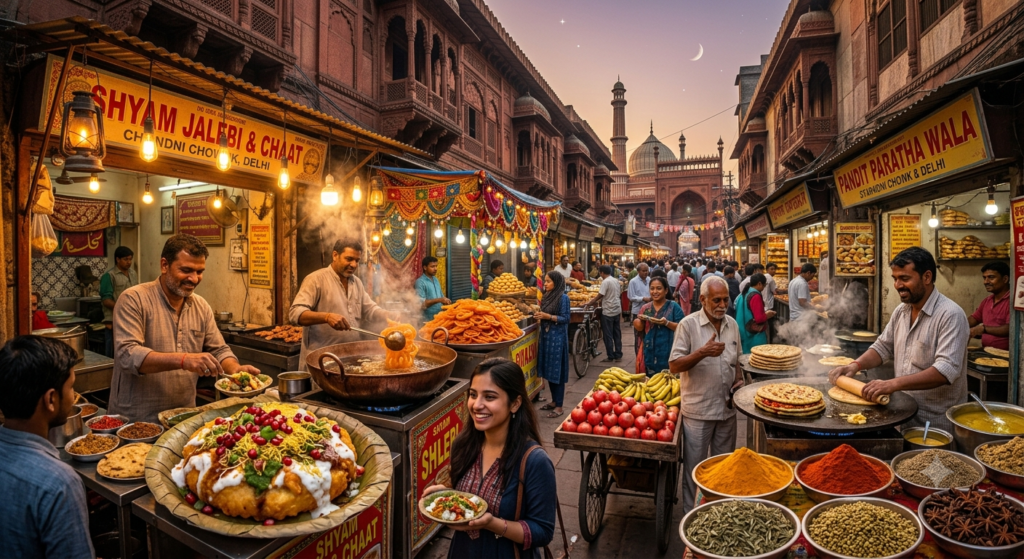
Unlike mass-produced fast food, Delhi’s traditional street food is often prepared fresh throughout the day.
Visitors can watch skilled vendors:
- Roll fresh parathas
- Assemble flavorful chaat
- Fry crispy kachoris
- Grill kebabs over charcoal
- Prepare desserts by hand
The open kitchens become part of the culinary experience.
A City Best Explored One Bite at a Time
Delhi’s street food is more than a collection of famous dishes—it is a celebration of history, culture, migration, and community.
Every neighborhood offers new flavors, every vendor has a story, and every meal provides another reason to fall in love with India’s incredible culinary heritage.
For travelers seeking authentic experiences, Delhi promises an unforgettable food journey unlike anywhere else in the world.
Must-Try Delhi Street Foods
Delhi’s street food scene is incredibly diverse, offering everything from spicy chaats and buttery breads to smoky kebabs and decadent desserts. While every neighborhood has its own specialties, certain dishes have become synonymous with the city’s culinary identity.
Chole Bhature
Few dishes represent Delhi better than Chole Bhature.
This iconic North Indian breakfast features fluffy deep-fried bhature served with spicy chickpea curry, pickles, onions, and green chilies.
The rich flavors and generous portions make it one of the city’s most beloved comfort foods.
Best Areas
- Sita Ram Diwan Chand
- Chache Di Hatti
- Paharganj
- Karol Bagh
Aloo Tikki Chaat
One of Delhi’s most famous street snacks, Aloo Tikki Chaat combines crispy potato patties with yogurt, tamarind chutney, mint chutney, chickpeas, spices, and crunchy sev.
Every vendor adds a unique twist, making each tasting experience slightly different.
Gol Gappe (Pani Puri)
Known across India by different names, Delhi’s Gol Gappe are famous for their tangy tamarind water, spicy mint water, mashed potatoes, and chickpeas.
Many vendors offer multiple flavored waters, allowing visitors to customize each bite.
Papdi Chaat
Another Chandni Chowk favorite, Papdi Chaat features crispy wafers topped with potatoes, yogurt, chutneys, spices, pomegranate, coriander, and sev.
The combination of sweet, spicy, tangy, and crunchy textures perfectly represents Delhi’s vibrant street food culture.
Dahi Bhalla
Soft lentil dumplings soaked in creamy yogurt and topped with flavorful chutneys make Dahi Bhalla one of Delhi’s most refreshing street foods.
It is especially popular during the warmer months.
Chandni Chowk Food Trail
A visit to Delhi is incomplete without exploring the legendary food streets of Chandni Chowk.
Dating back to the 17th century, this historic marketplace remains one of India’s greatest culinary destinations.
The narrow lanes are packed with generations-old eateries serving dishes that have remained unchanged for decades.
Start with Breakfast
Begin your food trail early in the morning with:
- Bedmi Puri
- Nagori Halwa
- Chole Bhature
- Fresh Lassi
The lively morning atmosphere adds to the experience.
Midday Street Snacks
Continue your culinary exploration with:
- Aloo Chaat
- Papdi Chaat
- Fruit Chaat
- Kachori
- Samosa
Nearly every lane introduces a new specialty.
Evening Delicacies
As the sun sets, Chandni Chowk transforms into a bustling food paradise.
Visitors can enjoy:
- Kebabs
- Rolls
- Kulfi
- Rabri
- Jalebi
- Falooda
The evening lights create an unforgettable atmosphere.
Paratha Wali Gali – Delhi’s Legendary Breakfast Street
One of Old Delhi’s most famous culinary landmarks is Paratha Wali Gali, where traditional stuffed parathas have been served for more than a century.
The narrow lane is lined with historic family-run restaurants specializing in dozens of varieties of parathas.
Signature Parathas
Popular fillings include:
- Aloo
- Paneer
- Gobi
- Mooli
- Mixed vegetables
- Dry fruits
- Banana
- Khoya
Each paratha is served with pickles, chutneys, curd, and seasonal vegetable curries.
Traditional Cooking
Unlike modern fast-food establishments, the parathas here are still prepared using traditional techniques.
The slow cooking process produces crispy, flaky layers packed with rich flavors.
Karim’s – The Legendary Mughlai Experience
Located near Jama Masjid, Karim’s is one of Delhi’s most iconic restaurants.
Established in 1913, it traces its culinary roots to the royal kitchens of the Mughal emperors.
For over a century, Karim’s has been serving authentic Mughlai cuisine to food lovers from around the world.
Signature Dishes
Must-try specialties include:
- Mutton Korma
- Chicken Jahangiri
- Seekh Kebab
- Mutton Burra
- Nihari
- Roomali Roti
Each dish reflects the rich culinary traditions of Mughal Delhi.
The Mughlai Legacy
Karim’s remains one of the best places to experience authentic Mughlai cooking, where recipes have been preserved across generations.
The restaurant continues to attract celebrities, politicians, chefs, and travelers alike.
Sweet Treats That Complete the Journey
Delhi’s desserts are every bit as famous as its savory street food.
No culinary tour is complete without sampling its traditional sweets.
Jalebi
Freshly fried jalebis dipped in warm sugar syrup are among Delhi’s most iconic desserts.
The best versions are crispy on the outside and delightfully juicy inside.
Rabri Falooda
Rich rabri served with chilled falooda noodles creates a refreshing dessert that is especially popular during summer evenings.
Kulfi
Traditional Indian ice cream made with slow-cooked milk remains one of Delhi’s favorite desserts.
Popular flavors include:
- Malai
- Kesar Pista
- Mango
- Rose
- Paan
Daulat Ki Chaat
Available only during winter, Daulat Ki Chaat is one of Delhi’s rarest desserts.
Prepared using delicately whisked milk foam, saffron, pistachios, and sugar, this seasonal delicacy is both light and luxurious.
Best Time for a Delhi Food Trail
Delhi offers fantastic food experiences throughout the year, but cooler months provide the most comfortable conditions.
October to March
This is widely considered the best season.
Advantages include:
- Pleasant weather
- Comfortable walking
- Seasonal desserts
- Outdoor food markets
- Numerous festivals
Evening Food Walks
Delhi truly comes alive after sunset.
Most famous food streets become vibrant with:
- Freshly prepared snacks
- Street performers
- Illuminated markets
- Bustling crowds
- Lively atmosphere
Evening is the ideal time to experience the city’s culinary energy.
How to Reach Delhi
As India’s capital, Delhi enjoys outstanding connectivity.
By Air
Indira Gandhi International Airport
One of South Asia’s busiest airports with domestic and international connections.
By Train
Major railway stations include:
- New Delhi Railway Station
- Old Delhi Railway Station
- Hazrat Nizamuddin
- Anand Vihar Terminal
All are well connected to India’s major cities.
By Metro
Delhi Metro is the fastest and most convenient way to reach most food destinations.
Nearest stations include:
- Chandni Chowk
- Chawri Bazar
- Jama Masjid
- Lal Quila
Suggested 2-Day Food Itinerary
Day 1 – Old Delhi Food Trail
- Breakfast at Chole Bhature outlet
- Chandni Chowk food walk
- Paratha Wali Gali
- Jama Masjid
- Karim’s
- Evening Jalebi & Rabri
Day 2 – Modern Delhi
- Connaught Place cafés
- Bengali Market snacks
- Rajouri Garden food street
- Delhi Haat regional cuisines
- Evening desserts
Food Traveler Tips
To enjoy Delhi’s street food safely and comfortably:
- Choose busy, popular food stalls with high turnover.
- Prefer freshly prepared dishes served hot.
- Carry bottled or filtered drinking water.
- Wear comfortable walking shoes.
- Carry cash or digital payment options for small vendors.
- Start with lighter portions—you’ll want to try many dishes.
- Keep tissues and hand sanitizer handy.
- Respect local customs and queue patiently at popular eateries.
- Visit early mornings or evenings to avoid peak heat during summer.
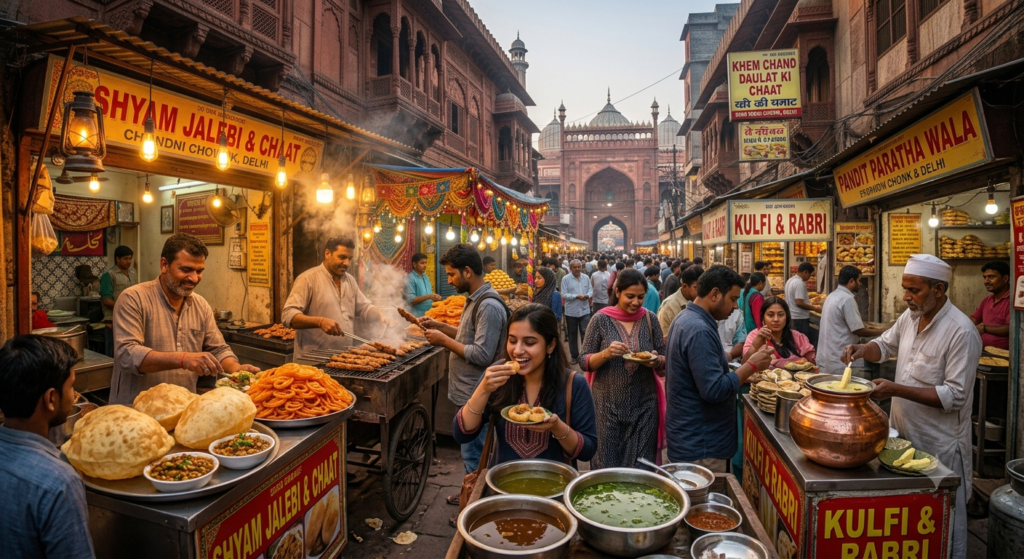
Responsible Food Tourism
Delhi’s street food is not just about satisfying your appetite—it is about experiencing centuries of culinary traditions, family recipes, and local communities that have preserved these flavors across generations.
Practicing responsible food tourism ensures that these authentic culinary traditions continue to thrive while creating meaningful benefits for local vendors and neighborhoods.
Support Family-Owned Food Businesses
Many of Delhi’s most iconic eateries are family-run establishments that have served customers for decades, and in some cases, over a century.
Whenever possible:
- Choose heritage eateries.
- Support local street vendors.
- Purchase directly from traditional food businesses.
- Appreciate the stories behind each establishment.
Every meal helps preserve Delhi’s rich culinary heritage.
Respect Local Food Culture
Delhi’s food streets are vibrant, crowded, and deeply rooted in local traditions.
While exploring:
- Wait patiently in queues.
- Follow local etiquette.
- Respect seating arrangements.
- Avoid wasting food.
- Be courteous to vendors and fellow diners.
A respectful attitude enhances the experience for everyone.
Reduce Plastic Waste
Help keep Delhi’s historic food streets clean by:
- Carrying a reusable water bottle.
- Avoiding single-use plastics where possible.
- Properly disposing of food containers.
- Using designated waste bins.
Small actions contribute to cleaner and more sustainable tourism.
Food Photography Etiquette
Delhi’s colorful street food is highly photogenic, but remember that vendors are working.
Always:
- Ask permission before photographing people.
- Avoid blocking customers.
- Keep photography quick during busy hours.
- Purchase something if photographing a small vendor’s stall.
Respect creates more authentic travel experiences.
Packing Checklist
A comfortable food trail requires very little equipment, but thoughtful preparation can make your experience much more enjoyable.
Clothing
✔ Comfortable walking shoes
✔ Lightweight breathable clothing
✔ Cap or hat
✔ Sunglasses
✔ Light jacket during winter evenings
Travel Essentials
✔ Government-issued ID
✔ Mobile phone
✔ Power bank
✔ Cash for small vendors
✔ Digital payment apps
✔ Reusable water bottle
✔ Hand sanitizer
✔ Wet wipes or tissues
Photography Gear
✔ Smartphone with good camera
✔ DSLR or Mirrorless Camera
✔ Wide-angle lens
✔ Portrait lens
✔ Extra batteries
✔ Memory cards
Health Essentials
✔ Personal medications
✔ ORS sachets
✔ Lip balm
✔ Sunscreen
✔ Basic first-aid kit
Frequently Asked Questions (FAQs)
What is Delhi’s most famous street food?
Some of Delhi’s most iconic street foods include:
- Chole Bhature
- Gol Gappe
- Aloo Tikki Chaat
- Papdi Chaat
- Parathas
- Seekh Kebabs
- Jalebi
- Daulat Ki Chaat
Each neighborhood also has its own local specialties.
Which area is best for street food?
The most popular food destinations include:
- Chandni Chowk
- Jama Masjid
- Paratha Wali Gali
- Bengali Market
- Connaught Place
- Delhi Haat
Every location offers a different culinary experience.
Is Delhi street food safe?
Yes, when you choose busy, well-established vendors with high customer turnover.
For the best experience:
- Eat freshly prepared food.
- Drink bottled or filtered water.
- Follow basic food hygiene precautions.
How many days are ideal for a Delhi food tour?
A 2–3 day itinerary allows sufficient time to explore:
- Old Delhi
- Chandni Chowk
- Mughlai cuisine
- Street food
- Traditional desserts
- Modern cafés
- Regional food markets
What is the best season for food walks?
October through March offers pleasant weather, making it the ideal time for walking through Delhi’s historic markets and enjoying outdoor food experiences.
Are vegetarian options available?
Absolutely.
Delhi offers an enormous variety of vegetarian street food including:
- Chaat
- Chole Bhature
- Kachori
- Parathas
- Kulfi
- Jalebi
- Rabri
- Lassi
Vegetarian travelers will have no shortage of delicious choices.
Conclusion
The Delhi Street Food Guide is far more than a list of famous dishes—it is an invitation to experience the living culinary heritage of India’s capital. Every lane of Old Delhi, every sizzling food stall, and every family-run eatery tells a story shaped by centuries of history, migration, and tradition.
From the rich aromas of Mughlai kebabs near Jama Masjid to the buttery delights of Paratha Wali Gali, from the irresistible crunch of Aloo Tikki Chaat to the sweetness of freshly made Jalebis, Delhi offers a feast that satisfies every palate.
Exploring Delhi through its food is one of the most rewarding ways to understand the city’s culture. Each meal connects travelers with generations of passionate cooks who have preserved authentic recipes while welcoming millions of visitors from around the world.
Whether you’re a first-time visitor or a returning foodie, Delhi promises a culinary journey filled with unforgettable flavors, warm hospitality, and countless stories waiting to be discovered.
🌍 Explore More
“The best way to discover a city is through its food. Every street, every recipe, and every shared meal tells the story of its people, culture, and history. Travel with curiosity, eat with gratitude, and let every bite become part of your journey.”
🌍 Explore More: BlueJay Explorations
📖 Read more travel stories: TravelAnecdotes
📸 Follow the journey on Instagram
👍 Follow us on Facebook
🎥 Watch cinematic travel stories on YouTube