Kashmir Tulip Garden Travel Guide: Experience Asia’s Largest Tulip Garden in Full Bloom
Introduction
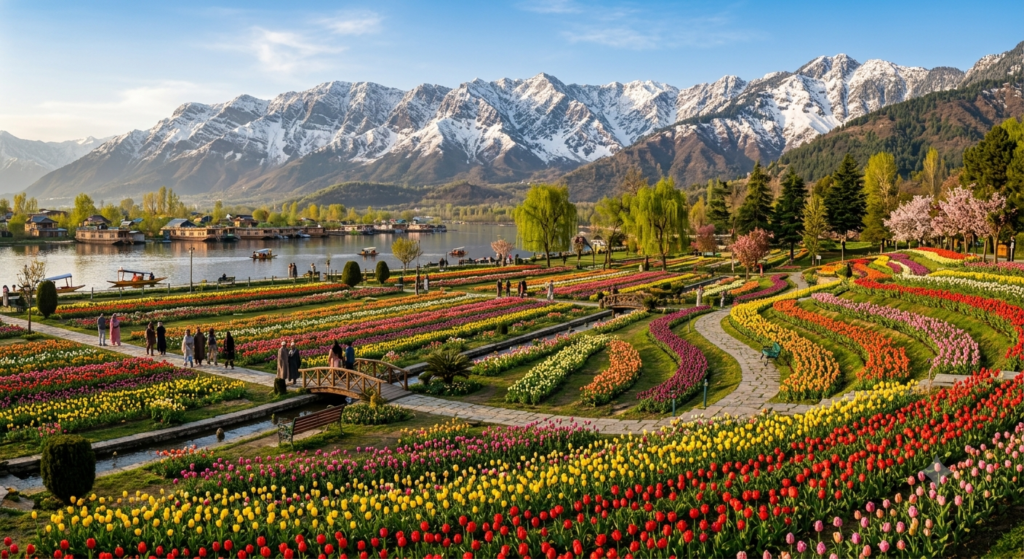
Kashmir Tulip Garden travel guide takes you to one of India’s most breathtaking spring destinations, where millions of tulips transform the foothills of the majestic Zabarwan Range into an unforgettable sea of vibrant colors. Officially known as the Indira Gandhi Memorial Tulip Garden, this extraordinary attraction in Srinagar is celebrated as Asia’s Largest Tulip Garden, drawing nature lovers, photographers, honeymooners, and travelers from around the world every spring.
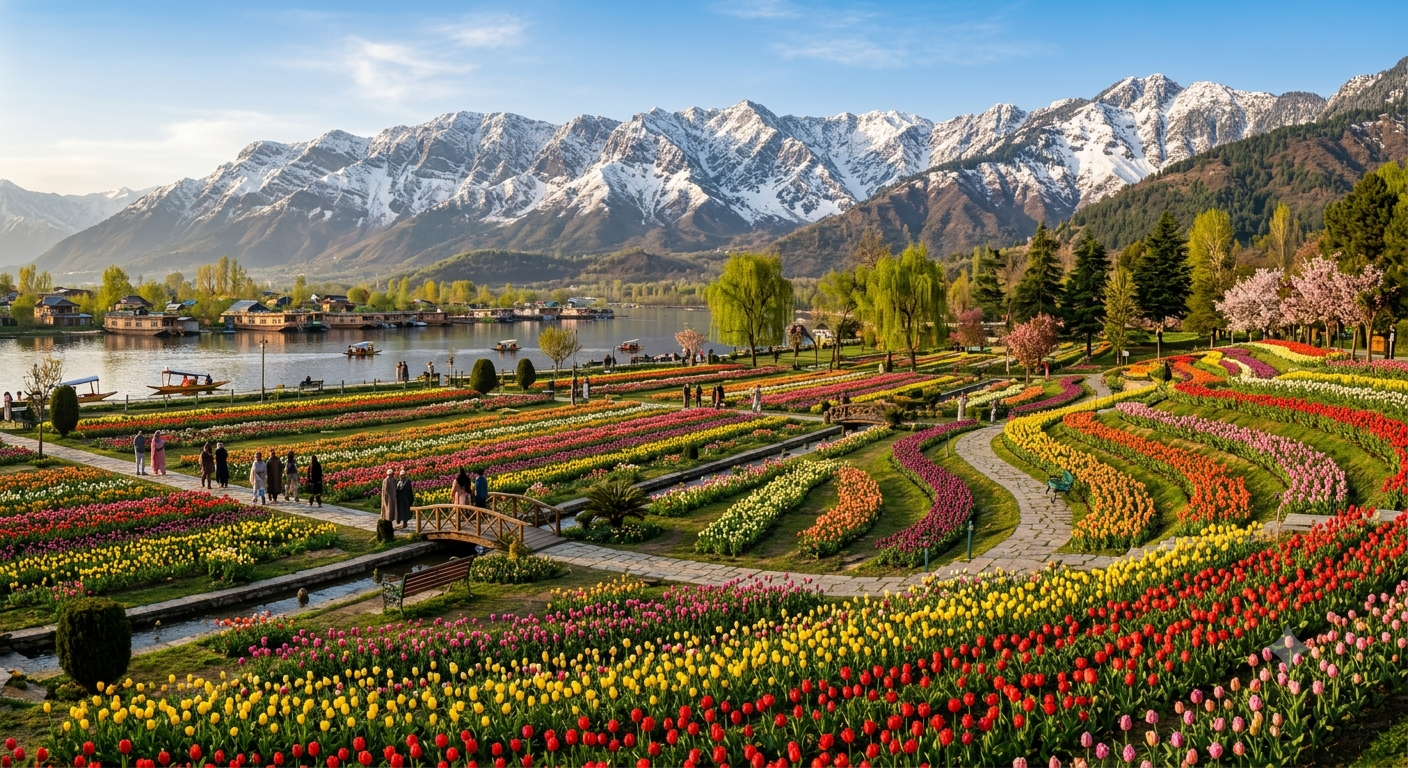
Spread across nearly 30 hectares, the garden showcases more than 1.5 million blooming tulips representing over 60 stunning varieties, creating a spectacular floral display against the backdrop of snow-capped Himalayan peaks and the tranquil waters of Dal Lake. Every year, the annual Kashmir Tulip Festival marks the arrival of spring, celebrating not only the blossoms but also the rich culture, handicrafts, music, and hospitality of Kashmir.
Whether you dream of walking through endless rows of colorful tulips, capturing postcard-perfect landscapes, or exploring the timeless beauty of Srinagar, this guide covers everything you need to plan an unforgettable journey.
Why This Kashmir Tulip Garden Travel Guide Should Be on Every Traveler’s Bucket List
Few destinations celebrate the arrival of spring as spectacularly as the Kashmir Tulip Garden. Unlike permanent botanical gardens, this floral paradise exists for only a few weeks each year, making every visit a truly exclusive experience.
The colorful terraces, fresh mountain air, panoramic Himalayan scenery, and the peaceful ambiance of Dal Lake combine to create one of the most picturesque landscapes in Asia. It is no surprise that photographers, travel influencers, and nature enthusiasts eagerly await the blooming season each year.
Beyond its natural beauty, the Tulip Garden symbolizes Kashmir’s resilience and commitment to sustainable tourism, attracting visitors who wish to experience the region’s vibrant culture alongside its breathtaking landscapes.
Asia’s Largest Tulip Garden
The Indira Gandhi Memorial Tulip Garden is recognized as the largest tulip garden in Asia. Established in 2007 to promote tourism during spring, it has grown into one of India’s most iconic seasonal attractions.
The garden features meticulously landscaped terraces, each displaying tulips in unique colors and patterns. Walking through these floral avenues feels like stepping into a living painting, with every turn offering a new perspective of blooming flowers framed by towering mountains.
A Symphony of Colors
From brilliant reds and vibrant yellows to delicate pinks, elegant whites, rich purples, and striking orange hues, the garden showcases an extraordinary spectrum of colors.
The carefully planned floral arrangements create mesmerizing patterns that change as visitors move through the terraces, making every pathway a photographer’s delight.
Why Every Visit Feels Unique
No two visits to the Tulip Garden are exactly the same. Weather conditions, bloom timings, and different tulip varieties ensure that the landscape evolves throughout the season. Early visitors witness the first blossoms opening, while peak-season travelers experience the garden at its most spectacular.
History of the Indira Gandhi Memorial Tulip Garden
The Tulip Garden was inaugurated in 2007 with a vision to expand Kashmir’s tourism season beyond its traditional summer and winter peaks. Inspired by the world-famous tulip gardens of the Netherlands, the Jammu & Kashmir Government developed this floral attraction on the foothills of the Zabarwan Range overlooking Dal Lake.
Over the years, the garden has continuously expanded in both size and popularity. Today, it welcomes hundreds of thousands of visitors annually and stands as one of India’s most photographed destinations during spring.
Its success has also inspired the annual Tulip Festival, which celebrates Kashmir’s rich cultural heritage through traditional music, dance, handicrafts, local cuisine, and floral exhibitions.
The Annual Tulip Festival
The Kashmir Tulip Festival is more than just a flower exhibition—it is a celebration of the region’s culture and hospitality.
During the festival, visitors can enjoy:
- Traditional Kashmiri folk music
- Local handicraft exhibitions
- Authentic Kashmiri cuisine
- Cultural dance performances
- Photography contests
- Artisan markets
- Guided garden tours
The festival attracts travelers from across India and around the world, making it one of the highlights of Kashmir’s tourism calendar.
Explore the Spectacular Floral Displays
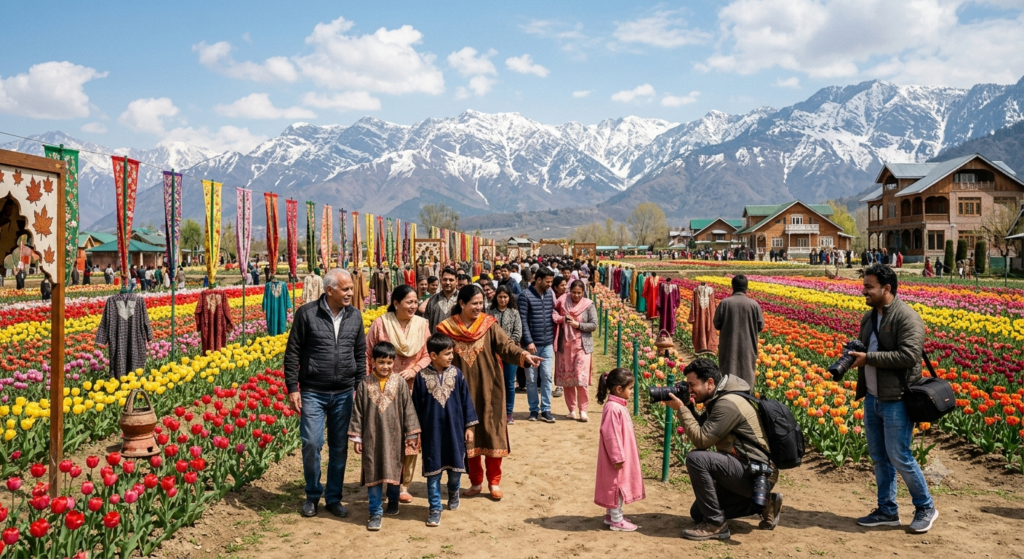
The garden features more than 60 varieties of tulips, carefully arranged across gently sloping terraces to maximize visual impact. Each variety blooms at slightly different times, ensuring that the display remains vibrant throughout the flowering season.
Visitors will encounter:
Triumph Tulips
Known for their classic cup-shaped blooms and vibrant colors, Triumph Tulips are among the most photographed varieties in the garden.
Darwin Hybrid Tulips
These tall, elegant tulips produce large blossoms and are celebrated for their brilliant reds, oranges, and yellows.
Parrot Tulips
Parrot Tulips feature uniquely ruffled petals with dramatic color combinations, making them favorites among flower enthusiasts.
Lily-Flowering Tulips
Characterized by their graceful pointed petals, these tulips add elegance and sophistication to the floral displays.
Best Time to Visit Kashmir Tulip Garden
Timing is crucial when planning your visit because the garden remains open only during the blooming season.
Late March
This marks the beginning of the blooming season. Early visitors enjoy fresh blossoms, pleasant weather, and relatively fewer crowds.
Early April
This is considered the peak blooming period, when nearly every terrace is covered in colorful tulips. Photographers and travel enthusiasts consider this the ideal time to visit.
Mid-April
While some tulips begin to fade, many varieties continue blooming. This period is excellent for combining the Tulip Garden with visits to Srinagar’s famous Mughal Gardens.
Weather During Tulip Season
Spring temperatures in Srinagar generally range from 10°C to 20°C, creating comfortable conditions for sightseeing, photography, and leisurely walks through the garden.
Top Attractions Near the Kashmir Tulip Garden
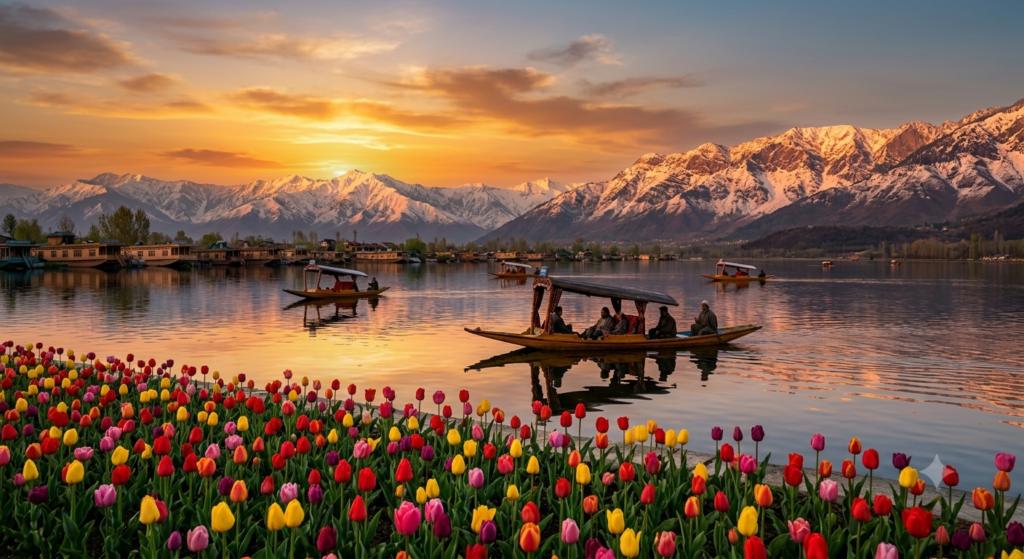
While the Tulip Garden is undoubtedly the highlight of spring in Srinagar, its location makes it the perfect starting point for exploring some of Kashmir’s most iconic attractions. Most of these destinations are within a 15–30-minute drive, allowing travelers to experience multiple landmarks in a single day.
Dal Lake
No visit to Srinagar is complete without experiencing the legendary Dal Lake. Often called the “Jewel of Srinagar,” the lake is famous for its colorful Shikara rides, floating gardens, houseboats, and breathtaking Himalayan reflections.
A sunrise or sunset Shikara ride offers one of the most peaceful experiences in Kashmir, while the floating vegetable market provides a glimpse into local life that has remained unchanged for generations.
Travel Tip: Plan your Shikara ride during the golden hour for the most spectacular photographs.
Nishat Bagh
Located on the eastern shores of Dal Lake, Nishat Bagh is one of Kashmir’s largest and most beautiful Mughal gardens. Built in 1633, the garden features cascading fountains, beautifully manicured lawns, and terraces offering panoramic views of Dal Lake.
Spring visitors enjoy a stunning combination of blooming flowers and snow-covered mountains, making Nishat Bagh an ideal companion to the Tulip Garden.
Shalimar Bagh
Commissioned by Mughal Emperor Jahangir for his beloved wife Nur Jahan, Shalimar Bagh represents the elegance of Mughal landscape architecture.
Its symmetrical design, flowing water channels, ancient Chinar trees, and colorful flower beds create an atmosphere of timeless beauty.
Chashme Shahi
Meaning “Royal Spring,” Chashme Shahi is renowned for its natural freshwater spring believed to have medicinal properties.
The terraced garden is smaller than Nishat Bagh but offers magnificent views of Dal Lake and the surrounding valley.
Pari Mahal
Perched high above Srinagar, Pari Mahal is a historic terraced garden and observatory offering one of the finest panoramic views of the city.
During spring, visitors enjoy breathtaking vistas of Dal Lake framed by blooming flowers and snow-capped mountains.
Suggested 5-Day Kashmir Spring Itinerary
Day 1 – Arrival in Srinagar
- Arrive at Srinagar Airport.
- Check into your hotel or traditional houseboat.
- Evening Shikara ride on Dal Lake.
- Explore the Boulevard Road promenade.
Day 2 – Tulip Garden & Mughal Gardens
- Visit the Indira Gandhi Memorial Tulip Garden.
- Explore Nishat Bagh.
- Visit Shalimar Bagh.
- Sunset at Pari Mahal.
Day 3 – Sonamarg Excursion
Take a scenic drive to Sonamarg, famous for:
- Snow-covered mountains
- Sindh River
- Glacier viewpoints
- Pony rides
- Alpine meadows
Day 4 – Gulmarg Adventure
Experience:
- Gulmarg Gondola
- Apharwat Peak
- Snow activities (season permitting)
- Pine forests
- Scenic cable car ride
Day 5 – Shopping & Departure
Before leaving Srinagar, shop for:
- Pashmina shawls
- Kashmiri saffron
- Dry fruits
- Walnut wood carvings
- Papier-mâché handicrafts
How to Reach Kashmir Tulip Garden
By Air
The nearest airport is Srinagar International Airport (SXR), approximately 17 km from the Tulip Garden. Regular flights connect Srinagar with Delhi, Mumbai, Bengaluru, Hyderabad, Chennai, Kolkata, and other major Indian cities.
By Train
The nearest operational railway station is Srinagar Railway Station for regional connectivity. Many travelers also arrive via Jammu Tawi Railway Station, followed by a scenic road journey.
By Road
Srinagar is connected through National Highway 44. Travelers can also hire taxis or join organized tours from Jammu.
Entry Fee & Timings
(Always verify the latest details before traveling, as they may change seasonally.)
Entry Fee (Typical)
- Adults: ₹75–₹100
- Children: ₹30–₹40
Timings
- 9:00 AM – 7:00 PM (during tulip season)
Local Food You Must Try
A trip to Kashmir is incomplete without savoring its rich culinary heritage.
Rogan Josh
Tender lamb cooked in aromatic Kashmiri spices.
Gushtaba
Traditional meatballs served in creamy yogurt gravy.
Dum Aloo
A flavorful vegetarian delicacy prepared with baby potatoes.
Kashmiri Kahwa
A fragrant green tea infused with saffron, cinnamon, almonds, and cardamom.
Modur Pulao
Sweet saffron rice garnished with dry fruits.
Noon Chai
Traditional pink salted tea unique to Kashmir.
Photography Tips
Capture the garden at its absolute best with these recommendations:
- Visit before 10 AM for soft natural light.
- Use wide-angle lenses for panoramic tulip fields.
- Include the Zabarwan Mountains in your composition.
- Capture reflections in Dal Lake during sunset.
- Respect barriers and never enter flower beds.
Responsible Travel Tips
The Tulip Garden is a protected floral attraction. Help preserve its beauty by following responsible travel practices.
- Do not pluck flowers.
- Stay on designated walking paths.
- Dispose of waste responsibly.
- Carry reusable water bottles.
- Support local artisans and small businesses.
- Respect local customs and traditions.
Responsible tourism ensures future generations can enjoy this spectacular destination.
Packing Checklist
✔ Comfortable walking shoes
✔ Light woollen jacket
✔ Sunglasses
✔ Sunscreen
✔ Power bank
✔ Camera with extra batteries
✔ Rain jacket (weather can change quickly)
✔ Personal medications
✔ Reusable water bottle
Frequently Asked Questions (FAQs)
Is the Kashmir Tulip Garden open throughout the year?
No. It opens only during the annual blooming season, usually from late March to mid-April.
How long should I spend at the Tulip Garden?
Plan for approximately 2–3 hours to fully explore the terraces and enjoy photography.
Is photography allowed?
Yes. Photography is encouraged, but visitors should avoid stepping into flower beds.
Which is the best time to visit?
The first week of April generally offers peak bloom and the most vibrant floral displays.
Can families with children visit?
Absolutely. The garden is family-friendly and offers a safe, enjoyable environment for visitors of all ages.
Are food facilities available?
Yes. During the Tulip Festival, visitors can enjoy local Kashmiri food stalls and refreshments.
Conclusion
The Kashmir Tulip Garden travel guide showcases one of India’s most extraordinary seasonal experiences. Every spring, millions of tulips transform Srinagar into a breathtaking canvas of color, framed by the majestic Himalayas and the tranquil waters of Dal Lake.
Beyond its floral beauty, the garden celebrates Kashmir’s rich culture, warm hospitality, and enduring connection with nature. Whether you’re planning a romantic getaway, a family vacation, or a photography expedition, the Indira Gandhi Memorial Tulip Garden promises memories that will last a lifetime.
Spring arrives only once each year—but the beauty of Kashmir during tulip season stays with every traveler forever.
🌍 Explore More
“Every season reveals a different masterpiece. Let BlueJay Explorations help you discover extraordinary destinations across India and around the world—one unforgettable journey at a time.”
🌐 Official Website: BlueJayExplorations.com
📖 Read more travel stories: TravelAnecdotes.com
📸 Follow the journey on Instagram
👍 Follow us on Facebook
🎥 Watch cinematic travel stories on YouTube