Pushkar Camel Fair Travel Guide: Rajasthan’s Iconic Desert Festival Experience
There are some travel experiences that you don’t simply watch — you step into them.
The Pushkar Camel Fair, or Pushkar Mela, is one of Rajasthan’s most visually striking annual celebrations, bringing together camels, livestock traders, pilgrims, musicians, artisans, travellers and thousands of curious visitors in and around the desert town of Pushkar.
For several days, the landscape around Pushkar transforms into a colourful meeting place where traditional livestock trading exists alongside cultural performances, competitions, handicrafts, food and pilgrimage.
And then there is Pushkar itself — a sacred town centred around Pushkar Lake, with temples, ghats, narrow streets and a spiritual atmosphere that gives the festival a dimension beyond its famous camel gatherings.
The Rajasthan Tourism Department describes the Pushkar Fair as an annual camel and livestock fair held between October and November, and its official 2026 festival calendar lists the Pushkar Fair from 17–24 November 2026.
If you’re planning to experience Rajasthan during festival season, Pushkar deserves more than a quick stop. It deserves time.
Why Is the Pushkar Camel Fair So Special?
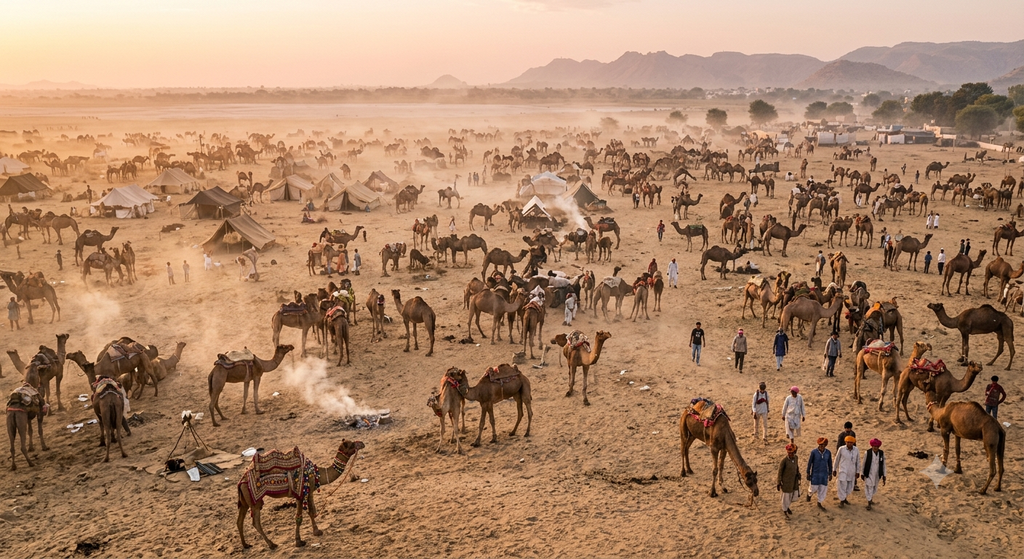
The first thing that catches your attention is the sheer visual character of the fair.
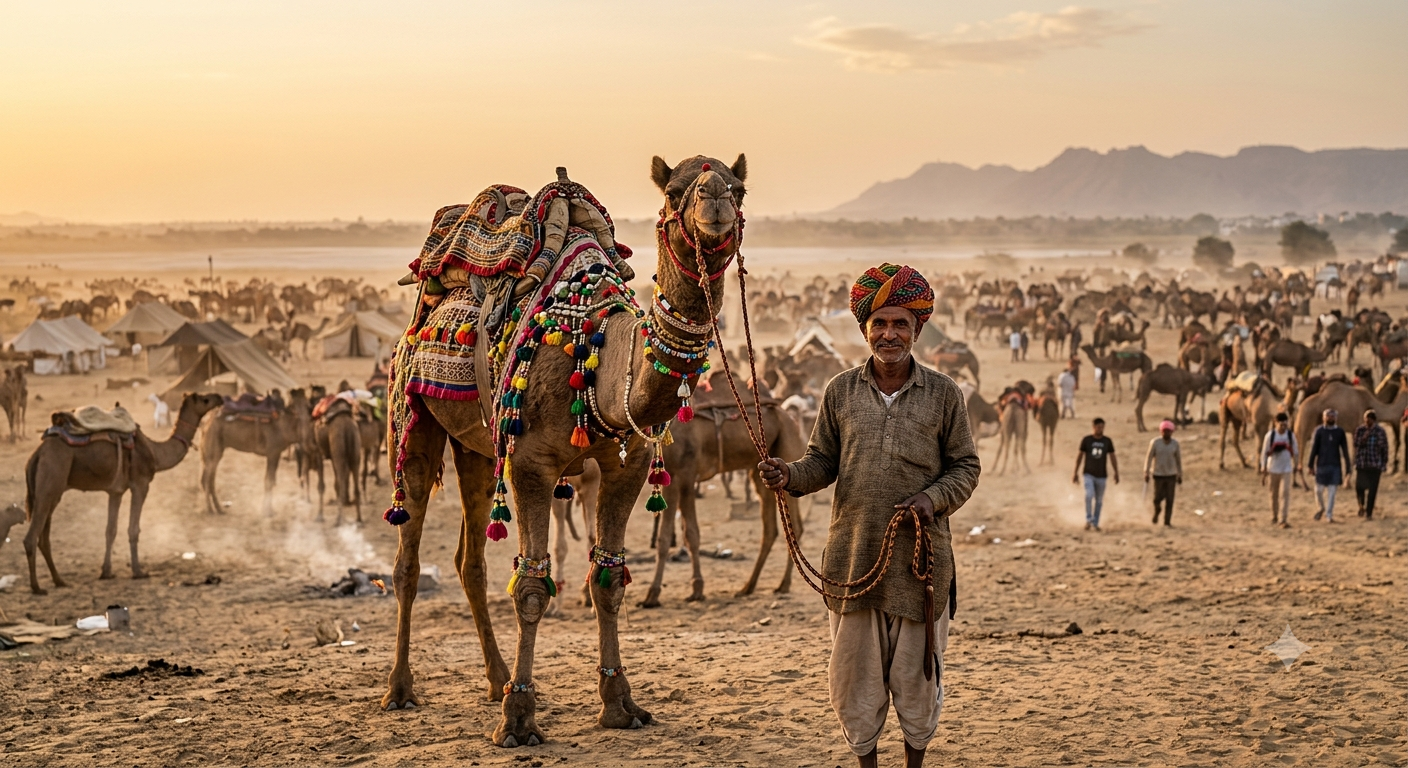
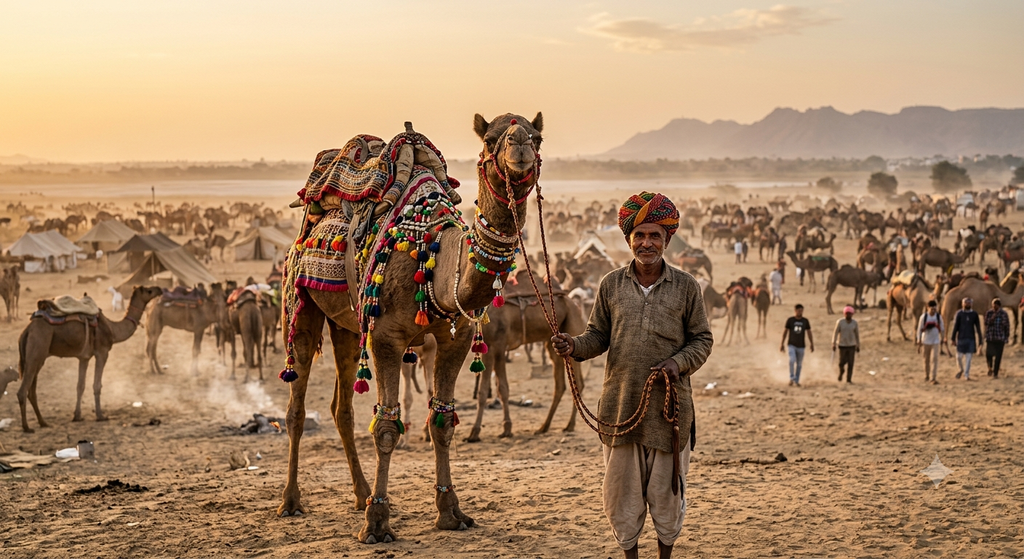
Colourful turbans.
Decorated camels.
Traditional clothing.
Dusty fairgrounds.
Temporary camps.
Music.
Markets.
And the dramatic landscape surrounding Pushkar.
But the Pushkar Camel Fair is much more than a colourful spectacle created for tourists.
At its heart, it is a traditional camel and livestock fair, with traders and breeders bringing animals to Pushkar. Over time, the event has also become a major tourism attraction featuring cultural activities and competitions. Rajasthan Tourism highlights events including camel-related displays and competitions such as matka phod, longest moustache and bridal competitions.
That combination of commerce, culture, pilgrimage and tourism is what makes the Pushkar experience so distinctive.
Pushkar Camel Fair 2026: Dates and What to Know
For travellers planning ahead, the official Rajasthan Tourism 2026 festival calendar lists the Pushkar Fair for 17–24 November 2026.
The exact programme of individual competitions, performances and activities can change from year to year, so travellers should check the official Rajasthan Tourism schedule closer to their travel dates.
The fair traditionally takes place around the Kartik period of the Hindu lunar calendar, culminating around Kartik Purnima, the full-moon day associated with an important pilgrimage period in Pushkar. Rajasthan Tourism describes the fair as having both a livestock-trading and religious dimension.
Important Planning Tip
Don’t assume that every event happens throughout the entire festival period.
If there is a particular activity you want to see — such as camel competitions, cultural programmes or religious ceremonies — check the year’s official programme before booking your exact dates.
The Story Behind Pushkar Mela
Pushkar has long been associated with pilgrimage and the sacred Pushkar Lake.
The fair’s religious significance is closely connected with Kartik Purnima, when pilgrims visit Pushkar and take a ritual bath in the lake. Rajasthan Tourism notes that Pushkar is an important Hindu pilgrimage destination and connects the Kartik Purnima period with traditions surrounding Lord Brahma and Pushkar Lake.
This creates an interesting contrast.
On one side, you have a busy livestock fair filled with camels, traders, competitions and activity.
On the other, you have pilgrims gathering around the ghats of Pushkar Lake in an atmosphere of devotion and ritual.
Experiencing both sides is essential to understanding the destination.
Camels: The Undisputed Stars of the Fair
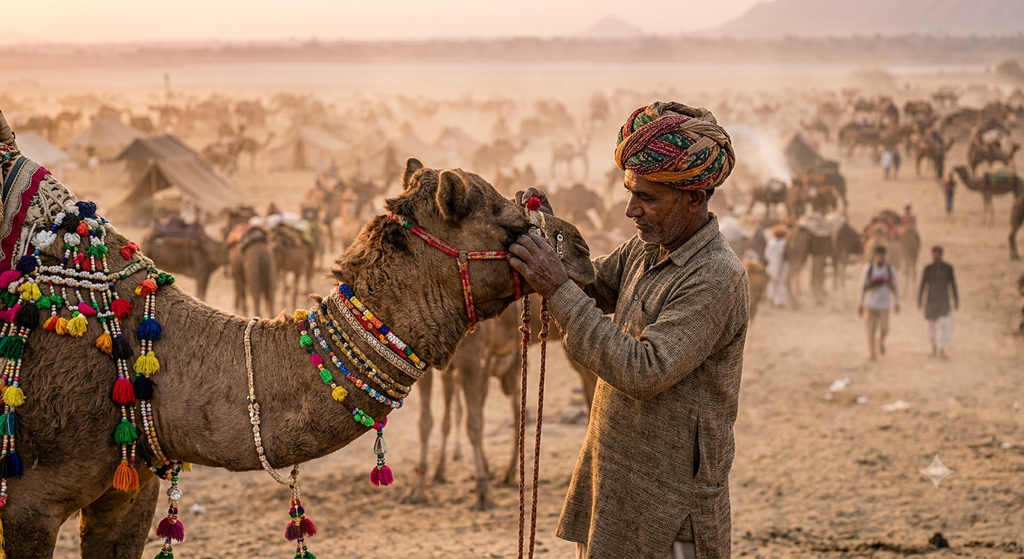
You cannot talk about the Pushkar Camel Fair without talking about the camels.
For generations, camels have played an important role in the life and economy of Rajasthan’s arid regions.
During the fair, camel owners and breeders gather with their animals, creating one of the most distinctive sights associated with Pushkar.
Visitors may see camels being:
- Groomed
- Decorated
- Displayed
- Traded
- Prepared for competitions
- Led through the fairgrounds
- Photographed against the desert landscape
Rajasthan Tourism specifically highlights camel decoration and camel-related activities as part of the Pushkar experience.
For photographers, the visual possibilities are extraordinary.
But remember that these are working animals and part of people’s livelihoods. Photograph respectfully and avoid interfering with handlers or animals.
More Than a Camel Fair
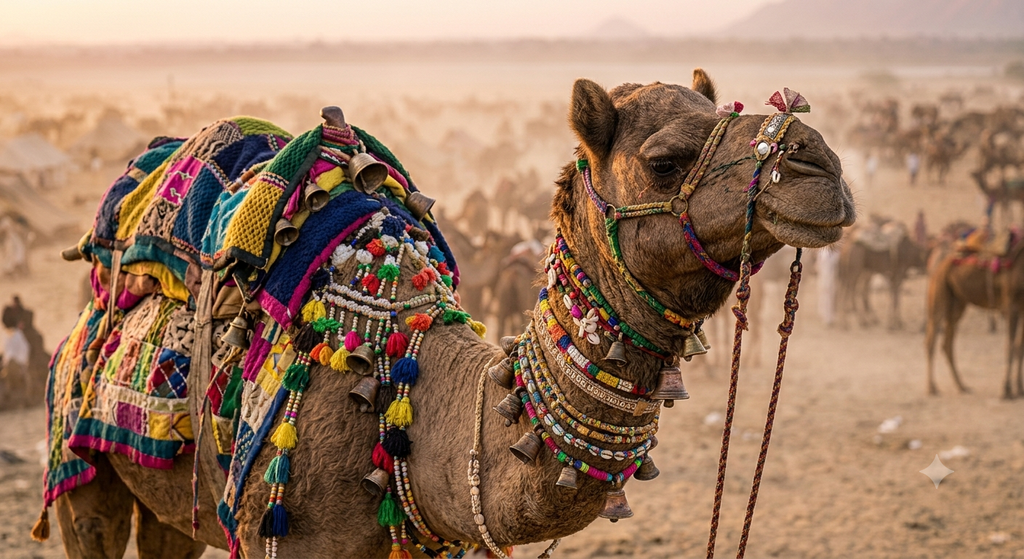
One of the biggest misconceptions about Pushkar is that the entire experience revolves around camels.
It doesn’t.
The fair has developed into a much broader cultural celebration.
Depending on the year’s programme, visitors may encounter:
Traditional Competitions
Rajasthan Tourism highlights events such as:
- Matka phod
- Longest moustache competition
- Bridal competition
- Local games
- Sports and entertainment events
Music and Dance
Traditional music and dance contribute significantly to the atmosphere, particularly during cultural evenings.
Handicrafts
The fair also provides opportunities to discover Rajasthani handicrafts, textiles, jewellery and traditional products.
Food
Pushkar becomes particularly lively during festival season, with food stalls and local eateries offering opportunities to experience Rajasthan’s flavours.
Pushkar Lake: The Spiritual Heart of the Journey
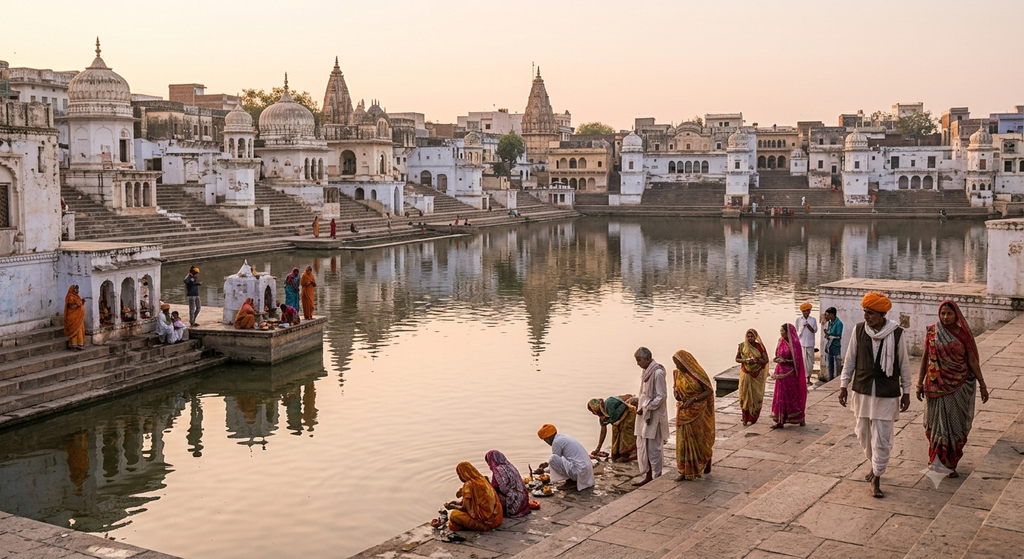
When the energy of the fair becomes overwhelming, walk toward Pushkar Lake.
The atmosphere changes almost immediately.
The noise of the fair gives way to temple bells, prayers, pilgrims and the gentle movement of people around the ghats.
The lake is one of the most important reasons Pushkar is considered a pilgrimage destination.
During the Kartik period, pilgrims gather here for ritual bathing and religious observances.
For travellers, this is an important reminder:
Pushkar is not simply a festival destination.
It is a living spiritual town.
Approach religious spaces with sensitivity, follow local instructions and ask before photographing people engaged in worship.
Brahma Temple and the Sacred Side of Pushkar
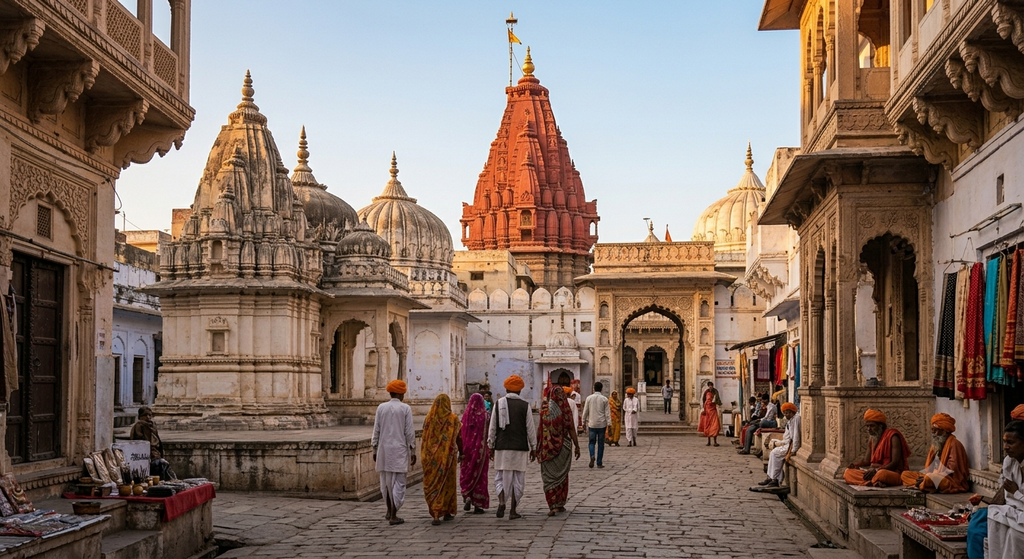
Pushkar is closely associated with Lord Brahma, and the town is home to the famous Brahma Temple.
A visit to Pushkar during the Camel Fair is therefore an opportunity to combine:
Festival + Pilgrimage + Culture + Desert Landscape
rather than treating the camel fair as an isolated event.
The contrast between the colourful fairgrounds and the quieter spiritual spaces is one of the most rewarding aspects of the journey.
The Colours of Rajasthan
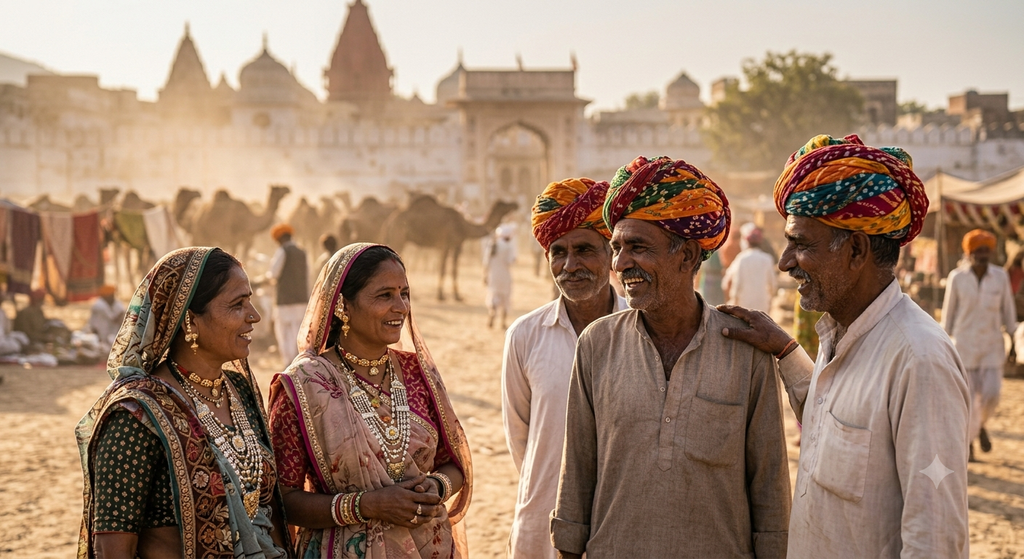
If you’ve ever imagined Rajasthan through its colours, Pushkar during festival season brings that image to life.
Bright turbans.
Mirror-work textiles.
Embroidered clothing.
Colourful jewellery.
Decorated camels.
Traditional handicrafts.
Earthy desert tones.
Against the pale landscape surrounding Pushkar, even ordinary moments can look cinematic.
This is one reason the fair has become particularly popular with photographers and visual storytellers.
Pushkar Camel Fair for Photography
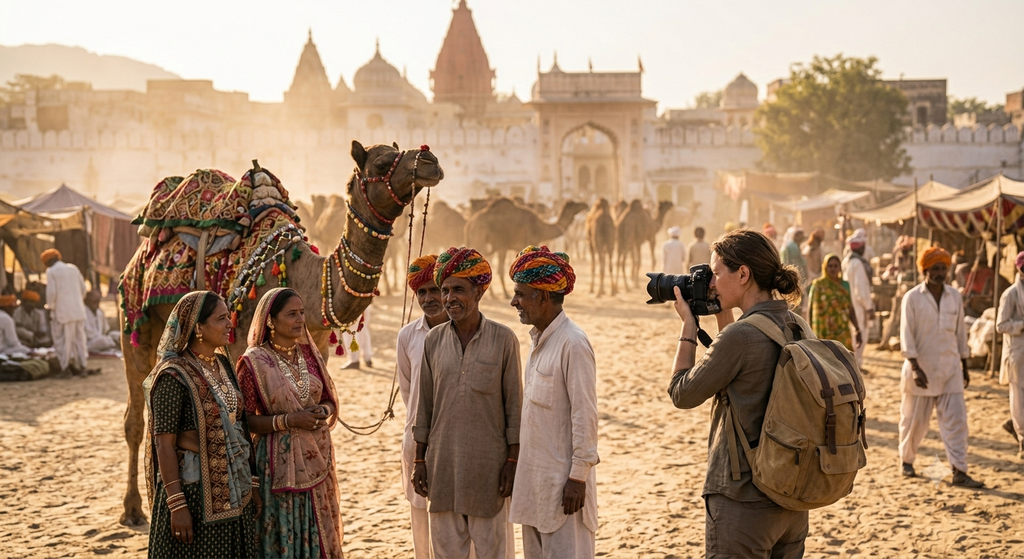
For photographers, Pushkar offers an unusually rich mixture of subjects.
Best Photography Opportunities
Early morning
Soft light, quieter surroundings and animal activity.
Camel grounds
Portraits, animal details and traditional equipment.
Fairground
Competitions, traders and cultural activity.
Pushkar Lake
Reflections, ghats and devotional scenes.
Golden hour
Warm light across the desert landscape.
Blue hour
Pushkar’s temples, lake and surrounding streets can take on a completely different atmosphere.
Photography Etiquette
Always remember that a cultural festival is not a human zoo.
Ask before making close-up portraits.
Don’t block rituals.
Don’t touch animals without permission.
Don’t enter restricted spaces for photographs.
And don’t turn a religious ceremony into a staged photo opportunity.
The best travel photographs often happen when you observe first and photograph second.
Best Time to Visit the Pushkar Camel Fair
If your primary goal is to experience the fair itself, visit during the officially scheduled festival period.
For 2026, Rajasthan Tourism lists the Pushkar Fair for 17–24 November.
Early Festival Period
Good for travellers interested in experiencing the livestock-fair atmosphere and seeing the fairgrounds become active.
Around Kartik Purnima
The religious side of Pushkar becomes particularly significant, with pilgrims gathering around the sacred lake.
Festival Ending
The atmosphere can become especially vibrant around the concluding religious celebrations.
Important
Because individual event schedules can change, check the official Rajasthan Tourism programme before finalising your itinerary.
How to Reach Pushkar
Pushkar is located in Rajasthan near Ajmer, making Ajmer an important gateway for travellers.
By Air
The nearest major aviation gateway commonly used by travellers is Jaipur.
From Jaipur, Pushkar can be reached by road.
By Train
Ajmer is the major railway gateway for Pushkar.
From Ajmer, continue by road to Pushkar.
By Road
Pushkar is well connected with Ajmer and other parts of Rajasthan.
Road travel is particularly convenient if you’re combining the fair with destinations such as:
- Jaipur
- Ajmer
- Jodhpur
- Udaipur
- Jaisalmer
For current transport schedules and road conditions, check the relevant transport provider before departure.
How Many Days Do You Need for Pushkar Camel Fair?
For a quick festival experience:
2 days can work.
For a more relaxed experience:
3 days is better.
For photographers and travellers who want to explore Pushkar beyond the fair:
3–4 days gives you much more breathing room.
The mistake is trying to arrive, photograph the camels, visit the lake and leave within a few hours.
Pushkar rewards slow travel.
Suggested 3-Day Pushkar Camel Fair Itinerary
Day 1 — Enter the Festival
Arrive in Pushkar and settle into your accommodation.
Spend the afternoon exploring:
- Fairgrounds
- Camel areas
- Local markets
- Handicraft stalls
In the evening, experience the cultural atmosphere and explore Pushkar’s streets.
Day 2 — Festival + Pushkar Lake
Start early.
Watch the fairgrounds come alive before the biggest crowds arrive.
Spend time around:
- Camel grounds
- Competitions
- Local traders
- Cultural performances
Later, visit:
Pushkar Lake
Explore the ghats and temples respectfully.
End the day with sunset around the town.
Day 3 — Culture + Slow Exploration
Use your final morning to explore:
- Brahma Temple
- Local bazaars
- Handicraft shops
- Cafés and traditional eateries
- Quiet areas around the lake
If your schedule permits, combine Pushkar with Ajmer before continuing your Rajasthan journey.
Desert Camping During Pushkar Fair
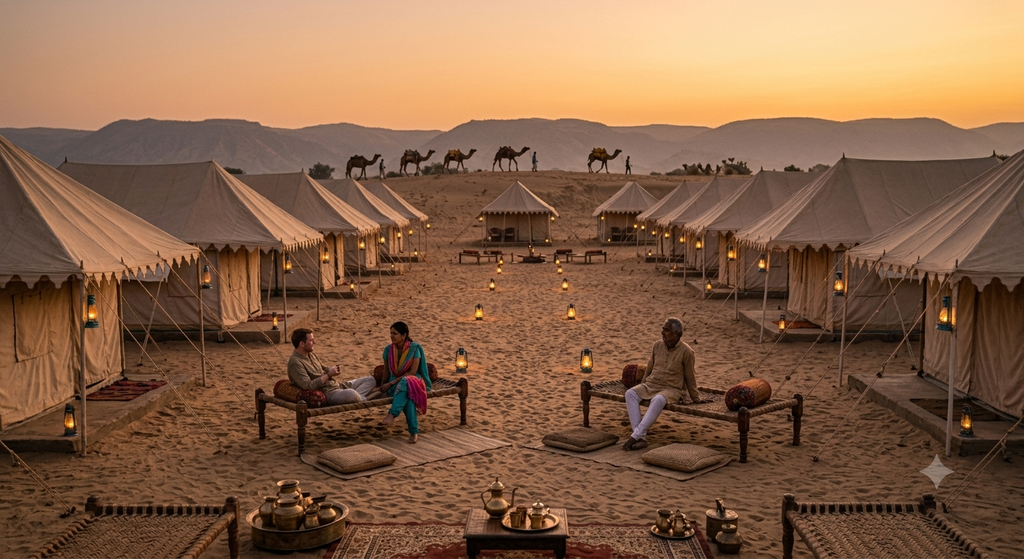
Camping is one of the experiences associated with Pushkar during festival season.
Temporary and organised camps can offer travellers a more immersive way to experience the desert environment.
Depending on the property, facilities may range from basic tented accommodation to more comfortable luxury-style camps.
What to Consider
Before booking, check:
- Distance from the fairground
- Transport arrangements
- Bathroom facilities
- Heating during cold nights
- Meals
- Electricity
- Cancellation policy
- Noise levels
- Environmental practices
Don’t book a camp simply because the photographs look spectacular.
Location and logistics matter enormously during a busy festival.
What to Eat in Pushkar
Pushkar is a great place to explore Rajasthan’s vegetarian food culture.
Depending on the restaurant and season, travellers can look for dishes and snacks such as:
- Dal baati churma
- Kachori
- Mirchi-based snacks
- Pakoras
- Malpua
- Lassi
- Chaat
- Traditional Rajasthani sweets
Rajasthan Tourism’s own travel features have highlighted local food experiences during the Pushkar Fair.
A good strategy is to try both:
traditional Rajasthani food + small local eateries
rather than limiting yourself to festival stalls.
Shopping at Pushkar Fair
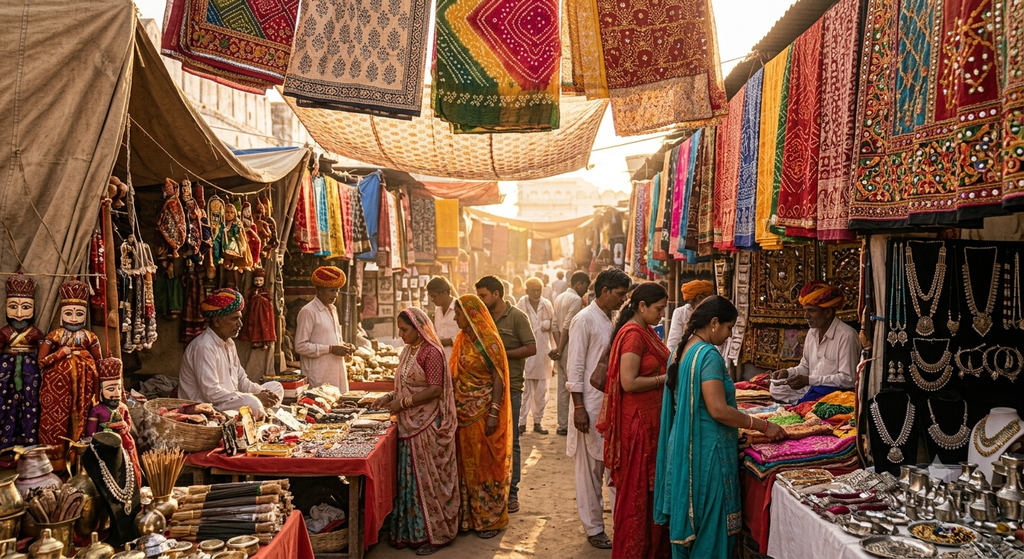
The festival provides plenty of opportunities to browse traditional crafts.
Look for:
- Textiles
- Embroidery
- Jewellery
- Leather goods
- Decorative items
- Traditional clothing
- Handcrafted souvenirs
Rajasthan Tourism highlights the handicrafts bazaar as an important part of the Pushkar experience.
Shopping Tip
Don’t buy simply because something looks “ethnic.”
Ask about the material, craftsmanship and origin when possible.
A meaningful souvenir is one that carries a story.
What to Wear
November can bring warm days and noticeably cooler mornings and evenings.
Pack:
- Comfortable walking shoes
- Light cotton clothing
- A warm layer
- Scarf or shawl
- Sunglasses
- Hat/cap
- Sunscreen
- Comfortable trousers
- Modest clothing for temples
- Light jacket for evenings
For photography, neutral clothing can also be useful if you’re planning to spend long periods around animals and dusty fairgrounds.
What to Pack for the Pushkar Camel Fair
Essentials
- Comfortable footwear
- Reusable water bottle
- Sunscreen
- Sunglasses
- Hat
- Power bank
- Phone
- Camera
- Extra memory cards
- Hand sanitiser
- Small daypack
- Light jacket
- Personal medicines
For Photographers
- Extra batteries
- Telephoto lens
- Wide-angle lens
- Lens cloth
- Dust protection
- Extra storage
The fairgrounds can be dusty, so protect your camera equipment accordingly.
Is Pushkar Camel Fair Suitable for Families?
Yes, but expectations matter.
The fair can be:
- Busy
- Dusty
- Noisy
- Crowded
- Physically tiring
Families travelling with children should plan breaks, hydration and shorter walking periods.
Early mornings can be more comfortable than the busiest afternoon periods.
Is Pushkar Camel Fair Good for Solo Travellers?
Pushkar can work very well for solo travellers who enjoy:
- Photography
- Culture
- Food
- Festivals
- Walking
- Meeting other travellers
- Slow travel
However, festival crowds require normal travel awareness.
Keep valuables secure, know your accommodation location and avoid wandering into unfamiliar areas late at night.
Pushkar for Women Travellers
Women travelling independently can experience Pushkar while taking the same practical precautions recommended for any busy tourist destination.
Useful habits include:
- Dress respectfully around religious sites
- Keep valuables secure
- Use trusted transport
- Share your itinerary with someone
- Choose well-reviewed accommodation
- Stay aware in very crowded areas
- Ask before photographing people
The goal is not to travel fearfully, but thoughtfully.
Responsible Travel at the Pushkar Camel Fair
This is especially important.
A major festival involving animals, religious rituals and local communities should be approached with respect.
Around Animals
- Don’t distress or provoke animals for photographs.
- Don’t interfere with handlers.
- Follow designated visitor areas.
- Don’t feed animals without permission.
- Avoid supporting practices that appear harmful.
Around Religious Sites
- Dress appropriately.
- Follow photography restrictions.
- Don’t photograph private rituals without permission.
- Respect bathing areas and sacred spaces.
- Never treat religious activity as entertainment.
Around Local Communities
Remember that the people you photograph are not simply “festival props.”
Ask permission.
Engage respectfully.
Buy from local artisans where possible.
Leave the destination cleaner than you found it.
Pushkar Camel Fair: Travel Experience vs Tourist Spectacle
This distinction matters.
If you arrive expecting a perfectly staged Rajasthan postcard, the real Pushkar may surprise you.
There will be:
- Dust
- Crowds
- Noise
- Traffic
- Commercial activity
- Animal trading
- Religious rituals
- Tourists
- Local communities
And that’s precisely what makes the experience real.
The Pushkar Fair is not a performance created exclusively for visitors.
It is a living event with different meanings for different people.
The traveller’s job is to observe, participate respectfully and understand that complexity.
What Makes Pushkar Different During Fair Season?
Outside the festival period, Pushkar can be a relatively relaxed pilgrimage and tourist town.
During the fair, the scale changes dramatically.
Temporary camps appear.
Livestock arrives.
Traders gather.
Cultural events take place.
Visitors arrive from different parts of India and abroad.
The town becomes a meeting point between rural Rajasthan, pilgrimage and international tourism.
That transformation is one of the most fascinating parts of the experience.
Pushkar Camel Fair and Slow Travel
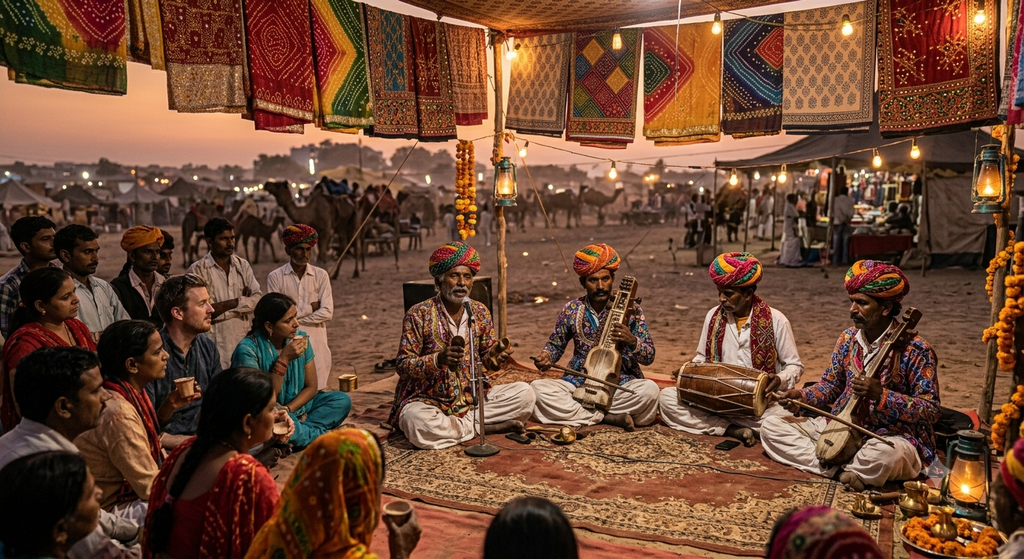
At first glance, the fair seems like the opposite of slow travel.
It’s crowded.
Colourful.
Busy.
Constantly moving.
But the best way to experience it is actually to slow down.
Spend an hour watching traders interact with their animals.
Sit quietly near Pushkar Lake.
Walk through the market without rushing.
Listen to folk musicians.
Watch the light change over the fairgrounds.
Talk to a local artisan.
Not every moment needs to become a photograph.
Some moments are better experienced first.
Places to Explore Around Pushkar
If you have additional time, consider combining the fair with:
Ajmer
The nearby historic city offers a completely different cultural and spiritual experience.
Pushkar Lake
The spiritual centre of the town.
Brahma Temple
One of Pushkar’s most important religious landmarks.
Man Mahal
Rajasthan Tourism describes Man Mahal as a former royal guest house associated with Raja Man Singh I and notes its views of Pushkar Lake and surrounding temples.
Pushkar’s Surrounding Landscape
The hills and desert-edge landscapes around Pushkar offer opportunities for photography, walking and quieter moments away from the busiest fairgrounds.
Pushkar Camel Fair Photography Tips
Shoot Early
Morning light can transform the colours of Rajasthan.
Look Beyond the Obvious
Don’t photograph only camels.
Look for:
- Hands
- Textures
- Turbans
- Jewellery
- Animal ornaments
- Markets
- Shadows
- Footprints
- Desert light
- Everyday interactions
Use Layers
A wide shot can establish the landscape while a telephoto lens isolates details.
Respect People
The most powerful portrait is one made with consent and connection.
Common Mistakes to Avoid
1. Visiting Only for a Few Hours
You’ll see the spectacle but miss the atmosphere.
2. Ignoring Pushkar’s Spiritual Side
The lake and pilgrimage traditions are central to understanding the destination.
3. Photographing Without Permission
Especially close-up portraits.
4. Overplanning Every Hour
Leave room for spontaneous discoveries.
5. Underestimating the Weather
November days can feel pleasant while mornings and nights are cooler.
6. Booking Accommodation Too Late
Festival periods can be busy, so plan ahead.
7. Treating the Fair Like a Theme Park
It’s a real cultural and livestock event, not simply a tourist attraction.
Pushkar Camel Fair Travel Tips
Before you leave:
- Confirm the official festival dates.
- Check the year’s event schedule.
- Book accommodation early.
- Decide whether you want to stay near the fairground or in central Pushkar.
- Carry comfortable walking shoes.
- Protect camera equipment from dust.
- Carry enough water.
- Dress appropriately for temples.
- Ask before photographing people.
- Respect animals.
- Keep some cash available for smaller vendors.
- Leave flexibility in your itinerary.
- Don’t try to see everything in one day.
- Keep valuables secure in crowded areas.
- Check transport arrangements before departure.
A Different Way to Experience Pushkar
Don’t arrive with a checklist that says:
See camel → take photo → visit lake → leave.
Instead:
Arrive early.
Watch the desert wake up.
Listen to the sounds around the fairground.
Notice how traders prepare their animals.
Walk toward the lake.
Observe the pilgrims.
Taste something local.
Talk to an artisan.
Watch the sunset.
Then return to the fairgrounds after dark.
That’s when Pushkar begins to feel less like a destination and more like a story.
Frequently Asked Questions
What is the Pushkar Camel Fair?
The Pushkar Camel Fair, also known as Pushkar Mela, is an annual camel and livestock fair in Pushkar, Rajasthan. It has also developed into a major cultural and tourism event featuring competitions, handicrafts and other activities.
When is the Pushkar Camel Fair 2026?
The official Rajasthan Tourism festival calendar lists the 2026 Pushkar Fair from 17 to 24 November 2026.
Why is Pushkar Camel Fair famous?
It is known for its camel and livestock fair, colourful Rajasthani culture, competitions, handicrafts, pilgrimage traditions and the dramatic atmosphere created around Pushkar during festival season.
Is Pushkar Camel Fair only about camels?
No. Camels are central to the event, but the fair also includes livestock trading, cultural performances, competitions, handicrafts, food and religious activities associated with Pushkar.
What is the best time to visit Pushkar Camel Fair?
For the festival experience itself, visit during the official fair dates. In 2026, those dates are 17–24 November. The religious atmosphere becomes particularly important around Kartik Purnima.
How many days are enough for Pushkar Camel Fair?
Two days can provide a quick experience, while three days is more comfortable. Four days can be worthwhile if you want to explore Pushkar and nearby Ajmer at a slower pace.
Is Pushkar Camel Fair good for photography?
Yes. The combination of camels, traditional clothing, desert landscapes, markets, cultural events and changing light creates many photographic opportunities. Always seek permission for close-up portraits and respect religious spaces.
Can I stay in a desert camp during Pushkar Fair?
Yes. Camping is a popular part of the Pushkar experience, and accommodation options can range from simple tented stays to more comfortable camps. Book early and verify facilities and location.
What should I wear to Pushkar Camel Fair?
Wear comfortable walking shoes and breathable clothing for the daytime, along with a warm layer for cooler mornings and evenings. Modest clothing is advisable when visiting temples and religious sites.
Is Pushkar suitable for a family trip?
Yes, although the fair can be crowded, dusty and tiring. Families should plan hydration, breaks and comfortable walking arrangements.
Can solo travellers visit Pushkar Camel Fair?
Yes. Pushkar can be rewarding for solo travellers interested in culture, photography, food and festivals. Normal precautions are advisable in crowded areas.
Final Thoughts: Why Pushkar Camel Fair Belongs on Your Rajasthan Journey
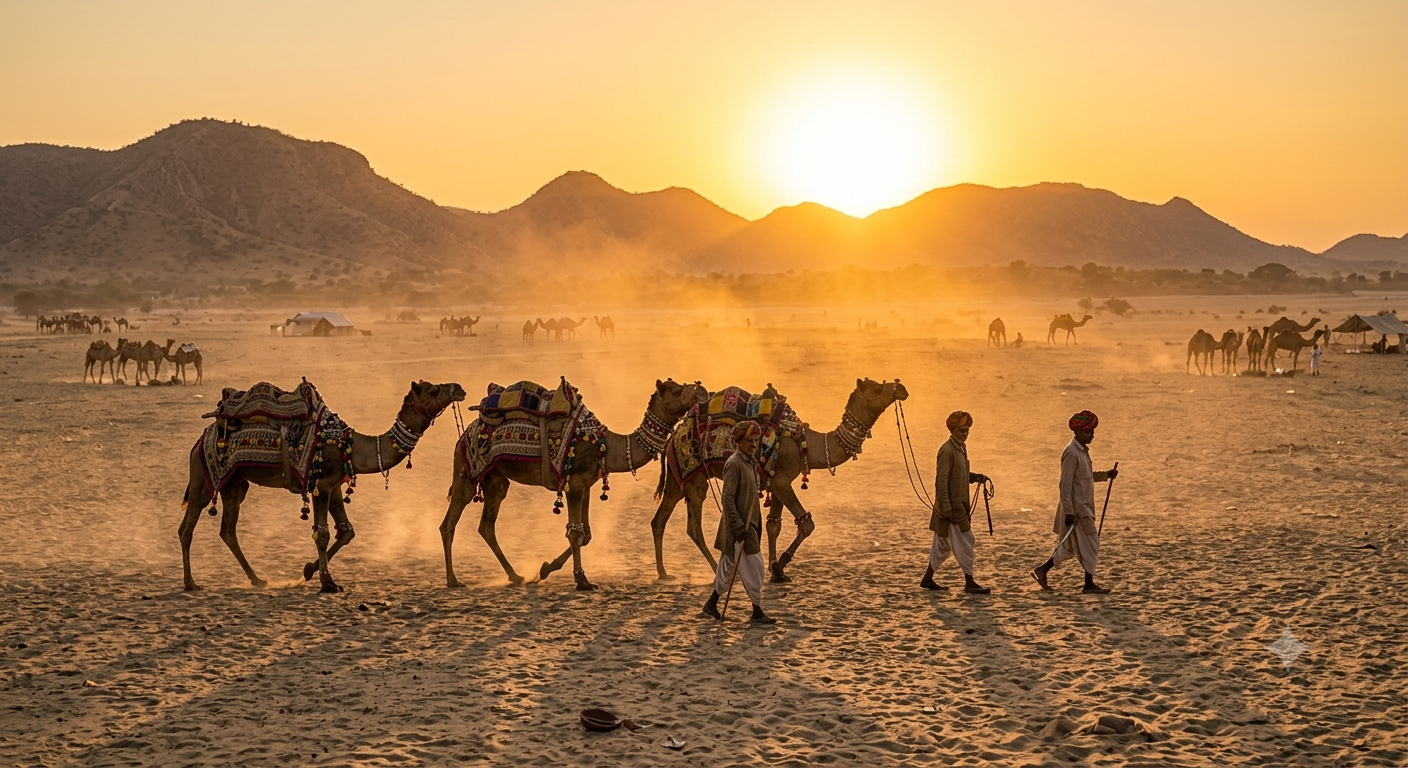
The Pushkar Camel Fair is easy to describe with photographs.
Camels against a golden landscape.
Colourful turbans.
Traditional jewellery.
Dust glowing in the afternoon light.
A sacred lake surrounded by pilgrims.
But photographs only capture the surface.
The real experience is found in the details — the conversations between traders, the quiet moments beside Pushkar Lake, the sounds of folk music drifting through the evening, the smell of local food, the movement of animals across the fairgrounds and the changing rhythm of a town transformed by festival season.
Pushkar is where Rajasthan’s rural traditions, spiritual heritage, desert landscapes and modern travel culture meet.
And perhaps that’s why the experience stays with you.
You don’t simply attend the Pushkar Camel Fair.
You enter a living chapter of Rajasthan.
🌍 Explore More
If Rajasthan is calling, don’t stop at Pushkar.
Explore more stories of India’s festivals, cultural traditions, seasonal landscapes and unforgettable travel experiences through Travel Anecdotes by BlueJay Explorations.
From sacred journeys to colourful festivals and remote landscapes, every destination has a story waiting to be discovered.
🌍 Explore More: BlueJay Explorations
📖 Read more travel stories: TravelAnecdotes.com
📸 Follow the journey on Instagram
👍 Follow us on Facebook
🎥 Watch cinematic travel stories on YouTube