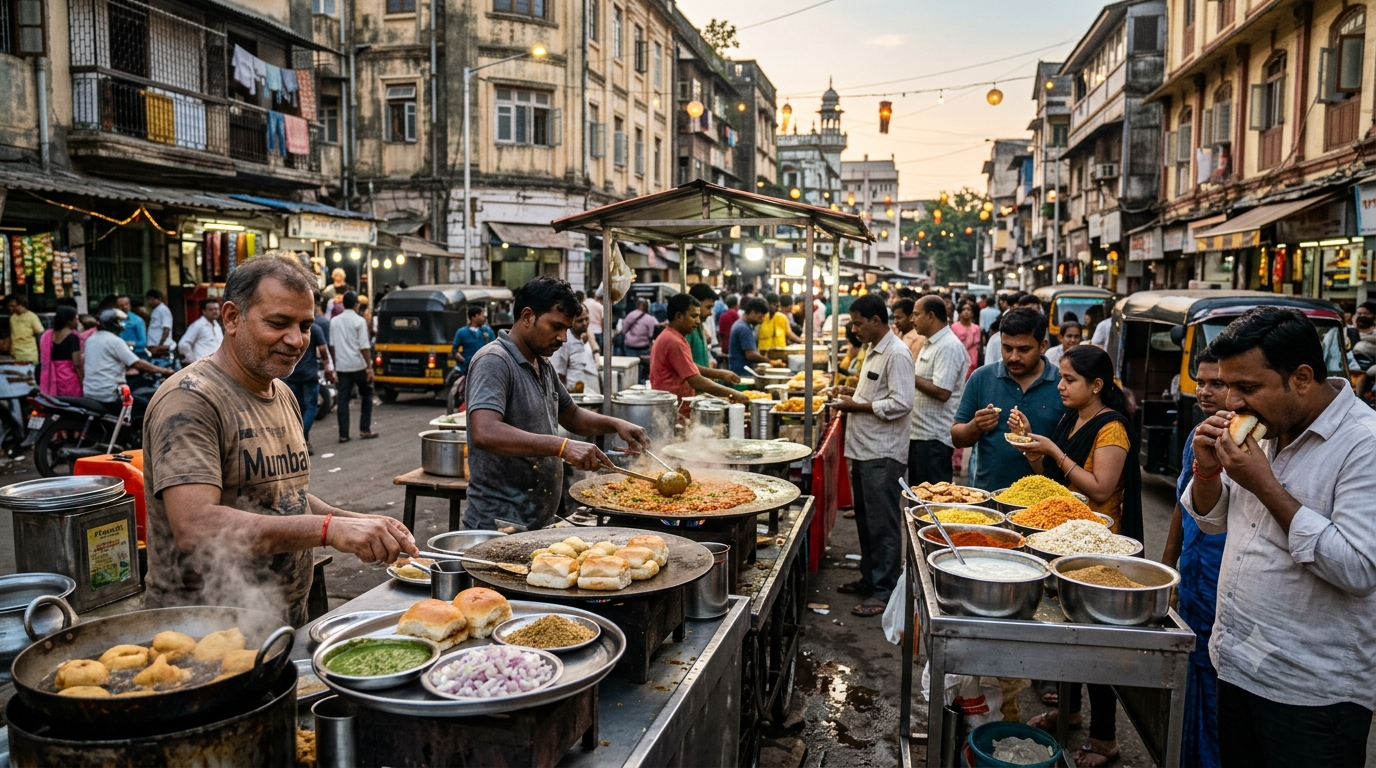
Mumbai Street Food Guide: A Delicious Journey Through the City of Dreams
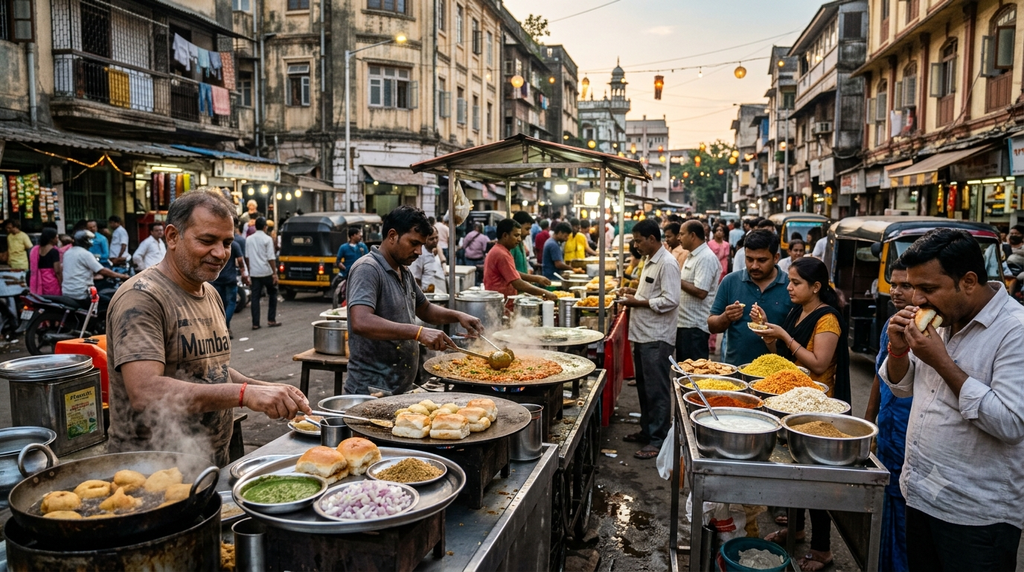
Mumbai is a city you don’t simply visit.
You taste it.
You taste it in the first hot cup of chai in the morning, in the crackle of a vada pav wrapper at a busy street corner, in the buttery aroma of pav bhaji drifting through the evening air, and in the sharp, sweet, spicy flavours of chaat being assembled in seconds.
Food in Mumbai is not separated from everyday life. It moves with the city.
It appears outside railway stations, in neighbourhood markets, beside beaches, along crowded lanes and in small stalls where generations of vendors have perfected recipes that locals return to again and again.
For a traveller, exploring Mumbai street food is therefore more than finding something delicious to eat. It is a way of experiencing the city’s neighbourhoods, communities, rhythms and memories.
This Mumbai street food guide takes you through the flavours that have become part of Mumbai’s identity — from vada pav and pav bhaji to chaat, misal pav, seafood and the vibrant food streets that come alive after sunset.
So come hungry.
Mumbai has a lot to say.
And it often says it through food.
Why Mumbai Is Best Experienced Through Food
Mumbai can feel overwhelming at first.
There are trains rushing through stations, taxis moving between traffic, office workers crossing roads, vendors calling out to customers and thousands of people moving through the city at almost every hour.
Yet food creates little pauses within all that movement.
A group of friends may gather around a plate of pav bhaji. A commuter may grab a vada pav between trains. Families may walk along the coast eating bhel puri. A food stall may become a neighbourhood meeting point.
This is what makes Mumbai food culture so fascinating.
Food isn’t simply something added to the travel experience.
It is part of the experience itself.
Mumbai’s culinary identity has also been shaped by its location on the Arabian Sea and by generations of communities who have made the city home. Maharashtrian traditions, coastal seafood, chaat culture and influences from across India have all contributed to the city’s remarkably varied food landscape.
You don’t necessarily need a formal food tour to experience it.
Sometimes, all you need is a good appetite and the willingness to explore a neighbourhood slowly.
The Mumbai Street Food Classics You Should Try
A Mumbai food guide would be incomplete without the dishes that have become almost synonymous with the city.
Some are incredibly simple.
That is part of their charm.
The magic often lies in the combination of ingredients, the preparation, the chutneys, the texture and the setting in which you eat them.
Vada Pav — Mumbai’s Iconic Street Snack
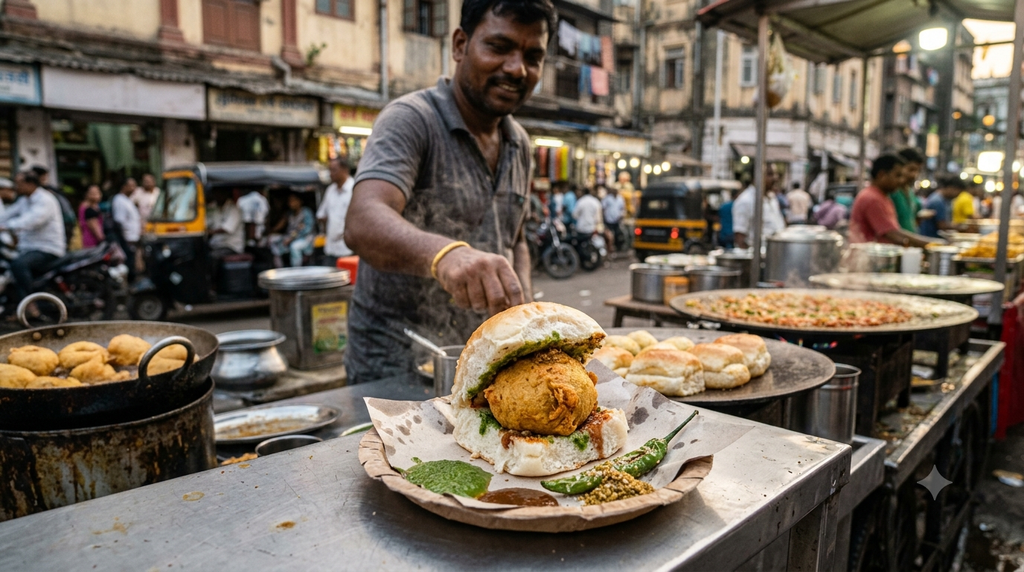
Few foods represent Mumbai as immediately as vada pav.
A crisp, spiced potato fritter is placed inside a soft pav and served with chutneys, often accompanied by fried green chilli.
It is inexpensive, filling and remarkably satisfying.
But vada pav is also more than a snack.
It belongs to the rhythm of Mumbai.
You can see it being eaten by commuters, students, office workers and travellers alike. It works as a quick breakfast, an afternoon snack or an impromptu meal when you’re exploring the city.
The beauty of vada pav lies in its simplicity.
Soft bread.
Crisp potato.
Spicy chutney.
A little heat.
And Mumbai moving around you.
Pav Bhaji — Comfort Food on a Plate
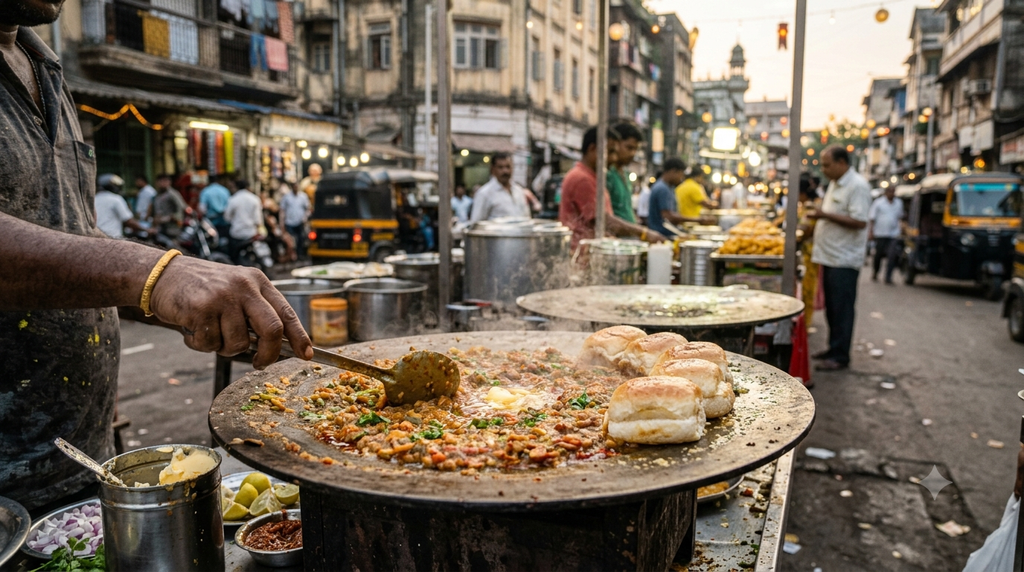
If vada pav represents speed, pav bhaji represents comfort.
The bhaji is a richly spiced vegetable preparation cooked until soft and flavourful, then served with buttered pav.
The pav is often toasted on the same hot tawa where the bhaji is prepared, absorbing the flavours and aroma.
It is particularly enjoyable in the evening, when Mumbai’s streets begin to glow under artificial lights and food stalls become gathering places.
Take your time with it.
Break the pav.
Mix it with the bhaji.
Add a little onion and lemon.
And enjoy the dish the way Mumbai intends — without overthinking it.
Bhel Puri — The Beach in a Bowl
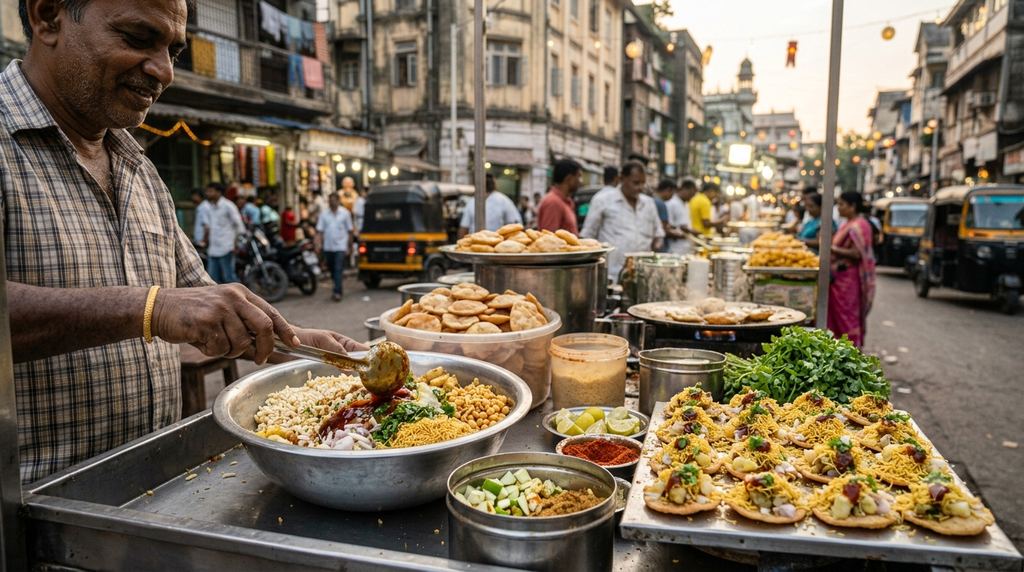
Bhel puri feels almost inseparable from Mumbai’s seaside atmosphere.
Puffed rice is combined with chutneys, vegetables, sev and other ingredients to create a snack that is simultaneously crunchy, tangy, sweet and spicy.
Its texture changes with every bite.
And that is part of the fun.
Bhel puri is particularly associated with Mumbai’s seaside food culture, making it a natural choice when exploring places such as Juhu Beach or Girgaum Chowpatty.
Eat it while watching the sea.
Let the breeze move through the evening.
And suddenly the food becomes part of the landscape.
Sev Puri — Small, Crunchy and Full of Flavour
Sev puri takes the chaat experience in another direction.
Small crisp bases are topped with potatoes, chutneys, onions and generous amounts of sev.
The result is a combination of crunch, sweetness, tanginess and spice.
The dish is assembled quickly, but every bite feels layered.
For travellers who enjoy Indian chaat, this is one of the foods worth seeking out during a Mumbai food trail.
Pani Puri — A Burst of Flavour
Pani puri is one of those foods that turns eating into an experience.
Crisp puris are filled with ingredients and flavoured water before being eaten immediately.
There is very little ceremony.
You eat one.
Then another.
And very often, another.
The combination of texture, spice, tanginess and chilled flavoured water makes pani puri especially enjoyable during an evening food walk.
Just remember that hygiene and water quality matter when choosing a stall.
Busy, well-maintained vendors with good customer turnover are generally a sensible choice for travellers.
Misal Pav — A Maharashtrian Favourite
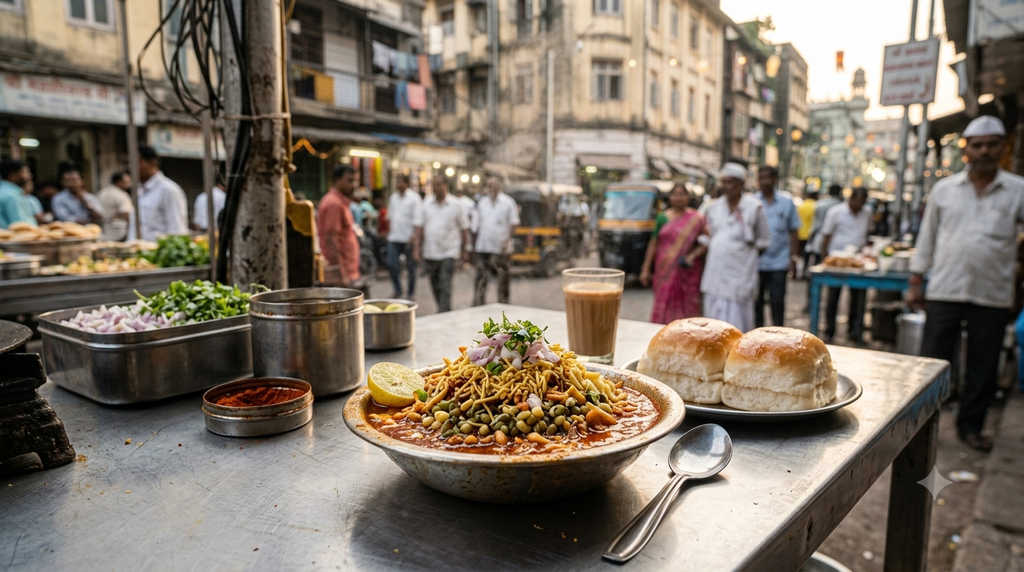
For something with a more distinctly Maharashtrian identity, try misal pav.
Misal combines a spicy preparation with toppings and is commonly served with pav.
It can be fiery, hearty and deeply satisfying.
Different places prepare misal differently, so the experience can vary considerably from one neighbourhood to another.
That is precisely why it works so well on a culinary journey.
Don’t think of it as a single fixed recipe.
Think of it as a dish with personality.
Kanda Bhajiya — Crispy Comfort
Kanda bhajiya, or onion fritters, are another familiar comfort food.
Thinly sliced onions are coated in a spiced batter and fried until crisp.
They are particularly inviting on a rainy Mumbai evening, ideally accompanied by hot chai.
During the monsoon, few combinations feel more naturally suited to the city’s atmosphere.
Bombay Sandwich — Mumbai’s Own Street-Side Creation
The Bombay sandwich is another example of how Mumbai can take familiar ingredients and turn them into something unmistakably local.
Bread, vegetables, chutneys, spices and other fillings come together in a pressed or toasted sandwich that can be enjoyed as a quick meal or snack.
The exact preparation varies from vendor to vendor.
And that variation is part of Mumbai’s street-food character.
Mumbai’s Seafood Side
Mumbai’s relationship with food cannot be understood entirely through vegetarian snacks.
The city sits beside the Arabian Sea, and its coastal identity has shaped its cuisine for generations.
Among the most interesting food traditions are those associated with the Koli community, one of Mumbai’s original fishing communities.
Bombil Fry — A Taste of Coastal Mumbai
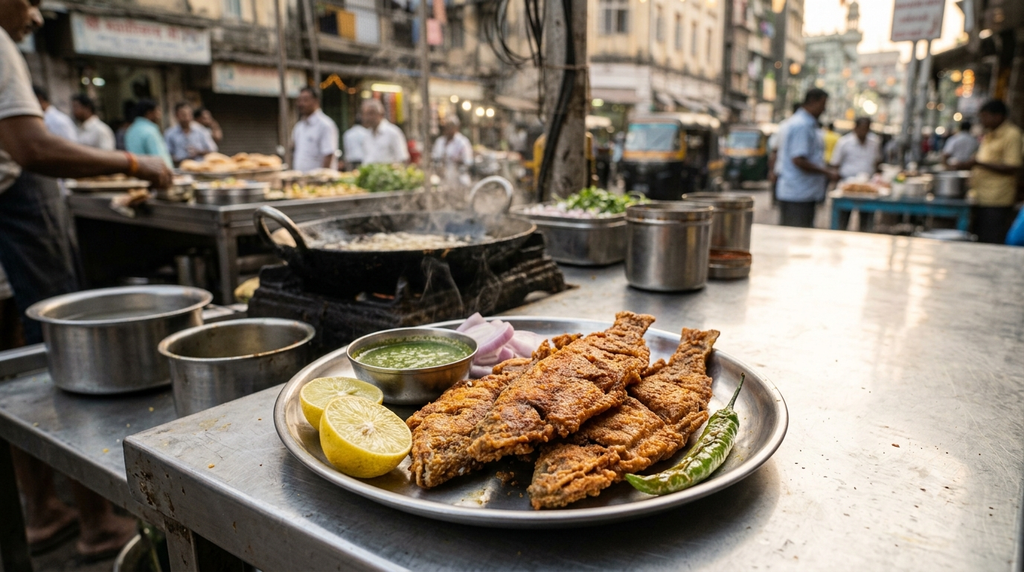
Bombil fry is one of Mumbai’s well-known seafood preparations.
Bombil, commonly known as Bombay duck, is coated with spices and cooked until crisp on the outside.
It offers a completely different experience from Mumbai’s famous chaat and snacks.
Here, the connection to the coast becomes much more obvious.
The flavours are direct, savoury and rooted in seafood traditions that have long been part of Mumbai’s culinary landscape.
Koli Seafood Traditions
The Koli community’s food traditions reflect Mumbai’s coastal history.
Fresh seafood, local spices and straightforward cooking techniques come together in dishes that carry a strong sense of place.
For travellers interested in understanding Mumbai beyond its famous landmarks, exploring its seafood traditions can add another dimension to the journey.
The city isn’t only a financial capital or a film capital.
It is also a coastal city with a food history of its own.
Where to Experience Mumbai Street Food
Knowing what to eat in Mumbai is only half the experience.
Knowing where to experience it can make the journey much more memorable.
Different parts of the city offer different atmospheres, dishes and rhythms.
Juhu Beach — Food Beside the Sea
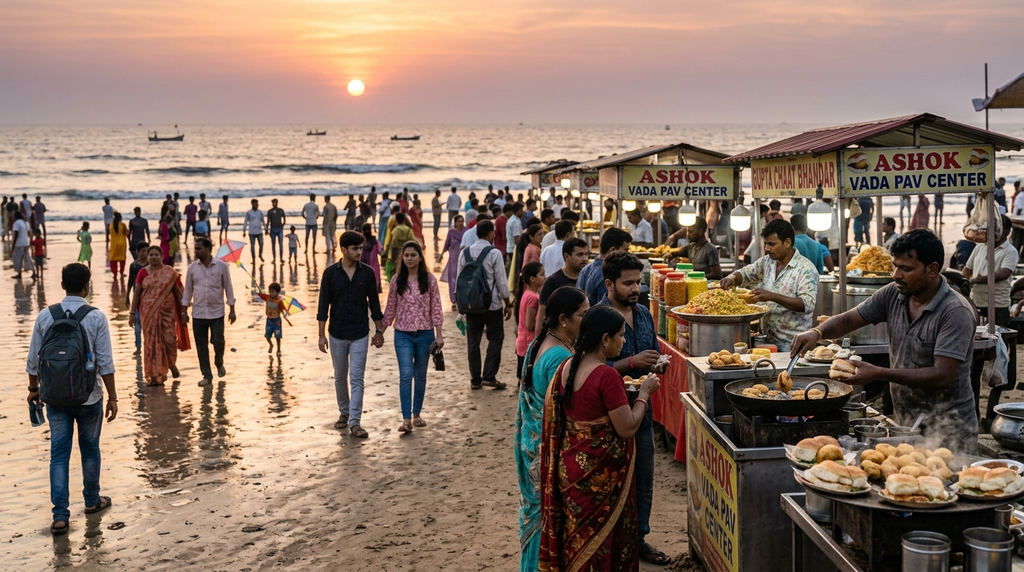
Juhu is one of Mumbai’s best-known seaside areas and a familiar destination for evening food experiences.
Walk along the beach, explore the food stalls and sample chaat or other popular Mumbai snacks.
The food itself is only part of the experience.
There is also the sea, the breeze, the crowds, families walking together and Mumbai’s evening energy.
Girgaum Chowpatty — Mumbai’s Classic Seaside Food Experience
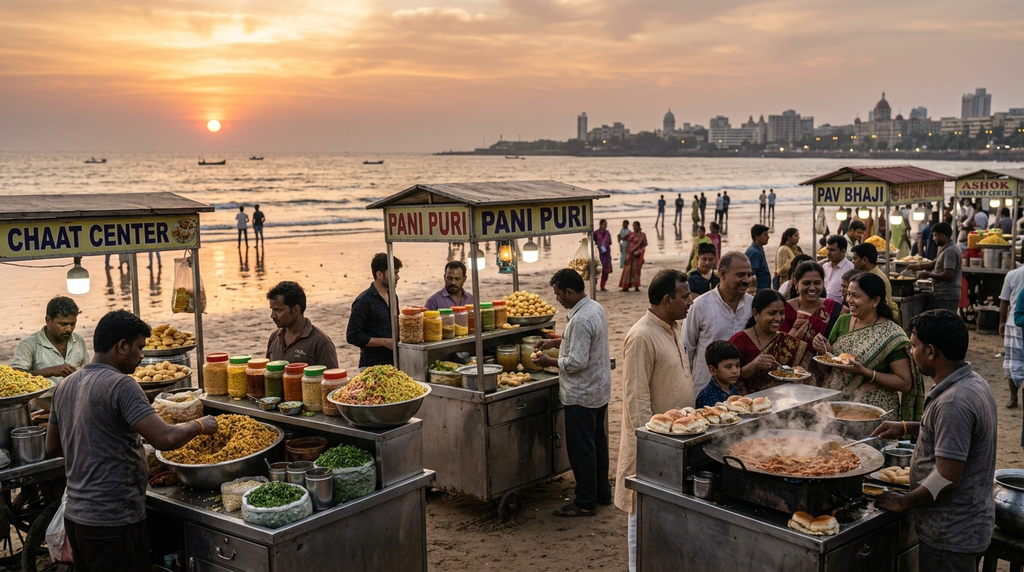
Girgaum Chowpatty offers another classic Mumbai food setting.
Here, popular snacks such as bhel puri, sev puri and pani puri fit naturally into an evening by the sea.
Come around sunset and the atmosphere becomes particularly memorable.
The sky changes colour.
The promenade becomes busier.
And the city’s food culture becomes part of the evening.
Crawford Market — Food and Old Mumbai
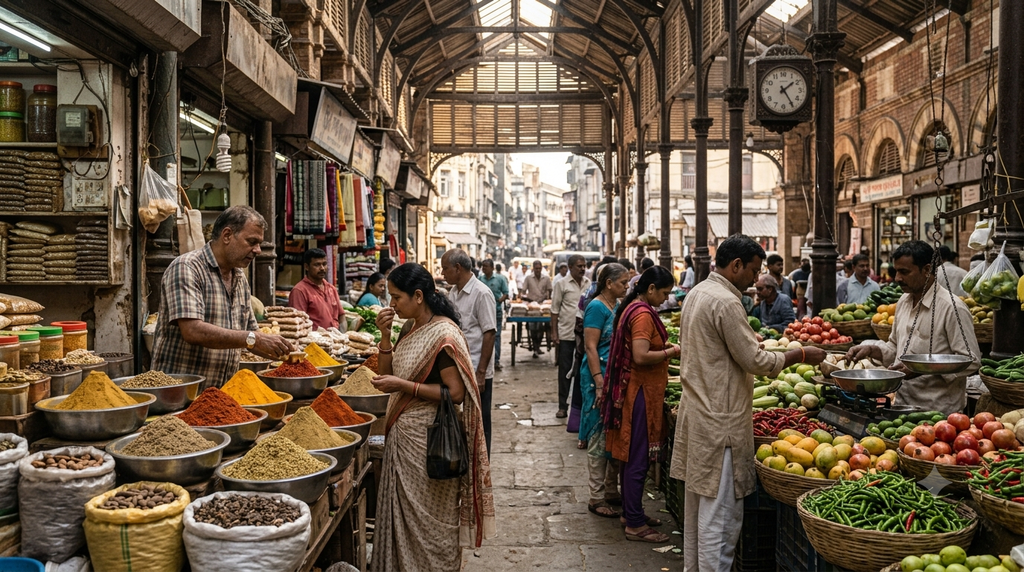
Crawford Market, now officially Mahatma Jyotiba Phule Mandai, sits within Mumbai’s historic landscape.
The market environment provides a different perspective from the beachside food experience.
This is a place to observe the movement of goods, vendors and shoppers while exploring the older commercial character of the city.
For travellers interested in food beyond prepared dishes, markets like this can offer a glimpse into the ingredients and supply networks that support the city’s enormous food culture.
Dadar — A Strong Maharashtrian Food Connection
Dadar is an important stop for travellers interested in Maharashtrian food.
The neighbourhood’s food culture includes traditional snacks and breakfast dishes, making it a useful place to explore flavours beyond Mumbai’s globally famous vada pav.
This is where a food journey can become more regional.
Instead of simply asking, “What is famous in Mumbai?”
you begin asking:
“What do people here actually eat?”
Ghatkopar Khau Galli — A Food Lover’s Playground
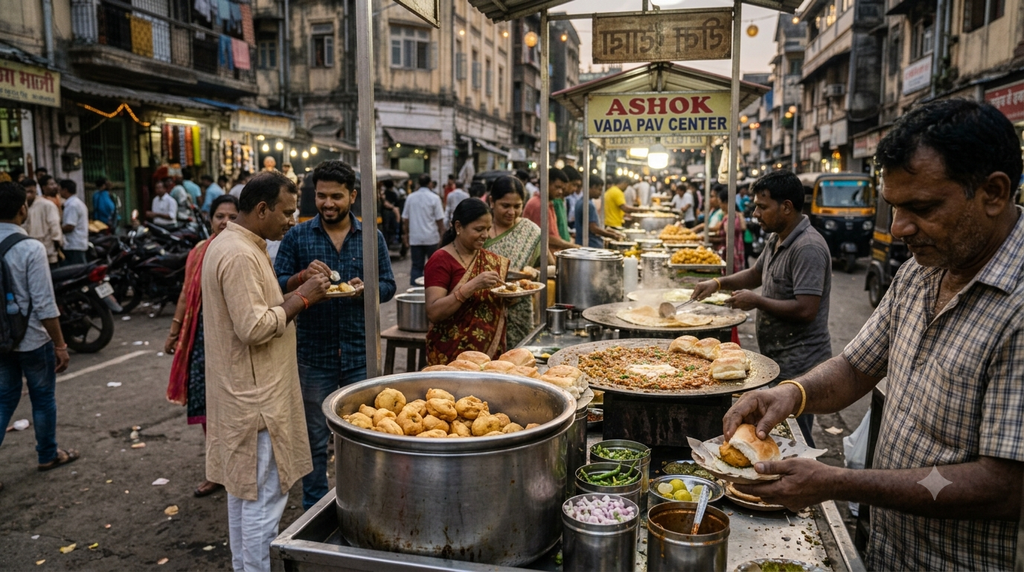
The word khau galli itself suggests what to expect — a lane or area filled with food.
Ghatkopar is particularly known for its wide variety of vegetarian street-food options.
It is an excellent place to experience the social side of Mumbai’s food culture, where several dishes can be sampled during one outing.
Come with friends.
Share portions.
Try different flavours.
And don’t worry about completing a checklist.
Mohammed Ali Road — Mumbai After Dark
As evening turns into night, another side of Mumbai’s food culture begins to appear around Mohammed Ali Road and the surrounding areas.
The neighbourhood is particularly associated with Muslim culinary traditions and becomes especially lively during Ramadan.
The experience here can be very different from a beachside chaat walk.
There are richer flavours, meat dishes, sweets and a strong evening atmosphere.
If you’re visiting during a festival period, expect crowds and plan accordingly.
A Mumbai Street Food Trail: From Morning to Night
One of the best ways to experience Mumbai food is to think of the city as a journey rather than a list.
You don’t need to eat everything.
Instead, allow the day to unfold.
Morning — Start With a Maharashtrian Breakfast
Begin somewhere with a local breakfast.
Try misal pav or another regional breakfast preparation with chai.
Morning food has a different atmosphere.
The city is waking up.
Commuters are beginning their journeys.
Shops are opening.
And the streets are already moving.
Late Morning — Find a Vada Pav
Later, stop for a vada pav.
Don’t make it complicated.
Find a busy local vendor, watch the preparation and enjoy it fresh.
Sometimes the simplest stop becomes one of the most memorable parts of a trip.
Afternoon — Slow Down
Mumbai afternoons can be intense, particularly during the warmer months.
This is a good time to combine food exploration with sightseeing, markets or indoor attractions.
Don’t try to force another five dishes into your itinerary.
Leave room for the evening.
Evening — Chaat by the Sea
As the temperature becomes more comfortable, head toward Juhu or Chowpatty.
This is the time for bhel puri, sev puri or pani puri.
Sit.
Walk.
Watch the sunset.
Let the city happen around you.
Night — Discover Mumbai After Dark
If you still have room for food, explore one of Mumbai’s evening food districts.
Depending on your interests and the day of your visit, that could mean a neighbourhood food street or an evening experience around Mohammed Ali Road.
Mumbai’s food story doesn’t end when the sun goes down.
In many parts of the city, it becomes even more energetic.
Mumbai Street Food by Neighbourhood
| Mumbai Area | Food Experience |
|---|---|
| Juhu | Chaat, pav bhaji, beachside snacks |
| Girgaum Chowpatty | Bhel puri, sev puri, pani puri |
| Dadar | Maharashtrian snacks and breakfast foods |
| Ghatkopar | Khau galli and vegetarian street food |
| Crawford Market | Historic market atmosphere and local food exploration |
| Mohammed Ali Road | Meat dishes, sweets and evening food culture |
| Coastal Mumbai | Seafood and Koli culinary traditions |
The point is not to visit every neighbourhood in one day.
Mumbai is too large for that.
Choose a few areas that fit naturally into your sightseeing route.
What Makes Mumbai Street Food Different?
The answer isn’t simply “spice.”
It is the combination.
Mumbai street food often brings together:
- bold flavours
- contrasting textures
- chutneys
- spices
- bread
- vegetables
- seafood
- regional traditions
- fast preparation
- affordable portions
- neighbourhood culture
And perhaps most importantly, it is food designed to fit into city life.
You can eat while commuting.
You can eat while talking.
You can eat while watching the sea.
You can stop for five minutes or stay for half an hour.
Mumbai’s food adapts to the rhythm of Mumbai itself.
Fast.
Flexible.
Full of character.
The Culture Behind the Food
One reason Mumbai food culture is so fascinating is that it tells the story of the city.
Mumbai has always attracted people from different parts of India.
As communities arrived, they brought their food traditions with them.
Over time, those traditions interacted with one another and with Mumbai’s own Maharashtrian and coastal heritage.
That is why a single food journey can move from vada pav to chaat, from misal pav to seafood and from beachside snacks to the richer dishes of evening food streets.
Food becomes a map.
Each dish points toward a community, a neighbourhood or a chapter in the city’s history.
And when you eat it in the place where it belongs, the experience becomes much more meaningful.
Eating Mumbai Like a Traveller, Not a Tourist
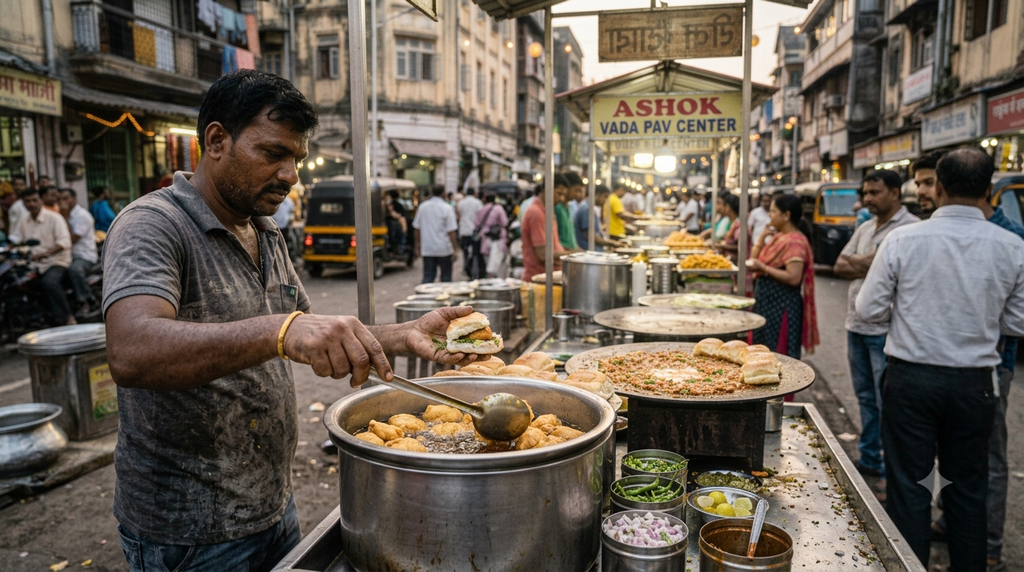
There is a difference between collecting food photographs and actually experiencing a city’s food culture.
A traveller slows down.
Watch the vendor prepare your food.
Notice the ingredients.
Look at how locals order.
Observe what people around you are eating.
Try something you don’t immediately recognise.
If you enjoy the food, ask what makes that version different.
And remember that a street vendor’s stall is someone’s livelihood.
A little patience and respect go a long way.
The best culinary memories often come from moments that were never part of the itinerary.
A conversation.
A surprising dish.
A rainy evening.
A tiny stall you almost walked past.
That is the Mumbai worth discovering.
Mumbai Street Food Photography Tips
Mumbai gives food photographers almost endless possibilities.
The challenge is knowing when to photograph and when to simply eat.
For food photography, look for:
Steam and Heat
Fresh pav bhaji, chai and fried snacks photograph beautifully when the food is still hot.
Preparation
A vendor’s hands preparing food can tell a stronger story than a perfectly arranged plate.
Texture
Capture the crispness of sev, the softness of pav and the richness of chutneys.
Street Context
Don’t photograph the dish in isolation.
Show the stall, street, people and surroundings when appropriate.
Evening Light
Mumbai’s food streets can become particularly atmospheric after sunset.
And always remember:
Ask before photographing people closely.
Respect matters more than getting the perfect frame.
Food Safety Tips for Travellers
Street food is part of the Mumbai experience, but travellers should still use common sense.
Choose stalls that appear clean and have a steady flow of customers.
Freshly prepared food is generally preferable to items that have been sitting out for long periods.
Be mindful of raw ingredients and water-based preparations if you have a sensitive stomach.
If you’re trying spicy food for the first time, start gradually.
And stay hydrated, especially during Mumbai’s hotter months.
The goal isn’t to avoid street food.
It is to enjoy it sensibly.
Best Time for a Mumbai Food Journey
Mumbai can be explored throughout the year, but the experience changes with the seasons.
October to February
The cooler months are generally comfortable for walking around the city and spending more time outdoors.
This is an especially pleasant period for combining food exploration with sightseeing.
June to September
The monsoon transforms Mumbai.
Rain can be dramatic, beautiful and occasionally disruptive.
Hot chai and crispy bhajiya can feel particularly appropriate during this season, but heavy rain can make outdoor food walks less convenient.
Carry suitable rain protection and allow extra travel time.
March to May
These months can be hot and humid.
Plan longer food walks for mornings or evenings and take breaks during the afternoon.
Ultimately, the best time is the time when you can explore without rushing.
How to Plan a Mumbai Street Food Trail
Mumbai’s size makes planning important.
Trying to visit five distant neighbourhoods in one day can turn a food adventure into a transportation exercise.
Instead:
Choose Two or Three Areas
Group your food stops geographically.
Share Portions
If you’re travelling with friends, share dishes so you can try more without becoming full too quickly.
Leave Gaps
Don’t schedule every meal.
Some of the best discoveries happen between planned stops.
Combine Food With Sightseeing
Pair neighbourhood food exploration with nearby cultural or heritage attractions.
Travel at a Comfortable Pace
The goal isn’t to eat the largest number of dishes.
It is to experience the city through them.
A One-Day Mumbai Food & Culture Itinerary
Here’s one possible approach.
Morning — Maharashtrian Breakfast
Begin with a local breakfast such as misal pav and chai.
Spend some time exploring the surrounding neighbourhood.
Late Morning — South Mumbai
Continue toward South Mumbai and explore its historic streets, architecture and markets.
A stop around Crawford Market can add a useful food-and-city perspective.
Afternoon — Take a Break
Mumbai can be tiring.
Have lunch, rest and allow yourself time to recharge.
Evening — Chowpatty or Juhu
Head toward the coast.
Try bhel puri, sev puri or pani puri while experiencing Mumbai’s evening atmosphere.
Night — A Local Food Street
If you’re still hungry, explore an appropriate evening food district.
Depending on your interests, this could include Mohammed Ali Road or another neighbourhood food destination.
The important thing is not to complete every dish.
Leave with a few flavours you genuinely remember.
Why Mumbai’s Street Food Is More Than Food
Perhaps this is the most important thing to understand.
A vada pav is not only a potato fritter inside bread.
Bhel puri is not simply puffed rice and chutney.
Misal pav is not merely a spicy breakfast.
They are all pieces of Mumbai.
They belong to specific streets, communities, routines and memories.
The food tells you how people move through the city.
It tells you what people eat when they’re working, travelling, celebrating, meeting friends or simply looking for something comforting after a long day.
That is why a food journey can reveal a city in ways that sightseeing alone cannot.
You don’t just look at Mumbai.
You participate in it.
Why Mumbai Belongs on a Food Traveller’s List
For food lovers, Mumbai offers an unusually broad culinary experience.
You can begin with Maharashtrian breakfast food.
Move into street-side snacks.
Explore chaat.
Walk along the coast.
Discover seafood traditions.
Visit historic markets.
Explore neighbourhood food streets.
And end the day with the city still buzzing around you.
There is no single definition of famous food in Mumbai.
That may be the best part.
The city is too diverse for one dish to tell its entire story.
Experience Mumbai With Travel Anecdotes
A destination becomes more meaningful when you experience its everyday life — its streets, flavours, communities, traditions and stories.
Mumbai is a perfect example.
You can visit the Gateway of India.
You can photograph Marine Drive.
You can explore its famous landmarks.
But somewhere between those experiences, stop for a vada pav.
Share a plate of pav bhaji.
Try the chaat.
Walk through a local market.
Watch the city eat.
Because sometimes the best way to understand a destination is not to stand in front of its most famous landmark.
It is to sit down and taste what the people who live there have been enjoying for generations.
Final Thoughts — Taste Mumbai, Don’t Just See It
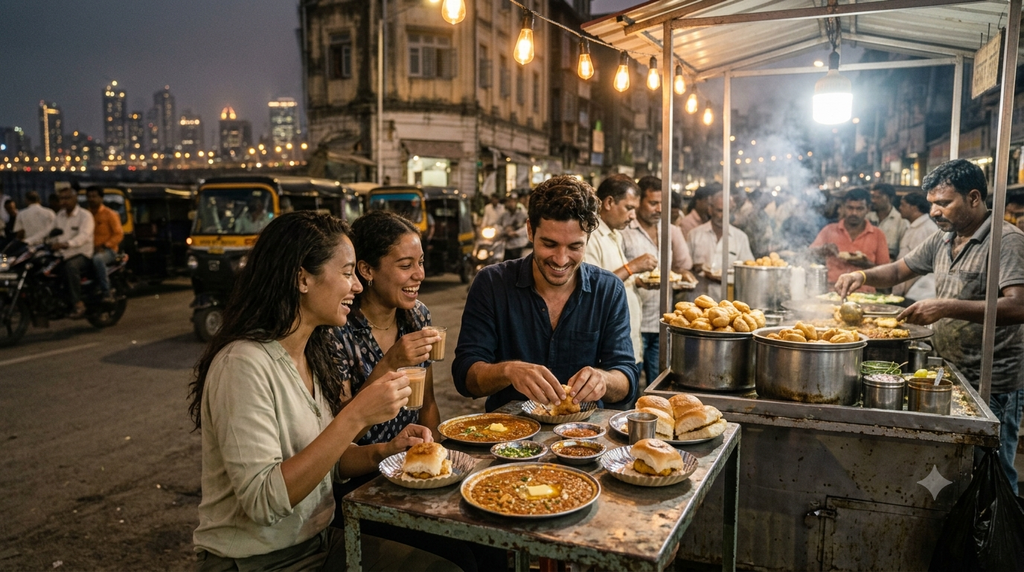
Mumbai is loud.
Mumbai is fast.
Mumbai is crowded.
And Mumbai is delicious.
Its food tells stories that aren’t always written on monuments or found in guidebooks.
They live in small stalls, busy markets, seaside walks, neighbourhood kitchens and food streets that become alive after dark.
You might remember the crunch of sev puri.
The heat of a freshly fried vada.
The buttery pav beside bhaji.
The tang of bhel.
The taste of coastal seafood.
But you may remember something else even more clearly:
the feeling of standing on a Mumbai street, eating something wonderful, while the city moved around you.
That is the real Mumbai food experience.
So don’t just visit Mumbai.
Taste it.
Explore More. Travel Better. Live Deeper.
Frequently Asked Questions
What is the most famous street food in Mumbai?
Vada pav is among the most iconic street foods associated with Mumbai. Pav bhaji, bhel puri, sev puri and pani puri are also strongly associated with the city’s street-food culture.
What food should I try first in Mumbai?
Vada pav is an easy starting point for first-time visitors. After that, try pav bhaji, bhel puri, sev puri or misal pav depending on your preferences.
Where can I find the best street food in Mumbai?
Popular food areas include Juhu Beach, Girgaum Chowpatty, Dadar, Ghatkopar and several food streets across the city. The best choice depends on the type of food and atmosphere you want to experience.
Is Mumbai street food vegetarian-friendly?
Yes. Mumbai has an extensive range of vegetarian street foods, including vada pav, pav bhaji, bhel puri, sev puri, pani puri and many other snacks.
What is Mumbai famous for besides vada pav?
Mumbai is also known for pav bhaji, bhel puri, sev puri, pani puri, misal pav, seafood and several regional Maharashtrian preparations.
Where can I try Mumbai chaat?
Juhu Beach and Girgaum Chowpatty are well-known settings for popular chaat-style street foods. Other neighbourhood food streets also offer extensive chaat options.
Is Mumbai street food expensive?
One of the attractions of Mumbai street food is its accessibility across a range of budgets. Prices vary by vendor, location and dish, so travellers should check current prices before ordering.
What is a good one-day Mumbai food itinerary?
A practical food day could combine a Maharashtrian breakfast, a vada pav stop, South Mumbai sightseeing, an evening visit to Juhu or Chowpatty for chaat, and a local food street at night.
What is Mumbai’s famous seafood?
Bombil fry is one of the seafood preparations associated with Mumbai’s coastal and Koli culinary traditions. The city also offers many other seafood preparations influenced by its coastal location.
What is the best time for a Mumbai food tour?
October to February is generally comfortable for walking and outdoor exploration. The monsoon can also provide a memorable atmosphere, although heavy rain can affect outdoor food walks.
A Final Invitation
The next time you find yourself in Mumbai, don’t make your entire itinerary about monuments and landmarks.
Leave a little space for the streets.
For the smell of butter on a hot tawa.
For the sound of a vendor calling out an order.
For a paper plate of chaat beside the sea.
For a simple vada pav eaten while watching Mumbai rush past.
Because the soul of a city is sometimes found in places that don’t appear on a sightseeing map.
And in Mumbai, some of those places are delicious.
🌍 Explore More
“To follow Mumbai’s street-food trail is to experience the city at its most spontaneous—where strangers share counters, conversations mingle with aromas, and every meal feels like part of the journey.”
🌍 Explore More: BlueJay Explorations
📖 Read more travel stories: TravelAnecdotes.com
📸 Follow the journey on Instagram
👍 Follow us on Facebook
🎥 Watch cinematic travel stories on YouTube