Hornbill Festival Nagaland Travel Guide: Experience India’s Festival of Festivals
Introduction
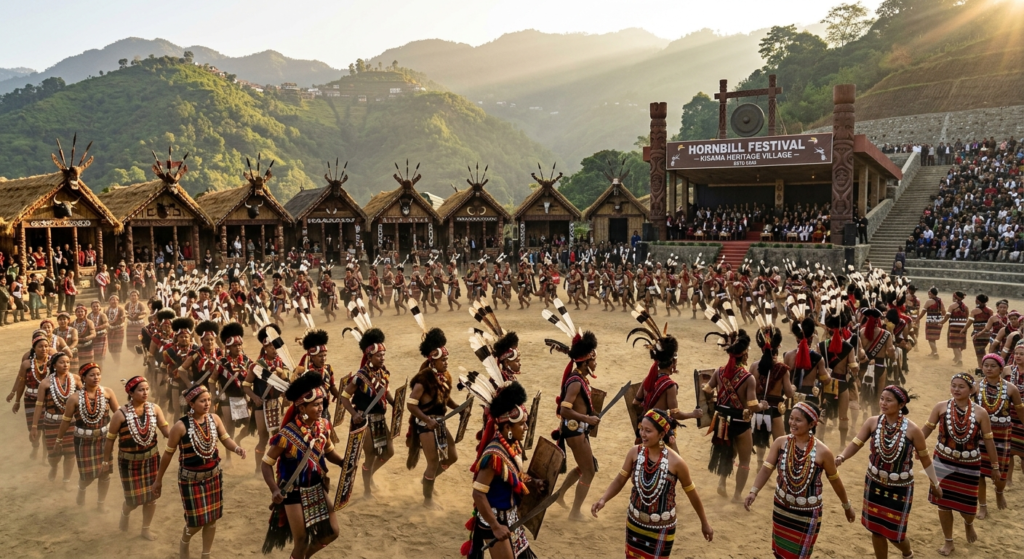
Every December, the mist-covered hills of Nagaland burst into a spectacular celebration of color, music, tradition, and community as thousands of people gather for one of India’s most extraordinary cultural events—the Hornbill Festival.
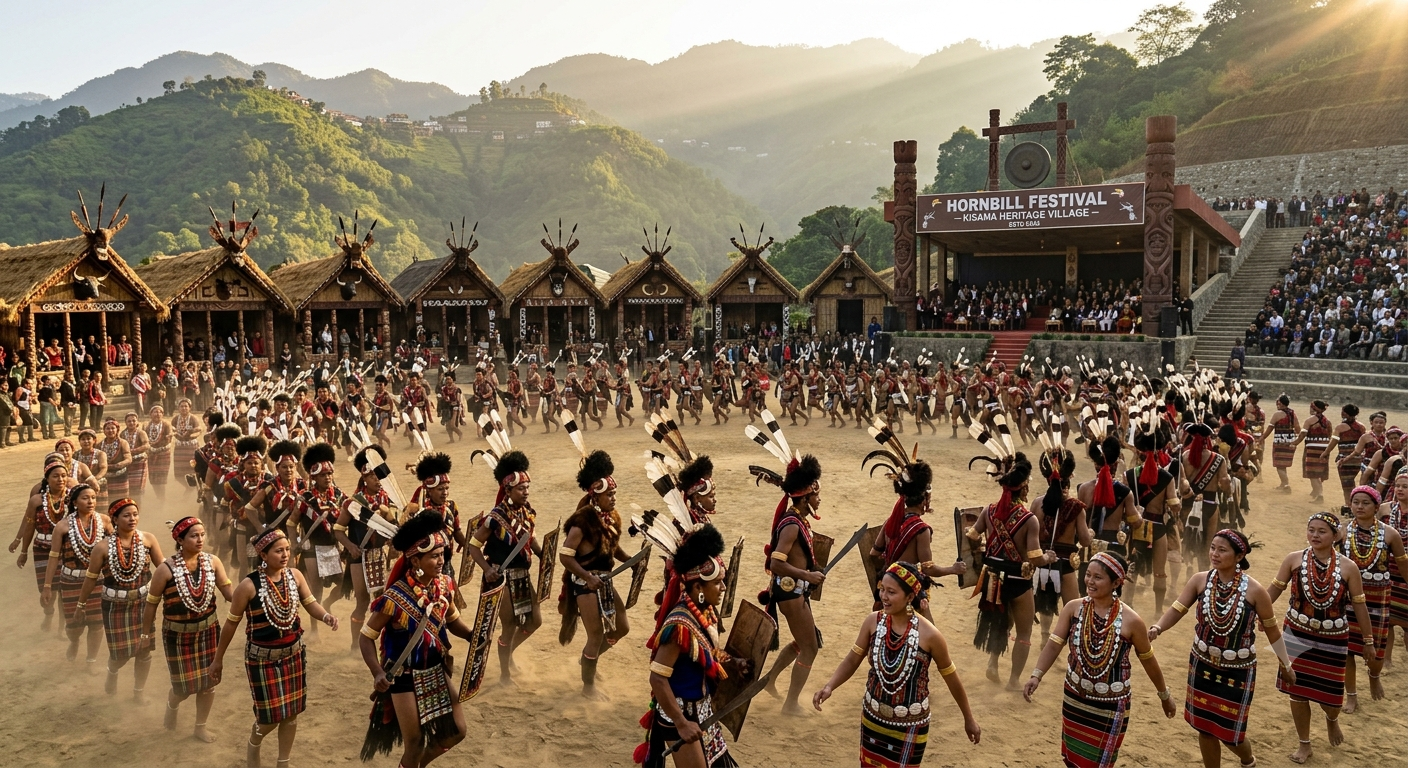
Often called the “Festival of Festivals,” this iconic event brings together all of Nagaland’s major tribes in a remarkable showcase of traditional dances, warrior songs, indigenous games, handcrafted art, authentic cuisine, and centuries-old customs. For ten unforgettable days, the peaceful Kisama Heritage Village, located just outside Kohima, transforms into a vibrant cultural stage where visitors can experience the incredible diversity of the Naga people in one place.
Named after the majestic Great Indian Hornbill, a bird deeply respected in Naga folklore for its beauty, courage, and significance, the festival celebrates not only the region’s rich tribal heritage but also the spirit of unity among Nagaland’s many communities.
Whether you’re fascinated by indigenous cultures, passionate about photography, eager to taste unique local cuisine, or simply looking for one of India’s most immersive seasonal travel experiences, the Hornbill Festival promises memories unlike any other.
This comprehensive Hornbill Festival Nagaland Travel Guide covers everything you need to know—from history and cultural significance to travel planning, festival highlights, accommodation tips, and a complete itinerary.
What is the Hornbill Festival?
The Hornbill Festival is Nagaland’s largest and most celebrated cultural festival, organized annually by the Government of Nagaland to preserve, promote, and celebrate the traditions of the state’s indigenous tribes.
Held every year from 1st to 10th December, the festival provides a rare opportunity to witness the customs, music, dance, cuisine, architecture, and craftsmanship of Nagaland’s many tribal communities in one vibrant location.
What began as a cultural initiative has now become one of India’s premier tourism festivals, attracting travelers from across the globe.
A Celebration of Diversity
Nagaland is home to numerous indigenous tribes, each with its own distinct language, customs, attire, festivals, and folklore.
The Hornbill Festival creates a shared platform where these communities come together to celebrate their unique identities while promoting unity and cultural preservation.
Visitors can experience:
- Traditional dances
- Folk music
- Warrior performances
- Tribal rituals
- Indigenous games
- Handcrafted art
- Local cuisine
- Storytelling traditions
Every performance reflects centuries of living heritage.
Why Visit the Hornbill Festival?
Few festivals in India offer such an immersive cultural experience.
Reasons to attend include:
- Witness authentic tribal traditions.
- Experience vibrant cultural performances.
- Taste traditional Naga cuisine.
- Explore indigenous architecture.
- Shop handcrafted tribal products.
- Photograph colorful ceremonies.
- Meet local artisans.
- Discover Northeast India’s remarkable cultural diversity.
It is one of the most rewarding seasonal journeys for travelers interested in culture and heritage.
Why is it Called the “Festival of Festivals”?
The Hornbill Festival brings together all of Nagaland’s major tribes under one celebration.
Instead of traveling to different villages throughout the state, visitors can experience a remarkable variety of traditions in a single destination.
The festival serves as a grand showcase of Nagaland’s cultural richness, making it a true Festival of Festivals.
Throughout the event, each tribe proudly presents its own:
- Traditional dances
- Music
- Costumes
- Handicrafts
- Cuisine
- Architecture
- Rituals
- Oral traditions
The result is one of India’s most vibrant cultural spectacles.
The History of the Hornbill Festival
The Hornbill Festival was first introduced in 2000 with the goal of preserving Nagaland’s rapidly evolving tribal heritage while promoting tourism and cultural awareness.
As modernization began influencing traditional lifestyles, the festival became an important initiative to ensure that indigenous customs continued to be celebrated by future generations.
Over the years, it has grown into an internationally recognized event that welcomes thousands of domestic and international visitors every December.
Today, it serves as both a cultural celebration and an important platform for local artisans, musicians, performers, and entrepreneurs.
Symbolism of the Hornbill Bird
The festival takes its name from the Great Indian Hornbill, one of the most revered birds in Naga folklore.
The hornbill symbolizes:
- Strength
- Loyalty
- Courage
- Beauty
- Wisdom
Its distinctive feathers traditionally featured in ceremonial headgear worn by Naga warriors and community leaders.
Today, the bird represents the spirit of unity and cultural pride that defines the festival.
Kisama Heritage Village
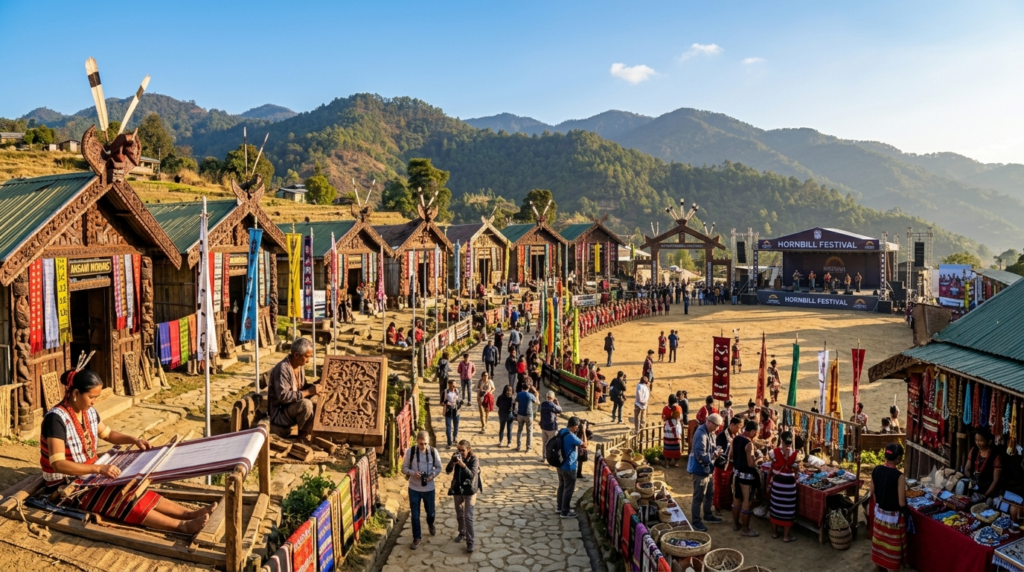
Located approximately 12 kilometers from Kohima, Kisama Heritage Village serves as the permanent venue for the Hornbill Festival.
Designed as a living cultural museum, the village recreates the traditional architecture and lifestyle of Nagaland’s indigenous tribes.
Rather than simply displaying artifacts, Kisama allows visitors to walk through authentic-style tribal settlements, interact with local communities, and experience cultural performances throughout the festival.
Traditional Morungs
One of Kisama’s most fascinating attractions is its collection of Morungs.
Morungs are traditional communal houses that historically served as:
- Youth dormitories
- Community gathering spaces
- Learning centers
- Cultural meeting halls
- Ceremonial venues
Each tribe has constructed its own Morung, reflecting distinctive architectural styles and cultural identity.
Walking through these beautifully crafted wooden structures offers valuable insight into Nagaland’s tribal heritage.
Discover the Rich Heritage of the Naga Tribes
Nagaland is home to numerous tribes, each with a unique identity shaped by centuries of history, tradition, and close connection to the surrounding mountains.
Although every tribe maintains its own language, attire, customs, and festivals, the Hornbill Festival provides a rare opportunity to witness this incredible diversity in one place.
Among the prominent tribes represented are:
- Angami
- Ao
- Konyak
- Lotha
- Sumi
- Chakhesang
- Phom
- Sangtam
- Rengma
- Chang
- Yimkhiung
- Zeliang
Each community contributes colorful performances, traditional crafts, and unique cultural expressions that enrich the festival experience.’
Living Traditions Passed Through Generations
Despite rapid modernization, many Naga communities continue to preserve their ancestral heritage through:
- Folk songs
- Oral storytelling
- Hand weaving
- Wood carving
- Traditional farming
- Community festivals
- Indigenous music
- Ceremonial dances
The Hornbill Festival plays a vital role in ensuring these traditions remain vibrant for future generations.
Why the Hornbill Festival Belongs on Every Traveler’s Bucket List
More than just a festival, Hornbill is a celebration of identity, resilience, and cultural pride. It offers travelers a rare chance to witness centuries-old traditions in an authentic setting while engaging with some of India’s most welcoming indigenous communities.
Whether you come for the music, food, dance, craftsmanship, or simply the atmosphere, the Hornbill Festival delivers an unforgettable experience that captures the true spirit of Nagaland.
Festival Highlights You Shouldn’t Miss
The Hornbill Festival is far more than a series of performances—it’s a complete cultural immersion. Every day offers new experiences, from energetic tribal dances and indigenous sports to food festivals, craft exhibitions, and evening concerts.
No two visits feel exactly the same, making every edition of the festival unique.
Traditional Tribal Performances
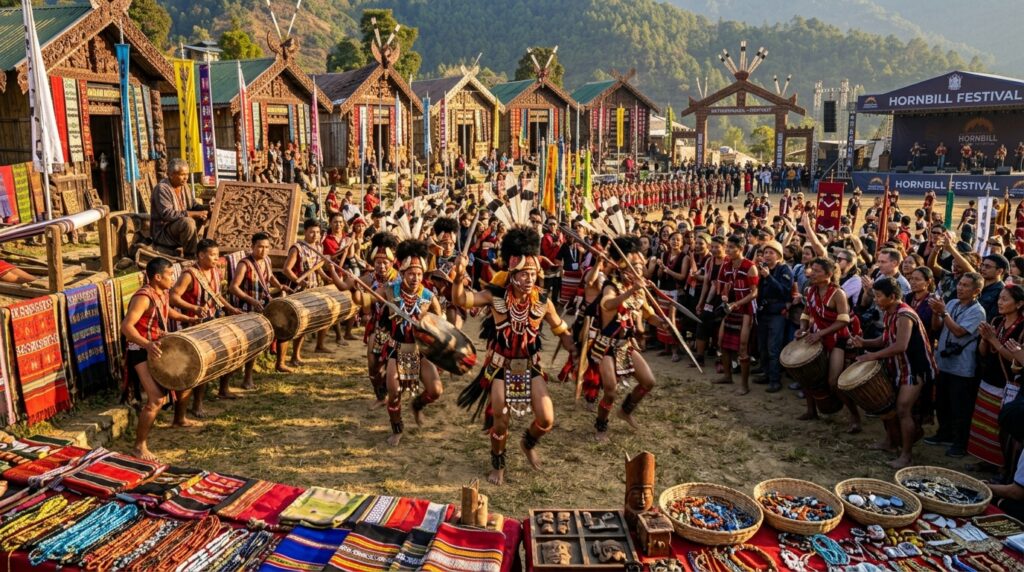
The heart of the Hornbill Festival lies in its spectacular tribal performances.
Throughout the day, representatives from Nagaland’s tribes perform traditional dances, ceremonial rituals, warrior songs, and folk music that have been passed down through generations.
These performances celebrate:
- Harvest traditions
- Community life
- Tribal legends
- Warrior heritage
- Seasonal celebrations
- Spiritual beliefs
The vibrant costumes, synchronized movements, and rhythmic drumbeats create one of India’s most captivating cultural spectacles.
Warrior Dances
One of the festival’s biggest attractions is the traditional warrior dance.
Performers appear in elaborate ceremonial attire featuring:
- Feathered headgear
- Beaded ornaments
- Handcrafted jewelry
- Traditional spears
- Shields
- Wooden weapons
Accompanied by chants and drums, these performances recreate stories of bravery, unity, and tribal history.
Folk Music and Indigenous Instruments
Music plays an essential role in Naga culture.
Visitors can enjoy performances using traditional instruments such as:
- Bamboo flutes
- Log drums
- Indigenous percussion
- String instruments
- Ceremonial horns
The melodies often narrate stories of nature, ancestors, festivals, and everyday village life.
Explore the Traditional Morungs
Each tribe showcases its own beautifully crafted Morung, offering visitors a fascinating look into traditional Naga architecture and community life.
Inside the Morungs, you’ll discover:
- Tribal artifacts
- Traditional furniture
- Wood carvings
- Hunting tools
- Musical instruments
- Historical displays
- Cultural exhibits
Many Morungs also host live demonstrations where artisans explain traditional craftsmanship.
Meet Local Artisans
One of the most rewarding experiences is interacting with local craftspeople.
Visitors can observe demonstrations of:
- Bamboo weaving
- Cane furniture making
- Wood carving
- Traditional weaving
- Basket making
- Beadwork
These handmade creations reflect generations of artistic knowledge.
Experience Authentic Naga Cuisine
The Hornbill Festival is also a paradise for food lovers.
Food stalls representing different tribes serve authentic regional dishes rarely found outside Nagaland.
Popular delicacies include:
- Smoked pork
- Bamboo shoot curry
- Axone (fermented soybean)
- Sticky rice
- Smoked beef
- River fish preparations
- Organic vegetables
- Local herbal dishes
The cuisine reflects the region’s deep connection with nature and traditional cooking techniques.
Don’t Miss These Local Favorites
Food enthusiasts should try:
- Smoked Pork with Bamboo Shoot
- Galho (Naga rice porridge)
- Anishi (dried yam leaves)
- Bamboo shoot pickle
- Fresh mountain herbs
- Millet-based dishes
- Traditional desserts
Many recipes have remained unchanged for centuries.
Music Festivals & Rock Concerts
As the sun sets, the atmosphere transforms into a vibrant celebration of contemporary music.
The Hornbill International Rock Contest has become one of Northeast India’s biggest music events.
Visitors can enjoy:
- Live rock bands
- Folk fusion performances
- Independent artists
- International musicians
- Cultural collaborations
The combination of tribal traditions and modern music creates an exciting contrast that appeals to travelers of all ages.
Indigenous Sports and Traditional Games
The Hornbill Festival also celebrates traditional sports that have long been part of Naga culture.
Popular demonstrations include:
- Naga wrestling
- Archery
- Spear throwing
- Log drum performances
- Traditional hunting skills
- Indigenous athletic competitions
These activities provide insight into the physical traditions that once played an important role in everyday tribal life.
Shopping for Authentic Handicrafts
One of the best places to purchase authentic Naga handicrafts is the festival marketplace.
Visitors can shop for:
- Handwoven shawls
- Bamboo products
- Cane furniture
- Wooden carvings
- Tribal jewelry
- Handmade baskets
- Decorative artifacts
- Traditional textiles
Buying directly from local artisans supports community livelihoods while preserving traditional craftsmanship.
Best Time to Visit
The Hornbill Festival takes place annually from 1st to 10th December, making early December the ideal time to visit Nagaland.
However, arriving a day or two before the festival begins allows travelers to acclimatize and explore Kohima before the celebrations start.
Weather During the Festival
December offers pleasant weather with:
- Cool mornings
- Sunny afternoons
- Crisp evenings
- Clear mountain views
- Comfortable sightseeing conditions
Average temperatures range between 8°C and 20°C, making layered clothing essential.
How to Reach Hornbill Festival
Although Nagaland is located in India’s northeastern region, reaching the festival is relatively straightforward with proper planning.
By Air
The nearest airport is:
Dimapur Airport
From Dimapur:
Kohima: Approximately 75 km
Kisama Heritage Village: Around 12 km beyond Kohima
Regular taxis and shared transport are available.
By Train
Nearest Railway Station:
Dimapur Railway Station
Connected with major cities including:
Guwahati
Kolkata
Delhi (via connecting services)
Road transport continues onward to Kohima.
By Road
The drive from Dimapur to Kohima is scenic and takes approximately 2–3 hours, depending on road conditions.
From Kohima, Kisama Heritage Village is about 20–30 minutes by road.
During the festival, shuttle buses and taxis operate frequently between Kohima and Kisama.
Suggested 5-Day Hornbill Festival Itinerary
Day 1
Arrive in Kohima
Explore local cafés
Visit Kohima Market
Evening at leisure
Day 2
Opening Ceremony
Tribal dance performances
Morung visits
Traditional cuisine
Day 3
Craft exhibitions
Indigenous sports
Photography sessions
Evening rock concert
Day 4
Cultural workshops
Village exploration
Local shopping
Food festival
Day 5
Sunrise around Kohima
Last festival visits
Purchase handicrafts
Return journey
Essential Travel Tips
To make the most of your Hornbill Festival experience:
- Book accommodation several months in advance.
- Carry warm clothing for cool mornings and evenings.
- Wear comfortable walking shoes.
- Carry cash, as digital payments may not be accepted everywhere.
- Respect local customs and traditions.
- Ask permission before photographing performers or villagers.
- Stay hydrated throughout the day.
- Arrive early for major performances to secure good viewing spots.
Responsible Cultural Tourism
The Hornbill Festival is much more than a tourist attraction—it’s a living celebration of the traditions, identity, and heritage of Nagaland’s indigenous communities.
As visitors, we have the responsibility to appreciate these traditions respectfully while helping preserve them for future generations.
Responsible tourism ensures that the festival continues to benefit local communities while protecting the authenticity that makes it so special.
Respect Tribal Traditions
The Naga tribes proudly share their culture with visitors.
While attending performances and exploring Morungs:
Dress respectfully.
Follow festival guidelines.
Avoid interrupting ceremonies.
Listen to local guides.
Respect sacred spaces.
Showing genuine interest and courtesy creates meaningful cultural exchanges.
Ask Before Taking Portraits
The colorful attire worn by performers makes them popular photography subjects.
Always ask permission before taking close-up portraits of:
Tribal elders
Performers
Artisans
Local families
Children
Most people are welcoming, and asking first demonstrates respect for their privacy and traditions.
Support Local Communities
The festival provides an important source of income for local artisans, performers, and entrepreneurs.
Visitors can support the local economy by:
- Buying handmade crafts
- Eating at local food stalls
- Staying in locally owned accommodations
- Hiring certified local guides
- Purchasing authentic tribal products
These choices directly contribute to sustainable tourism in Nagaland.
Photography Guide
The Hornbill Festival is one of India’s most photogenic cultural events.
From elaborate tribal costumes to traditional architecture and lively performances, photographers will find endless creative opportunities.
Best Time for Photography
Morning
Ideal for:
- Cultural performances
- Soft natural lighting
- Portrait photography
- Morung exploration
- Late Afternoon
Perfect for:
- Golden-hour portraits
- Warm lighting
- Traditional dances
- Landscape photography
- Evening
Excellent for:
- Concert photography
- Festival lights
- Cultural ambiance
- Stage performances
- Recommended Equipment
- DSLR or Mirrorless Camera
- Wide-angle lens (16–35mm)
- Standard zoom lens (24–70mm)
- Telephoto lens (70–200mm)
- Extra batteries
- Memory cards
- Power bank
- Lightweight tripod (where permitted)
- Best Photography Subjects
Capture the festival’s diversity through:
- Traditional tribal dancers
- Colorful feathered headgear
- Morungs
- Bamboo architecture
- Handwoven textiles
- Food stalls
- Musicians
- Local artisans
- Cultural rituals
- Kisama Heritage Village landscapes
Every corner of the festival offers vibrant storytelling opportunities.
Packing Checklist
Early December in Nagaland brings cool mornings and evenings with pleasant daytime temperatures.
Packing appropriately ensures a comfortable festival experience.
Clothing:
✔ Warm jacket
✔ Fleece layer
✔ Comfortable walking shoes
✔ Woollen cap
✔ Light gloves
✔ Sunglasses
✔ Rain jacket (weather dependent)
Photography Gear:
✔ Smartphone
✔ DSLR / Mirrorless Camera
✔ Zoom lens
✔ Wide-angle lens
✔ Extra batteries
✔ Power bank
✔ Memory cards
Essentials:
✔ Government-issued ID
✔ Hotel confirmations
✔ Cash
✔ Reusable water bottle
✔ Sunscreen
✔ Backpack
✔ Personal medicines
✔ Wet wipes
Optional:
✔ Notebook
✔ Binoculars
✔ Portable umbrella
✔ Festival schedule
Frequently Asked Questions (FAQs):
When is the Hornbill Festival held?
The festival is celebrated every year from 1st to 10th December at Kisama Heritage Village near Kohima.
Where is the Hornbill Festival celebrated?
The festival takes place at Kisama Heritage Village, located approximately 12 kilometers from Kohima, Nagaland.
Why is it called the Festival of Festivals?
The event brings together nearly all of Nagaland’s major tribes, allowing visitors to experience their unique traditions, music, dances, food, crafts, and customs in one location.
Is the Hornbill Festival suitable for families?
Absolutely.
Families, photographers, cultural enthusiasts, students, and international travelers all enjoy the welcoming atmosphere and diverse activities.
How many days should I spend?
A 4–5 day itinerary provides enough time to experience performances, explore Kohima, visit the Morungs, attend concerts, and enjoy local cuisine.
Can I buy authentic tribal handicrafts?
Yes.
The festival marketplace offers a wide range of authentic handmade products, including:
Bamboo crafts
Shawls
Traditional jewelry
Wooden carvings
Cane products
Handwoven textiles
Purchasing directly from artisans supports local livelihoods.
Is photography allowed?
Yes.
Photography is encouraged throughout most areas of the festival.
However, visitors should always ask permission before taking close-up portraits of performers or local residents and respect any restricted areas.
Conclusion
The Hornbill Festival is more than just a celebration—it’s a remarkable journey into the heart of Nagaland’s rich tribal heritage. Bringing together centuries-old traditions, vibrant performances, authentic cuisine, handcrafted art, and warm community spirit, it offers one of India’s most immersive cultural travel experiences.
Whether you’re captivated by colorful warrior dances, fascinated by indigenous architecture, eager to taste traditional Naga dishes, or simply seeking a unique seasonal adventure, the festival delivers unforgettable memories at every turn.
Set against the scenic backdrop of the Naga Hills, the Hornbill Festival reminds us that travel is not only about visiting new places but also about connecting with people, stories, and traditions that enrich our understanding of the world.
If you’re looking to experience India’s incredible cultural diversity, this extraordinary Festival of Festivals deserves a place on your travel bucket list.
🌍 Explore More
“The true spirit of travel comes alive when cultures open their hearts, traditions are shared with pride, and every journey becomes a celebration of humanity.”
🌍 Explore More: BlueJay Explorations
📖 Read more travel stories: TravelAnecdotes.com
📸 Follow the journey on Instagram
👍 Follow us on Facebook
🎥 Watch cinematic travel stories on YouTube