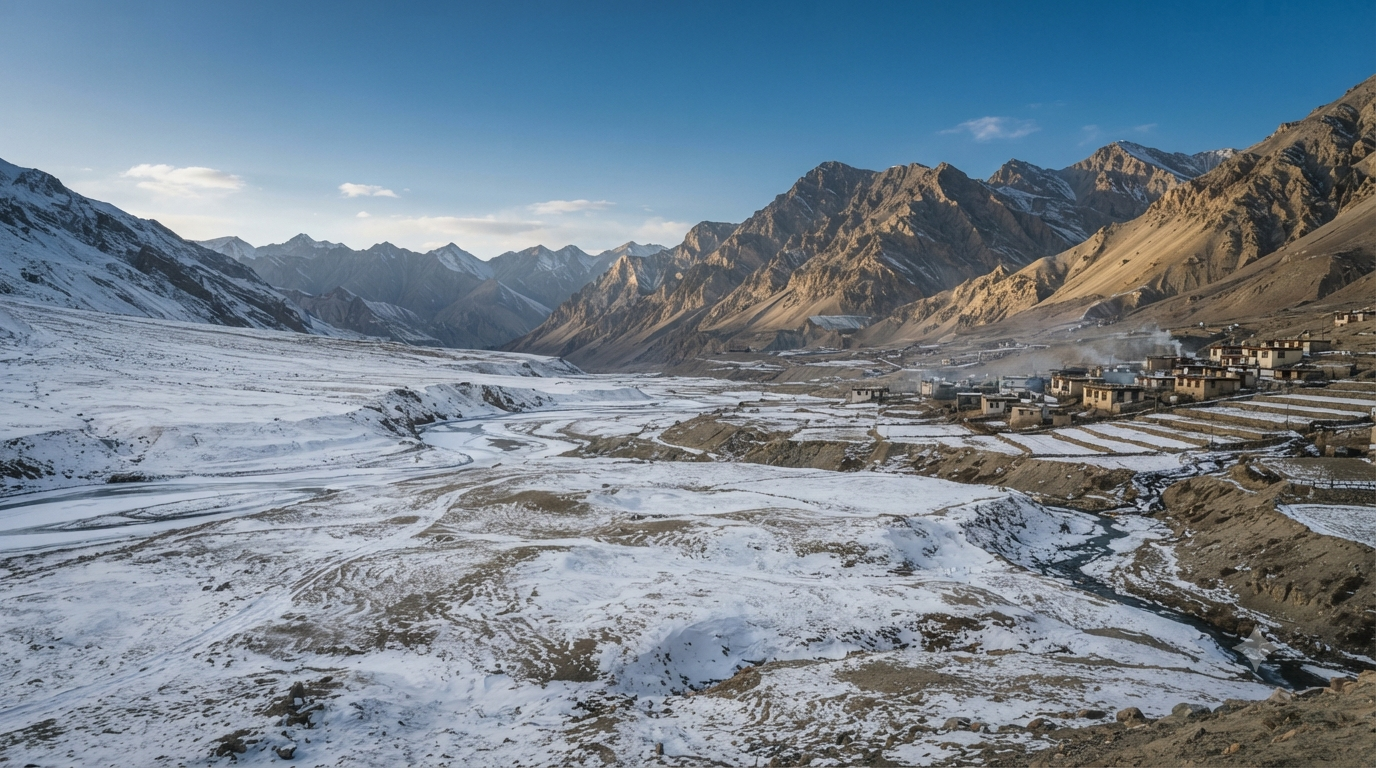
Spiti Valley in Winter: A Journey Through India’s Frozen Himalayan Desert
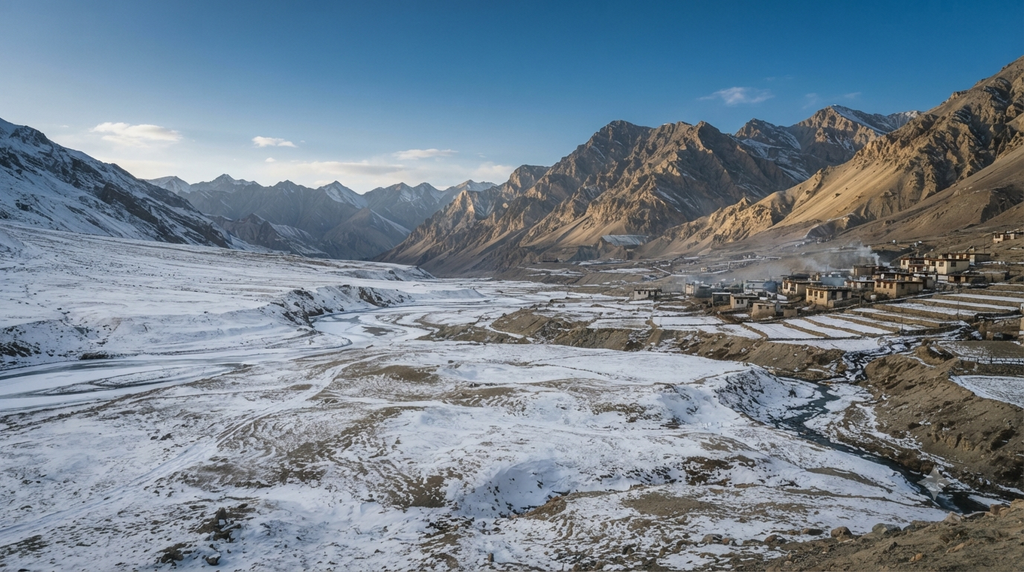
There are places in the Himalayas that become beautiful when summer arrives.
And then there is Spiti Valley in winter.
When snow settles across the mountains, roads wind through frozen landscapes, villages become quieter and ancient monasteries stand against immense white horizons, Spiti seems to transform into another world.
The familiar colours of the high-altitude desert give way to shades of white, grey, brown and deep blue.
The valley slows down.
The landscape becomes quieter.
And travel becomes less about ticking places off a list and more about experiencing a remote Himalayan world on its own terms.
This is winter in Spiti Valley.
A journey through snow-covered villages, ancient Buddhist monasteries, dramatic mountain roads and communities that have adapted to one of India’s most demanding environments.
If you’re looking for a Himalayan journey that feels remote, immersive and completely different from conventional winter holidays, Spiti Valley in winter offers an experience unlike almost anywhere else in India.
Quick Facts About Spiti Valley in Winter
| Detail | Information |
|---|---|
| Region | Spiti Valley, Himachal Pradesh |
| Landscape | High-altitude Himalayan desert |
| Main town | Kaza |
| Character | Remote, rugged and sparsely populated |
| Winter experience | Snow, frozen landscapes, quiet villages and monasteries |
| Main attractions | Kaza, Key Monastery, Langza, Hikkim, Kibber, Chicham and Pin Valley |
| Travel style | Slow, flexible and weather-dependent |
| Ideal approach | Local guidance + adequate acclimatization + buffer days |
Winter conditions in the valley can be severe, and accessibility can change with weather and road conditions. Always verify current local conditions before travelling.
Why Spiti Valley in Winter Feels So Different
Spiti is already one of India’s most distinctive mountain regions.
Its landscape is stark rather than lush.
Its villages are scattered across enormous valleys.
Its monasteries appear almost improbably against barren mountain slopes.
But winter changes the experience completely.
A Landscape Transformed by Snow
During the warmer months, Spiti’s high-altitude desert landscape reveals layers of brown, ochre, grey and green.
Winter adds another dimension.
Snow settles across village rooftops and mountain slopes. Frozen surfaces reflect the winter sun, while distant peaks become even more dramatic against the clear Himalayan sky.
The landscape feels vast.
And beautifully empty.
When the Valley Becomes Quiet
Winter is not the season for rushing from one attraction to another.
The pace changes.
There are fewer travellers, quieter roads and long stretches where the mountains seem to belong entirely to themselves.
That quietness is one of Spiti’s greatest attractions.
Life at High Altitude
Winter also reveals something more important than scenery.
It reveals resilience.
For generations, communities across Spiti have adapted their lives to altitude, cold, limited resources and long winters.
A winter journey here isn’t simply an encounter with snow.
It is an opportunity to understand how people live within one of the Himalayas’ most demanding environments.
Kaza in Winter: The Heart of Spiti
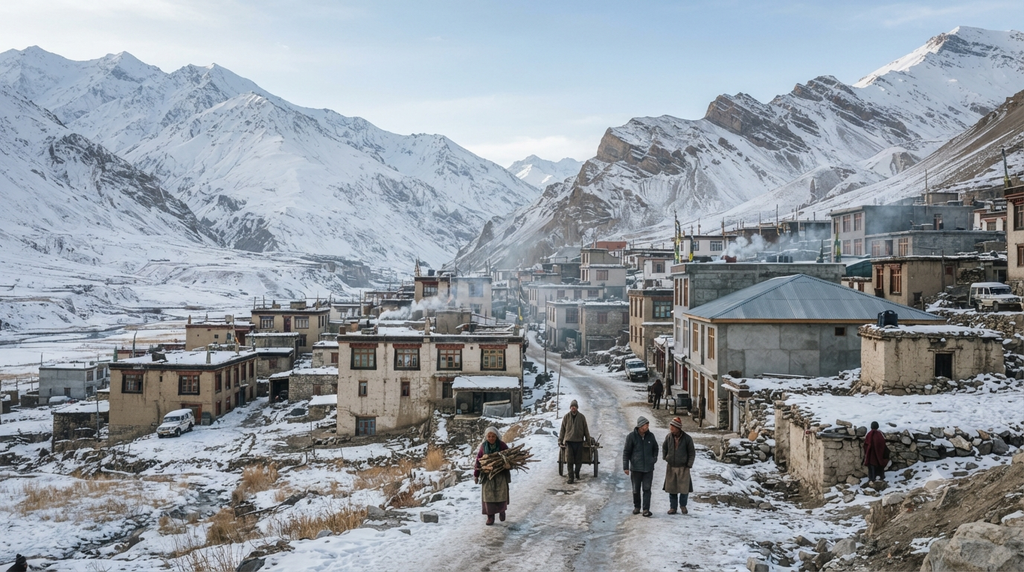
Kaza is the main town and an important base for exploring the valley.
In winter, however, Kaza takes on a completely different atmosphere.
The surrounding mountains appear closer.
The streets become quieter.
And everyday activities happen against a backdrop of snow and intense Himalayan cold.
The Heart of Winter Spiti
Spend time walking around town rather than treating Kaza only as a base.
Look at the surrounding mountains.
Notice the architecture.
Visit local establishments that remain open.
Talk to people when appropriate.
And allow yourself time to simply experience the landscape.
Snow-Covered Streets and Mountain Views
One of the pleasures of Kaza in winter is its simplicity.
A road disappears around a mountain.
A few homes sit beneath a snowy slope.
Prayer flags move in the cold wind.
Smoke rises from a chimney.
These small details often become more memorable than a conventional sightseeing stop.
Experiencing Local Life
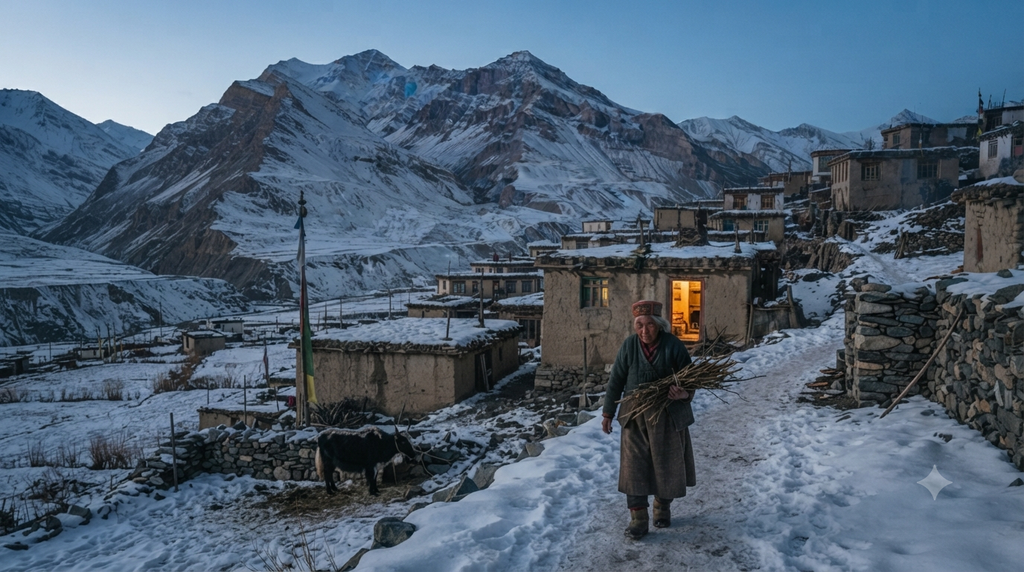
Winter also makes local interactions more meaningful.
A warm cup of tea.
A conversation with a homestay host.
A simple local meal.
A quiet evening indoors while snow covers the landscape outside.
These are the moments that turn a trip into a travel experience.
Key Monastery in Winter
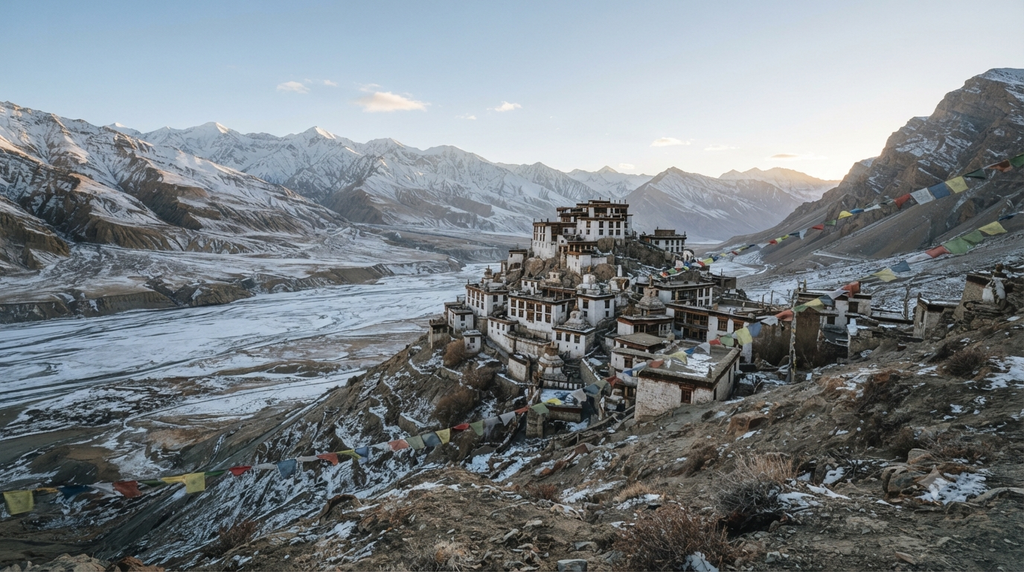
High above the Spiti River stands Key Monastery, one of the valley’s most recognizable cultural landmarks.
The monastery’s dramatic setting becomes even more striking during winter.
A Monastery Above the Valley
From a distance, Key Monastery appears almost connected to the mountain itself.
Its layered structures rise against the surrounding terrain, creating one of Spiti’s most memorable visual scenes.
Snow adds another layer to the landscape.
Snow, Prayer Flags and Himalayan Silence
Imagine standing outside the monastery on a cold winter morning.
The surrounding mountains are quiet.
The valley stretches below.
Prayer flags move gently in the wind.
And the only sounds may be the wind, footsteps and distant village activity.
It is a very different kind of sightseeing.
Experiencing Spiti’s Buddhist Heritage
Spiti’s monasteries are not simply photographic landmarks.
They are living cultural and spiritual spaces.
Visitors should enter respectfully, follow local instructions and remember that these are places of worship and community life.
Langza in Winter
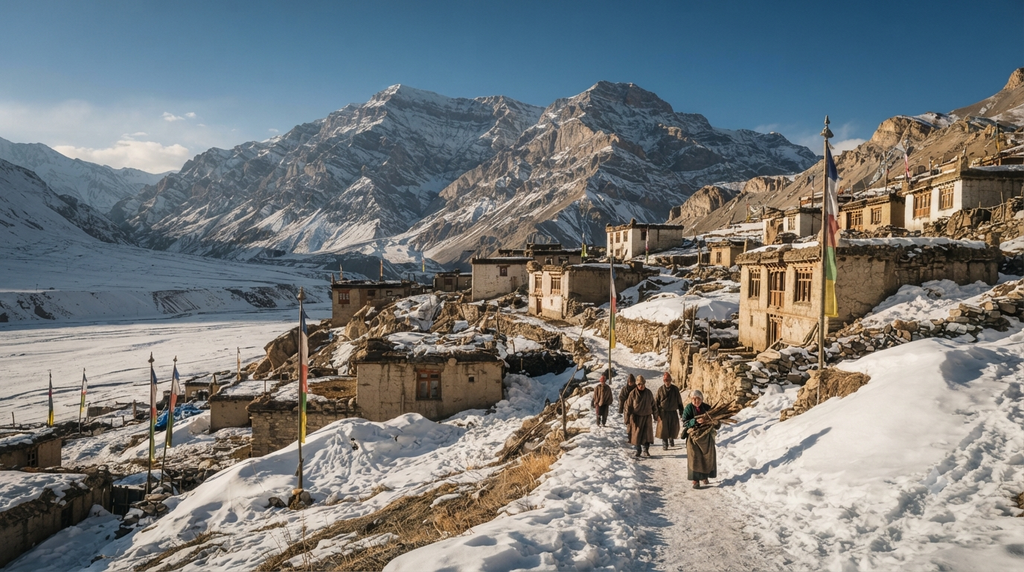
Langza is one of the high-altitude villages that has become closely associated with the wider Spiti experience.
Winter transforms its familiar landscape.
The High-Altitude Village Beneath the Mountains
The village sits against an immense Himalayan backdrop.
During winter, snow-covered homes and surrounding mountains create a scene that feels almost unreal.
But the beauty isn’t only visual.
It is also the feeling of being somewhere genuinely remote.
Snow-Covered Homes and Open Valleys
The contrast between the small village and the enormous mountains around it creates one of Spiti’s most powerful visual experiences.
A single house can appear tiny against the scale of the Himalayas.
A narrow trail can lead toward a vast empty valley.
And a short walk can become a moment of complete solitude.
A Slower Himalayan Experience
Winter Langza is not about rushing between viewpoints.
It’s about looking.
Listening.
Walking slowly.
And appreciating the relationship between village, mountain and sky.
Kibber and Chicham: Villages at the Edge of the Himalayas
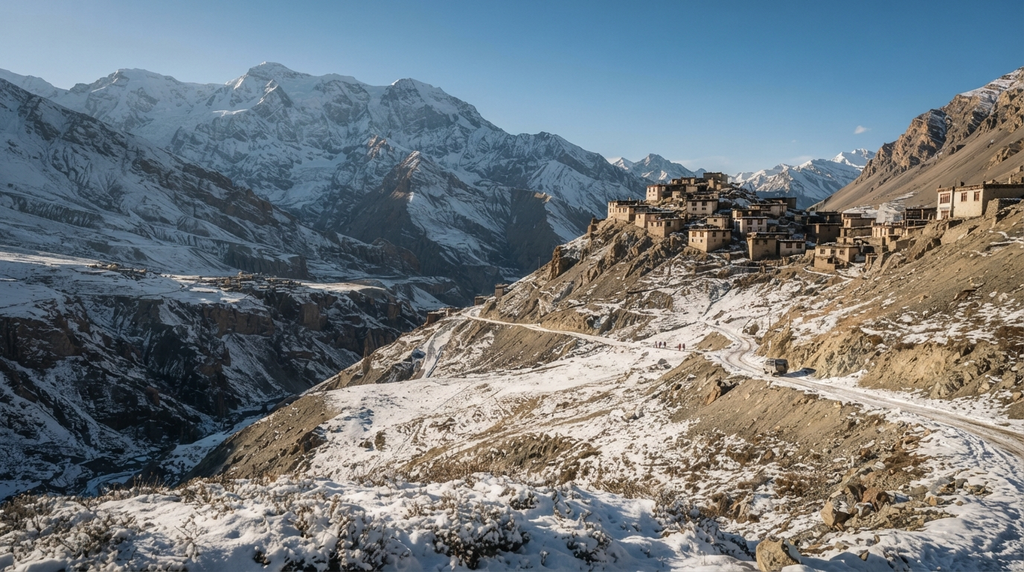
The villages around Kibber and the Chicham area reveal another side of high-altitude Spiti.
Villages at the Edge of the Mountains
The landscape here feels particularly exposed.
Mountain walls surround settlements, while roads and trails connect communities separated by dramatic terrain.
In winter, snow makes the environment even more powerful.
Chicham and the High Mountain Landscape
The Chicham region is known for its spectacular mountain setting.
The journey itself becomes part of the experience.
Instead of simply asking, “What is there to see?”, notice how the landscape changes as the road climbs and bends through the mountains.
Winter Wildlife Possibilities
Spiti is also associated with some of the Himalayas’ most elusive wildlife.
The possibility of encountering animals such as the snow leopard adds another dimension to winter journeys.
But wildlife sightings are never guaranteed.
The responsible approach is to observe from a distance, follow local guidance and never disturb or chase animals for photographs.
Hikkim and the High-Altitude Villages
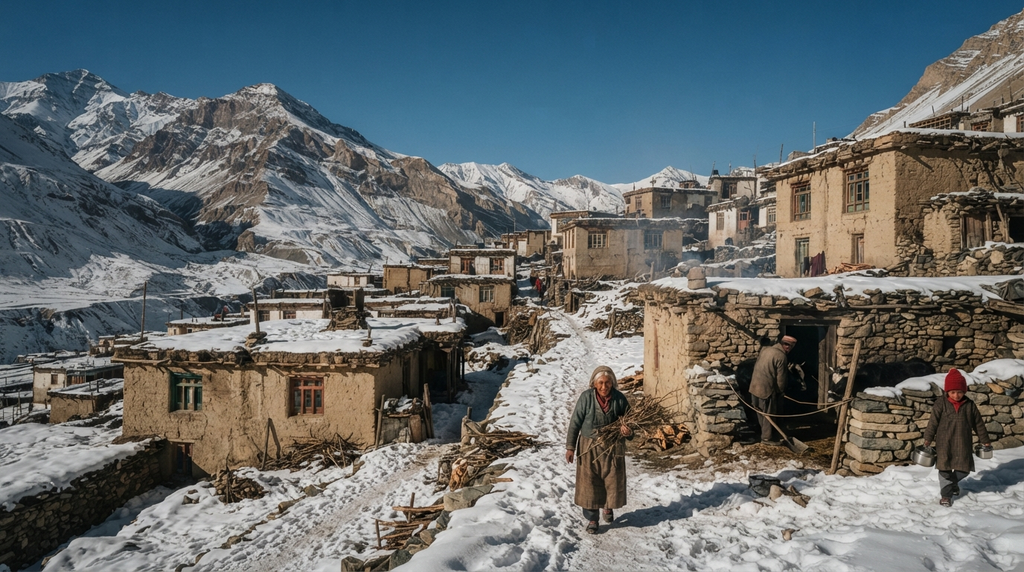
One of the most fascinating aspects of Spiti is its collection of remote settlements.
Life Above the Clouds
Villages such as Hikkim offer glimpses into life at extraordinary altitude.
In winter, the environment becomes even more demanding.
The cold is intense.
The landscape is sparse.
And everyday life requires adaptation.
Winter Silence
Stand outside on a clear winter morning and listen.
There may be no traffic.
No city noise.
No crowds.
Just wind moving across the mountains.
That silence can become one of the most powerful memories of the entire journey.
People Who Call Spiti Home
The most meaningful travel experiences often happen when the landscape becomes secondary to the people who live there.
Local hosts, drivers, guides and residents can offer perspectives that no itinerary can provide.
Travel with curiosity.
Ask respectfully.
Listen.
And remember that you’re visiting someone’s home, not simply a tourist attraction.
Pin Valley in Winter
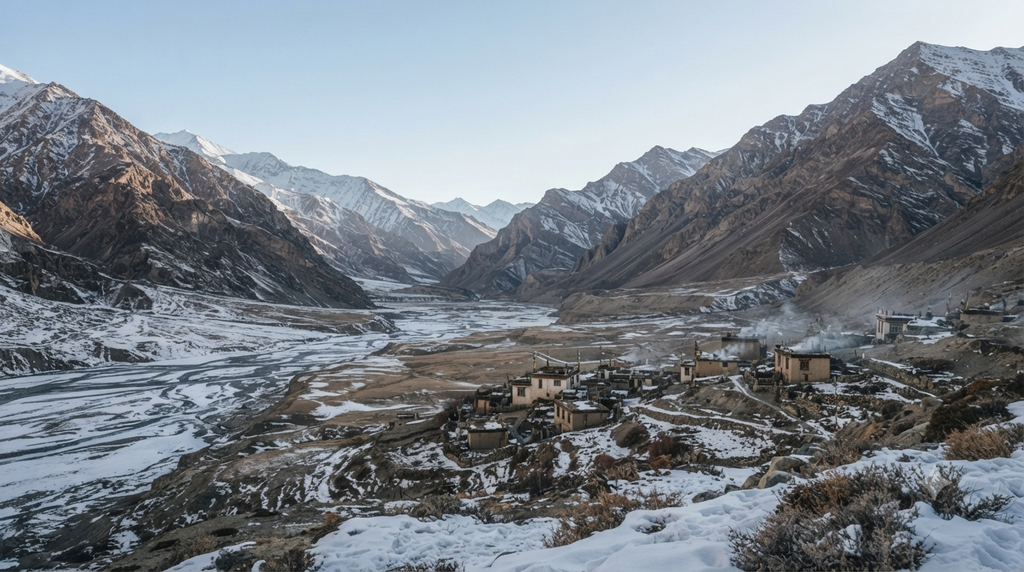
Pin Valley offers a different perspective on Spiti’s landscape.
A Different Side of Spiti
While the central valley is defined by dramatic barren mountains, Pin Valley brings its own character to the wider region.
Winter adds snow, silence and an even stronger feeling of remoteness.
Snow, Villages and Frozen Landscapes
The contrast between white snow and the surrounding mountain terrain creates an extraordinary photographic environment.
But conditions can be challenging.
Always assess weather and road accessibility before attempting winter journeys into remote areas.
Pin Valley’s Quiet Character
Perhaps the greatest attraction is simply the sense of space.
There are places where the mountains appear to continue endlessly.
And there are moments when you realise just how far away the ordinary world feels.
The Roads of Winter Spiti
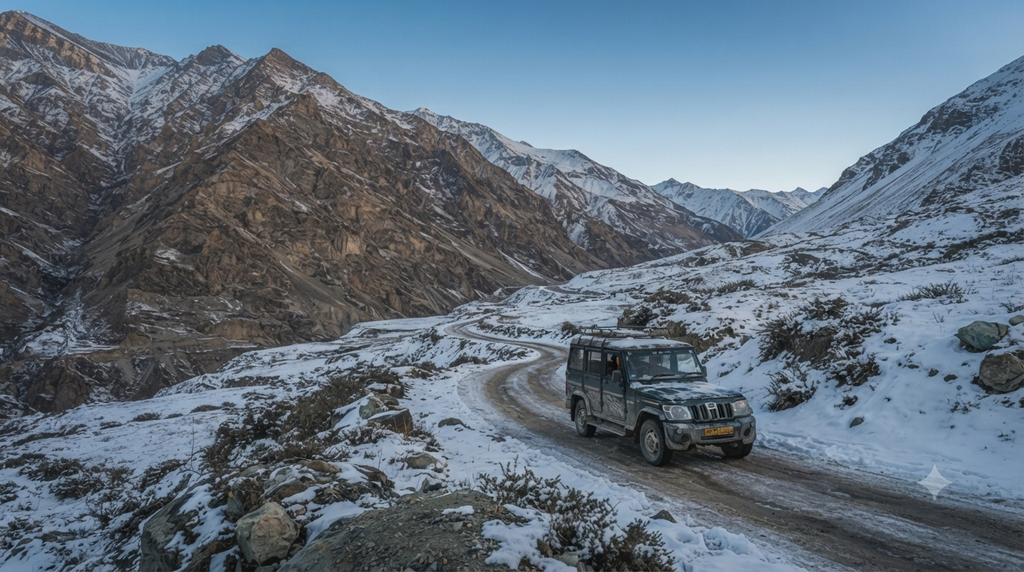
If you travel to Spiti during winter, remember one important thing:
The journey is not separate from the destination.
The roads are part of the experience.
A Road Trip Like No Other
Mountain roads wind between cliffs, valleys and villages.
In winter, snow and weather can transform familiar routes.
A journey that might look straightforward on a map can take considerably longer in real conditions.
Mountain Roads, Snow and Uncertainty
Winter travel requires flexibility.
A road may be delayed.
A journey may take longer than expected.
Weather can change.
Plans may need to be adjusted.
This is why winter Spiti should never be approached with an overly rigid itinerary.
Why Road Conditions Matter
Before travelling, check current conditions through reliable local or official sources.
Avoid making decisions based solely on old travel videos or articles.
Road accessibility can change from season to season and even from day to day.
When travelling through remote mountain terrain, local knowledge matters.
Things to Experience in Spiti Valley in Winter
Experience Snow-Covered Villages
Walk through villages when conditions allow.
Notice traditional homes, prayer flags, mountains and the rhythms of local life.
Visit Ancient Monasteries
Explore Spiti’s Buddhist heritage respectfully.
The monasteries are among the most important cultural experiences in the valley.
Photograph the Frozen Landscape
Winter provides extraordinary opportunities for landscape photography.
Snow, mountain shadows, clear skies and low winter light can create dramatic compositions.
Experience Himalayan Winter Nights
After sunset, the temperature can drop dramatically.
But the cold also creates a different kind of evening.
Warm food.
Hot tea.
Quiet conversations.
And skies far away from city lights.
Explore Local Food and Tea
A winter journey should include time to experience local food.
Simple meals can become surprisingly memorable after a cold day outside.
Watch Sunrise Over the Mountains
Winter mornings can be extremely cold.
But sunrise is worth experiencing.
The first light touches the mountains while the valley slowly emerges from darkness.
Spend Time With Local Communities
Where appropriate, choose locally operated accommodation and experiences.
This gives you a deeper understanding of the region while helping local communities benefit from tourism.
Experience the Silence
Perhaps this is the most important thing to do in winter Spiti.
Nothing.
Just stand there.
Look at the mountains.
Listen to the wind.
And allow the landscape to exist without needing to turn every moment into content.
Winter Wildlife in Spiti Valley
Spiti’s remote landscape supports remarkable Himalayan wildlife.
The possibility of seeing elusive animals, including the snow leopard, is one reason winter attracts wildlife enthusiasts and specialist travellers.
But wildlife watching requires patience.
Looking for Himalayan Wildlife
A responsible wildlife experience means understanding that nature operates on its own terms.
You may spend hours searching and see nothing.
And then, unexpectedly, a distant movement across a mountainside may become the highlight of your entire journey.
Responsible Wildlife Watching
Never:
- Chase an animal
- Block its route
- Use bait or attractants
- Shout or create unnecessary noise
- Approach wildlife for photographs
- Disturb nesting or resting areas
Follow local guides and experienced wildlife professionals wherever possible.
The best wildlife encounter is one in which the animal never feels threatened.
Best Time to Experience Winter Spiti
Winter itself is not one single experience.
Conditions change throughout the season.
Early Winter
The valley begins its transition into deeper winter.
Snow conditions can vary considerably, and some routes may still be more accessible than later in the season.
Deep Winter
This is when the valley can take on its most dramatic winter appearance.
Snow-covered villages, frozen landscapes and intense cold become central to the experience.
But this is also when travel can become significantly more demanding.
Late Winter
Conditions begin to change again.
Snow remains in many areas, but the landscape gradually moves toward the next season.
Always plan around current weather and road conditions rather than assuming a fixed seasonal pattern.
How to Reach Spiti Valley in Winter
Winter access requires more planning than a conventional summer trip.
Via Shimla and Kinnaur
The Shimla–Kinnaur side is an important approach to the Spiti region.
However, actual winter accessibility depends on prevailing conditions and road status.
Via Manali
The Manali route is a famous way to enter Spiti during the warmer months.
Winter conditions can make this route unsuitable or inaccessible for periods of time.
Never assume that a summer route remains available simply because it appears on an online itinerary.
By Air
There is no major commercial airport directly inside Spiti Valley.
Travellers typically combine air travel with a substantial road journey.
Local Transport
For winter travel, experienced local drivers are particularly valuable.
They understand mountain roads, changing conditions and the practical realities of travelling through the region.
How Many Days Do You Need for Spiti Valley in Winter?
4–5 Days
A shorter trip can provide an introduction to Kaza and nearby experiences, subject to conditions.
However, limited time leaves less room for weather delays.
6–7 Days
A week provides a more comfortable framework for exploring several locations while maintaining some flexibility.
8+ Days
A longer journey allows you to travel more slowly and accommodate unexpected weather or road changes.
For winter Spiti, buffer days are not wasted days.
They can make the difference between a stressful trip and a meaningful one.
A Sample 7-Day Winter Spiti Itinerary
Day 1 — Arrival and Acclimatization
Arrive in the region and allow your body time to adjust.
Avoid trying to do too much immediately.
Day 2 — Kaza
Explore Kaza and experience local life at a relaxed pace.
Day 3 — Key Monastery
Visit Key Monastery and explore the surrounding mountain landscape, subject to accessibility.
Day 4 — Langza and High-Altitude Villages
Explore Langza and nearby villages if weather and road conditions permit.
Day 5 — Kibber and Chicham
Travel toward Kibber and Chicham where conditions allow.
Day 6 — Pin Valley or Flexible Day
Keep this day flexible.
Winter weather may require changing the original plan.
Day 7 — Departure
Begin the return journey with adequate time for mountain-road conditions.
Important: This is an illustrative itinerary, not a guarantee of winter accessibility. Actual routes should be adjusted according to current local conditions.
Where to Stay in Spiti Valley During Winter
Kaza is generally the most practical base for many travellers, while village homestays can provide a more intimate experience when operating.
Before booking winter accommodation, confirm:
- Whether the property is open
- Heating arrangements
- Hot-water availability
- Electricity backup
- Food availability
- Road accessibility
- Distance from medical facilities
- Cancellation flexibility
In remote Himalayan destinations, these details matter more than luxury.
A warm room, reliable host and simple hot meal can be more valuable than an impressive hotel exterior.
What to Pack for Spiti Valley in Winter
Winter Spiti requires serious preparation.
Clothing
Carry:
- Thermal base layers
- Insulated jacket
- Warm fleece
- Windproof/water-resistant outer layer
- Woollen socks
- Insulated gloves
- Warm cap
- Neck warmer
- Proper winter footwear
Travel Essentials
Also consider:
- Sunglasses
- High-SPF sunscreen
- Lip balm
- Personal medicines
- Reusable water bottle
- Power bank
- Headlamp
- Basic emergency supplies
- Copies of important documents
Photography Gear
Cold conditions can reduce battery performance.
Carry:
- Spare batteries
- Extra memory cards
- Protective camera storage
- Power bank where practical
Keep batteries warm when not in use.
Altitude and Winter Travel
Spiti’s high elevation means travellers need to take altitude seriously.
Allow your body time to acclimatize.
Stay hydrated.
Avoid unnecessary physical exertion immediately after arrival.
Pay attention to how you feel.
Symptoms such as severe headache, unusual breathlessness, confusion, vomiting or significant deterioration should never be ignored.
If you experience concerning symptoms, seek appropriate medical assistance and follow qualified medical advice.
Winter cold can make an already challenging high-altitude environment more demanding, so preparation matters.
Photographing Winter Spiti
Spiti is one of those places where the landscape almost photographs itself.
But the best images often come from slowing down.
Snow-Covered Mountains
Use the enormous scale of the landscape to create a sense of depth.
Monasteries Against White Landscapes
The contrast between ancient architecture and winter mountains can create powerful compositions.
Village Life
Photograph daily life respectfully rather than staging moments.
Sunrise and Sunset
Winter light can create beautiful shadows across the mountains.
Early morning and late afternoon are often particularly atmospheric.
Night Photography
On clear nights, Spiti’s remote location can provide exceptional opportunities for photographing the night sky.
Always prioritize safety in extreme cold.
Responsible Winter Travel in Spiti
Winter is a vulnerable time for remote mountain communities.
Travel responsibly.
Respect Local Culture
Spiti’s Buddhist traditions and community practices deserve genuine respect.
Support Local Businesses
Choose local homestays, guides, drivers and businesses whenever possible.
Minimize Waste
Carry reusable essentials and avoid leaving plastic behind.
Conserve Water
Water is precious in high-altitude environments.
Use it thoughtfully.
Respect Monasteries
Dress appropriately, follow instructions and avoid disturbing religious activities.
Protect Wildlife
Never chase or disturb animals.
Follow Local Guidance
When local residents or drivers advise against travelling to a particular location because of weather or road conditions, take that advice seriously.
Spiti Valley in Winter Is More Than a Destination
There is a temptation to measure travel through experiences.
How many places did you visit?
How many photographs did you take?
How many attractions did you cover?
Winter Spiti asks different questions.
Did you slow down?
Did you notice the silence?
Did you speak to someone who calls this valley home?
Did you watch sunlight move across a mountain?
Did you sit quietly with a cup of tea while snow covered the world outside?
Perhaps that’s why Spiti Valley in winter feels so different.
The harshness of the environment strips travel back to its simplest form.
You travel.
You wait.
You observe.
And you appreciate.
Experience Spiti Valley With Travel Anecdotes
Some journeys are remembered because of how many places you visited.
Others are remembered because of how deeply you experienced them.
Spiti belongs to the second kind.
A meaningful journey through the Himalayas requires more than a list of destinations. It requires respect for the landscape, awareness of local communities and the flexibility to travel according to the mountain environment.
For travellers looking to experience India’s extraordinary destinations through thoughtfully planned journeys, Travel Anecdotes brings together exploration, discovery and meaningful travel experiences.
👉 Discover more with BlueJay Explorations:
https://bluejayexplorations.com/
Frequently Asked Question’s
Is Spiti Valley open in winter?
Parts of Spiti can be accessible during winter, but accessibility varies considerably according to weather and road conditions. Always check current local and official information before travelling.
Can you visit Spiti Valley during winter?
Yes, winter travel to Spiti is possible, but it requires substantially more preparation, flexibility and awareness of high-altitude and road conditions than a typical summer journey.
What is Spiti Valley like in winter?
Winter transforms Spiti into a snow-covered, quieter Himalayan landscape with frozen terrain, cold temperatures, remote villages and dramatic mountain scenery.
Does it snow in Spiti Valley?
Yes, snowfall occurs across parts of the valley during winter, although the amount and timing can vary by location and season.
How cold does Spiti Valley get in winter?
Winter temperatures can become extremely cold, particularly overnight. Travellers should prepare for severe cold rather than relying on ordinary winter clothing.
How do you reach Spiti Valley in winter?
Access depends on current road conditions. The route through Kinnaur and the Manali approach can have very different seasonal accessibility, so current conditions should always be verified before departure.
Is the Manali route open in winter?
The Manali–Spiti route can become inaccessible during winter because of snow and mountain conditions. Do not assume that routes shown in summer itineraries are available during winter.
Which places can you visit in Spiti during winter?
Depending on current conditions, travellers may be able to explore areas around Kaza, Key Monastery and some high-altitude villages such as Langza, Hikkim, Kibber and Chicham. Actual accessibility must be confirmed locally.
Can you visit Key Monastery in winter?
Winter visits may be possible depending on road and local conditions. Visitors should check accessibility before travelling and respect monastery rules.
Is Kaza accessible during winter?
Kaza can remain an important winter base, but access depends on prevailing road and weather conditions.
Can you see a snow leopard in Spiti Valley?
Spiti is known as a habitat for snow leopards, and winter is an important season for wildlife enthusiasts. However, sightings are never guaranteed and responsible wildlife observation is essential.
What should you pack for a winter Spiti trip?
Pack thermal layers, insulated outerwear, warm footwear, gloves, a warm cap, sunscreen, sunglasses, personal medicines, power banks and other cold-weather essentials.
How many days are enough for Spiti Valley in winter?
Around six to seven days can provide a useful framework, but longer trips are preferable because winter conditions can cause unexpected delays.
Final Thoughts: Let Winter Show You Another Spiti
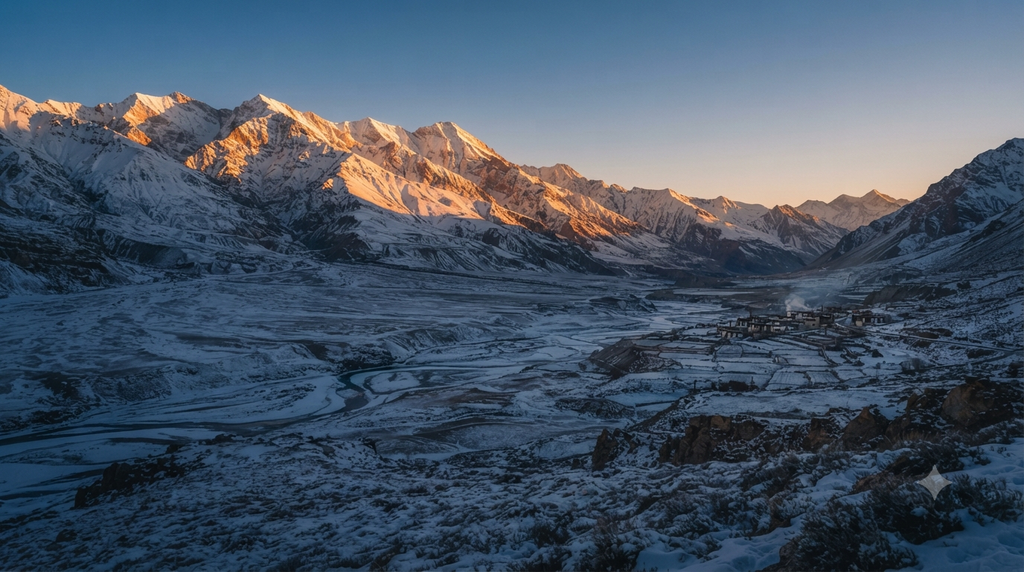
Spiti Valley is dramatic in every season.
But winter reveals something different.
The mountains become quieter.
Villages disappear beneath snow.
Monasteries stand against immense white landscapes.
Roads become uncertain.
And everyday life takes on a rhythm shaped by cold, altitude and resilience.
This isn’t the easiest way to experience Spiti.
And perhaps that’s exactly why it is so memorable.
If you travel with patience, preparation and respect, winter can reveal a side of the valley that few conventional journeys capture.
A quieter Spiti.
A colder Spiti.
A more intimate Spiti.
A Spiti that stays with you long after the snow disappears.
Go Somewhere New. Feel Something Different
Discover More Seasonal Journeys
From India’s colorful festivals to dramatic Himalayan winters, seasonal travel reveals destinations in completely different ways.
“Every season tells a different story in Spiti Valley. From snow-covered winter landscapes and peaceful spring valleys to clear summer skies and golden autumn mountains, discover the best time to visit and experience Spiti in a way that makes your Himalayan journey truly unforgettable.”
Go Somewhere New. Feel Something Different
🌍 Explore More: BlueJay Explorations
📖 Read more travel stories: TravelAnecdotes.com
📸 Follow the journey on Instagram
👍 Follow us on Facebook
🎥 Watch cinematic travel stories on YouTube