Pattadakal Travel Guide: Exploring Karnataka’s Chalukyan Temple Heritage
There are places where history is preserved in museums.
And then there are places where history surrounds you in stone.
Pattadakal, in northern Karnataka, belongs to the second kind.
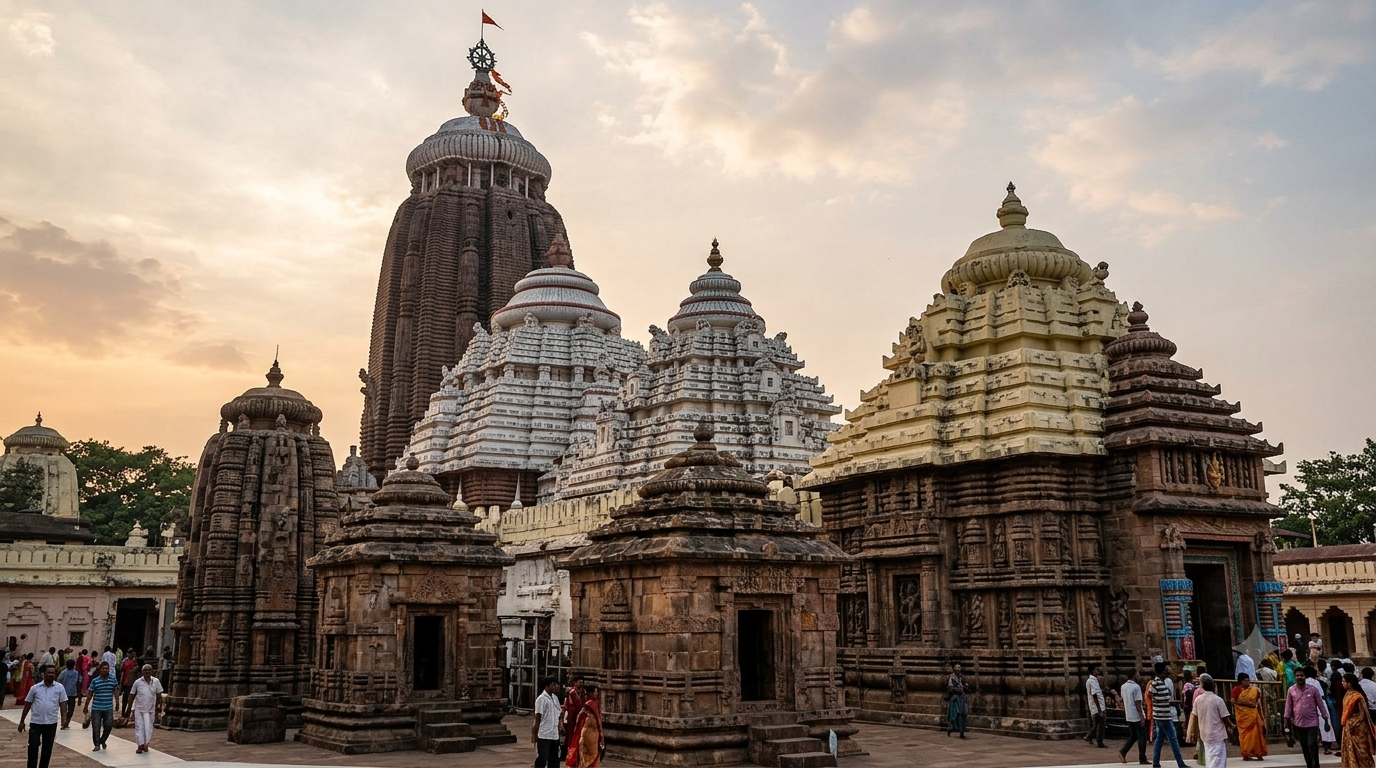
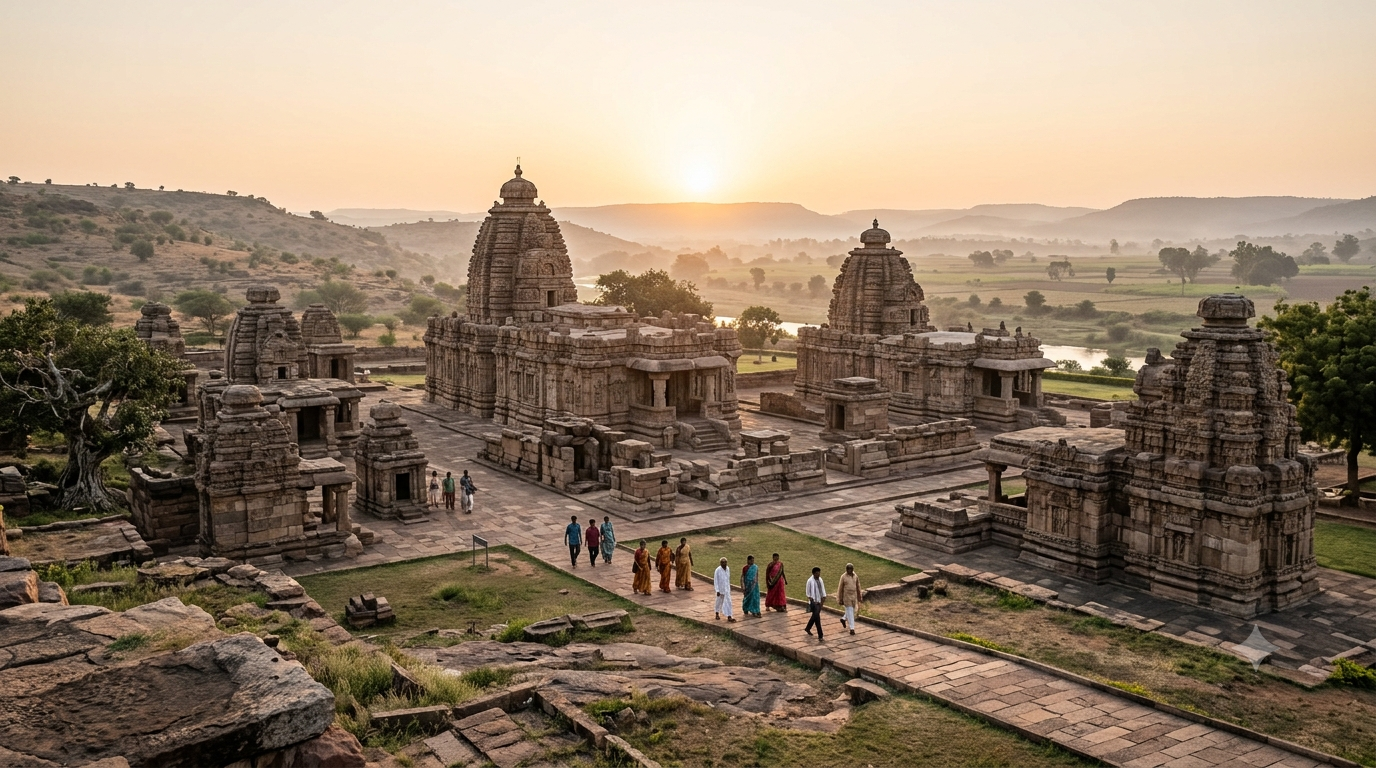
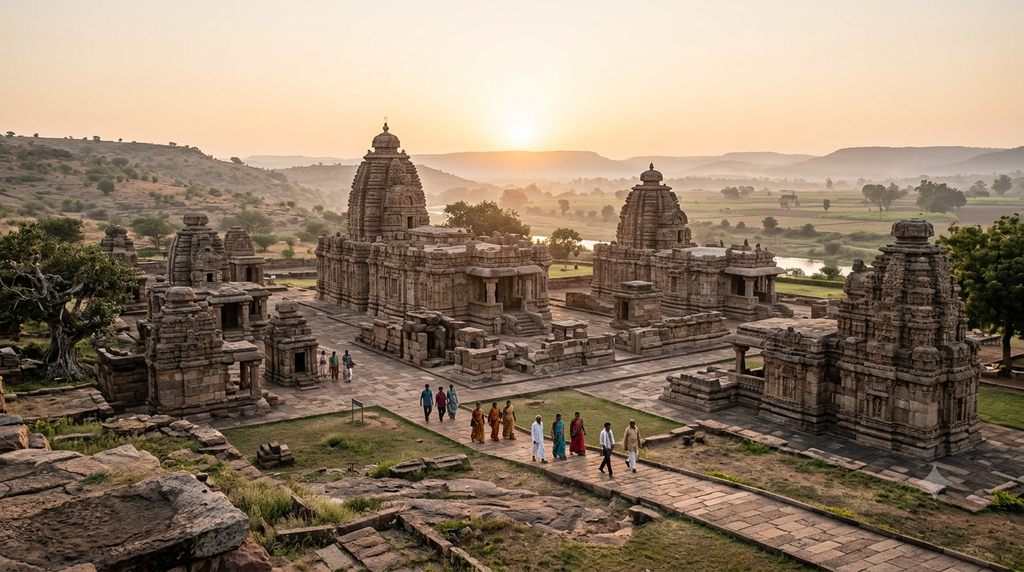
Set beside the Malaprabha River, this remarkable temple complex represents one of the most important chapters in the architectural history of the Deccan. During the 7th and 8th centuries, the Chalukyan builders experimented with different architectural traditions, bringing together forms associated with northern India and southern India in a remarkable group of monuments.
Today, Pattadakal is a UNESCO World Heritage Site and one of Karnataka’s most significant heritage destinations. Its monuments include nine Hindu temples and a Jain sanctuary, with the celebrated Virupaksha Temple standing among its greatest masterpieces.
But Pattadakal is not a place that should be rushed through.
Walk slowly between its temples.
Look closely at the pillars.
Notice the sculptures.
Study the shapes of the towers.
And allow the landscape to tell you how architecture, faith, craftsmanship and royal ambition once came together.
This Pattadakal travel guide takes you through the history, architecture, temples and travel experience of one of Karnataka’s extraordinary cultural treasures.
What Makes Pattadakal Special?
Pattadakal is special because it represents far more than a collection of ancient temples.
It is a record of architectural experimentation.
The monuments here demonstrate how Chalukyan architects worked with different traditions and developed their own distinctive expressions. UNESCO describes Pattadakal as a high point of Chalukyan architectural achievement, particularly for its harmonious combination of northern and southern Indian forms.
The result is a landscape where different architectural ideas exist within remarkably close proximity.
A Heritage Landscape Shaped by the Chalukyas
The Chalukyas played an important role in the cultural and architectural history of the Deccan.
Pattadakal emerged as one of the important centres of their temple-building tradition, and the site also had royal associations. Karnataka Tourism notes that the town hosted coronation ceremonies for Chalukyan kings.
Standing among the temples today, it is easy to imagine why this landscape was so important.
These were not simply buildings.
They were expressions of power, devotion, artistic skill and cultural identity.
Where Different Architectural Traditions Meet
One of Pattadakal’s most fascinating qualities is the presence of both Nagara and Dravida architectural influences.
Nagara forms are traditionally associated with northern Indian temple architecture, while Dravida forms developed prominently in southern India.
At Pattadakal, these traditions appear alongside one another and, in some monuments, are combined in innovative ways.
For a traveller interested in Indian architecture, this makes Pattadakal particularly rewarding.
You don’t simply see one architectural style.
You see a conversation between styles.
Why Pattadakal Matters to Indian Heritage
Pattadakal was inscribed on the UNESCO World Heritage List in 1987 under criteria relating to cultural traditions and architectural achievement.
Its importance lies not only in the age of its monuments but also in what they reveal about the evolution of Indian temple architecture.
The site allows visitors to see how architects and artisans transformed stone into structures filled with religious symbolism, sculpture and architectural experimentation.
Pattadakal and Its UNESCO World Heritage Status
The Group of Monuments at Pattadakal is officially recognised as a UNESCO World Heritage Site.
UNESCO describes the complex as an impressive series of nine Hindu temples together with a Jain sanctuary, representing the architectural achievements of the Chalukya dynasty during the 7th and 8th centuries.
The UNESCO listing was made in 1987.
When Pattadakal Became a UNESCO World Heritage Site
Pattadakal’s inscription placed the site among India’s internationally recognised cultural heritage destinations.
But the UNESCO designation is not simply about preserving old buildings.
It recognises the site’s importance as evidence of an important period of architectural development.
The temples show how different architectural forms were explored and refined within the Chalukyan cultural sphere.
The Architectural Significance of Pattadakal
Pattadakal demonstrates an extraordinary range of architectural ideas within one heritage landscape.
Some temples lean strongly toward southern architectural traditions.
Others display northern influences.
Some incorporate elements of both.
This variety makes walking through Pattadakal almost like moving through a historical architectural laboratory.
A Remarkable Collection of Temples in One Complex
The monuments are close enough to explore on foot, allowing visitors to move naturally from one temple to another.
Instead of seeing Pattadakal as a single monument, it is better understood as an architectural ensemble.
Each structure contributes another piece to the larger story.
Understanding Chalukyan Architecture
To appreciate Pattadakal fully, it helps to look beyond individual temples and understand the architectural experimentation taking place during the Chalukyan period.
Nagara and Dravida Architectural Traditions
Nagara and Dravida are two broad traditions commonly used to describe major forms of Indian temple architecture.
At Pattadakal, these traditions appear in different proportions and combinations.
The result is not uniform.
That is precisely what makes the site fascinating.
Some monuments feel distinctly southern in their architectural language, while others reveal northern influences. Several structures demonstrate the creative blending of these ideas.
How Chalukyan Builders Experimented With Temple Design
The architects of Pattadakal were not simply copying one established model.
They were adapting.
They were experimenting with forms, proportions, towers, halls and decorative elements.
This is one reason Pattadakal is so important to the history of Indian architecture.
The site captures a period when temple architecture was evolving through experimentation and interaction.
Stories Carved Into Stone
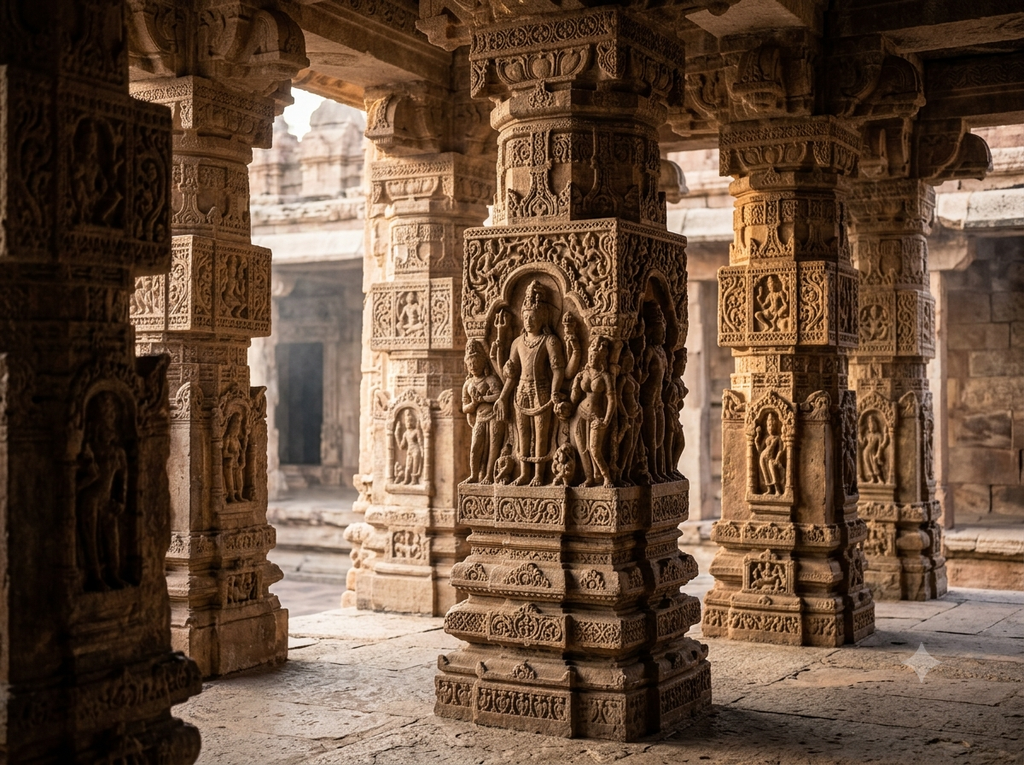
Perhaps the most memorable part of Pattadakal is the sculpture.
Look closely at the walls, pillars and decorative panels and you begin to notice scenes associated with Hindu mythology, religious traditions and the artistic culture of the period.
These carvings were not merely decoration.
They formed part of the visual language of the temples.
For today’s traveller, they provide a glimpse into how stories and beliefs were communicated through art long before modern forms of mass communication existed.
Sculptures, Pillars and Architectural Details
The larger monuments can be impressive from a distance.
But Pattadakal becomes even more interesting when you move closer.
Look at the pillars.
Study the doorways.
Notice the carved figures.
Examine the ceiling details.
Watch how light and shadow change the appearance of the stone during the day.
The more slowly you explore, the more details reveal themselves.
The Temples of Pattadakal You Should Explore
Pattadakal contains a remarkable group of monuments, and each deserves more than a quick photograph.
Virupaksha Temple
The Virupaksha Temple is widely regarded as the architectural highlight of Pattadakal.
UNESCO identifies it as a masterpiece of the group and dates its construction to around 740 CE. It was commissioned by Queen Lokamahadevi to commemorate her husband’s victory over southern rulers.
Its scale, sculpture and architectural detail make it one of the monuments you should spend time with rather than simply photograph and leave.
Mallikarjuna Temple
The Mallikarjuna Temple stands close to the Virupaksha Temple and adds another important layer to Pattadakal’s architectural story.
Its carved pillars, entrance and decorative details make it particularly interesting for travellers who enjoy studying temple architecture rather than simply viewing it from outside.
Karnataka Tourism notes that the Mallikarjuna and Virupaksha temples were commissioned by rival queens, giving the two monuments an additional historical connection.
Papanatha Temple
Papanatha Temple is another important monument within the Pattadakal group.
Its architecture reflects the experimentation characteristic of the site and provides another opportunity to observe how different architectural influences were interpreted by Chalukyan builders.
It is particularly rewarding to compare its structure and decorative vocabulary with the larger temples nearby.
Sangameshwara Temple
Sangameshwara is among the significant early temples at Pattadakal.
Its architecture provides another perspective on the development of southern Indian temple forms during the Chalukyan period.
Incredible India describes it as an early Dravidian structure dating to the 8th-century period.
Jain Narayana Temple
Pattadakal’s heritage is not limited to Hindu monuments.
The complex also includes a Jain sanctuary, demonstrating the wider religious and cultural landscape associated with the region. UNESCO specifically identifies a Jain sanctuary alongside the nine Hindu temples in the World Heritage property.
Exploring the Other Monuments
Do not make the mistake of visiting Pattadakal only for its most photographed temple.
Galaganatha, Kashi Vishwanatha and the other monuments contribute to the larger architectural story.
Together, they reveal the diversity of ideas that developed at Pattadakal.
Virupaksha Temple — The Architectural Highlight
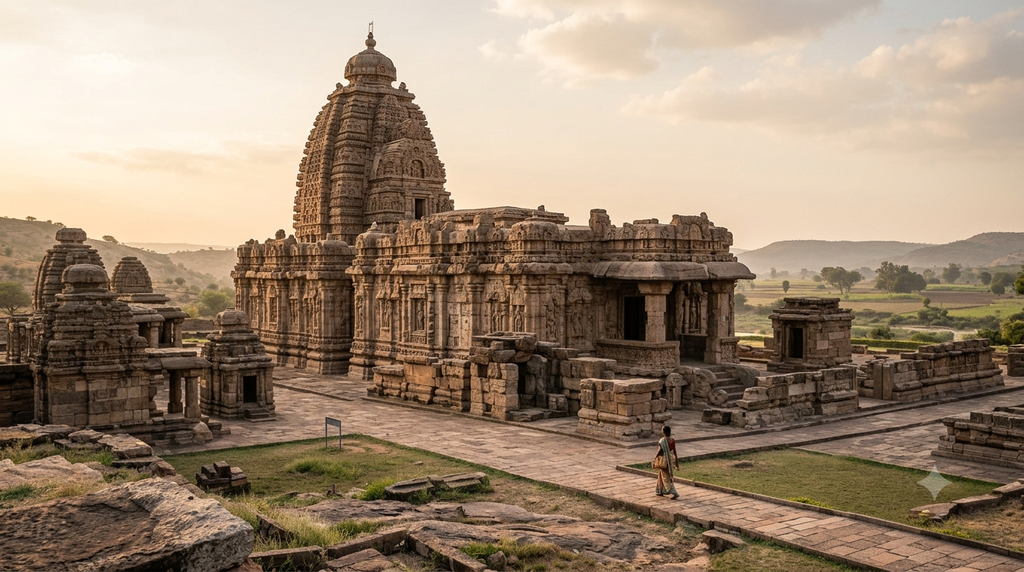
If you have limited time at Pattadakal, the Virupaksha Temple is likely to become one of the defining experiences of your visit.
But even if you have plenty of time, it deserves a slower look.
The Story Behind the Temple
The temple was built around 740 CE under Queen Lokamahadevi.
UNESCO records that it was commissioned to commemorate her husband’s victory over the kings of the South.
That detail alone reminds us that these monuments existed within a world of royal power, political ambition and religious devotion.
Sculptural Details Worth Looking For
Rather than trying to photograph the entire temple at once, spend time examining individual details.
Look for:
- carved figures
- narrative panels
- decorative pillars
- doorway details
- ceiling designs
- sculptural compositions
The temple rewards curiosity.
Understanding Its Architectural Design
The Virupaksha Temple demonstrates the maturity of Chalukyan architectural design.
Its structure, proportions and decorative programme create a sense of visual unity despite the enormous amount of detail.
Karnataka Tourism also notes a fascinating architectural connection: the Virupaksha Temple inspired the famous Kailasa Temple at Ellora.
Experiencing the Temple Today
The best way to experience Virupaksha is not to rush straight through it.
Stand back first.
Look at the complete structure.
Then move closer.
Observe the stonework.
Walk around the exterior.
Allow your eyes to move from the larger architectural form to the smallest carved detail.
That change in perspective can completely transform the experience.
Walking Through Pattadakal
Pattadakal is a place where walking becomes part of the experience.
The temple complex is walkable, and Karnataka Tourism specifically recommends strolling among its monuments.
Your First View of the Temple Complex
Your first impression is likely to be architectural.
Stone towers rise above the landscape.
Temple structures appear in different forms.
Sculptures cover portions of the monuments.
And the open setting allows you to appreciate the buildings from multiple angles.
Looking Beyond the Main Structures
Don’t spend the entire visit looking straight ahead.
Look sideways.
Look upward.
Look at the spaces between temples.
Look at how the monuments relate to one another.
Architecture is not only about individual buildings.
It is also about the relationship between buildings and landscape.
Discovering Details in Stone
The longer you remain, the more details emerge.
A figure carved into a pillar.
A pattern around a doorway.
A weathered inscription.
A sculptural scene partly hidden by shadow.
These discoveries are part of what makes heritage travel different from ordinary sightseeing.
Why Pattadakal Rewards Slow Exploration
A rushed visit can give you photographs.
A slower visit can give you an understanding of the place.
That difference matters.
Pattadakal is best approached with curiosity rather than a checklist.
Pattadakal, Aihole and Badami — Karnataka’s Heritage Triangle
Pattadakal becomes even more meaningful when experienced alongside Aihole and Badami.
These destinations collectively provide a deeper understanding of the Chalukyan architectural landscape of northern Karnataka.
Pattadakal — Monumental Temple Architecture
Pattadakal represents an important stage in the development and refinement of Chalukyan temple architecture.
It is the place to study a mature architectural landscape where different traditions coexist.
Aihole — An Architectural Laboratory
Aihole is often described as a major centre of early Indian temple architecture.
Incredible India describes it as the “cradle of Indian Rock Architecture” and notes the presence of numerous temples and monuments associated with the region’s Chalukyan heritage.
If Pattadakal demonstrates architectural achievement, Aihole helps travellers understand the experimentation that preceded it.
Badami — Temples Among Red Sandstone Cliffs
Badami provides a very different visual experience.
Its red sandstone cliffs, rock-cut caves, historic temples and landscape around Agastya Lake create a dramatic setting for understanding the Chalukyan period.
Pattadakal is around 22 kilometres from Badami, making the two destinations particularly easy to combine.
How to Combine All Three Destinations
A heritage-focused journey could be structured around:
Badami → Pattadakal → Aihole
or adapted according to your starting point and transport arrangements.
For travellers who enjoy history and architecture, spending more than one day in the region allows each destination to be experienced without rushing.
Best Time to Visit Pattadakal
Karnataka Tourism currently recommends October to February as the best period to visit Pattadakal.
Winter — Comfortable Heritage Exploration
The cooler months are particularly suitable for walking through the temple complex.
October through February generally offers a more comfortable environment for spending several hours outdoors and exploring the monuments at a relaxed pace.
Monsoon — Green Landscapes and Dramatic Skies
The monsoon can transform the surrounding landscape.
The stone temples contrast beautifully with greener surroundings, and cloudy skies can create dramatic conditions for photography.
However, wet surfaces can make walking less comfortable, so appropriate footwear and caution are important.
Summer — What to Keep in Mind
Northern Karnataka can become hot during summer.
If travelling during hotter months, begin early, carry sufficient water and plan your temple exploration around the strongest heat of the day.
How to Reach Pattadakal
Pattadakal is most commonly incorporated into a wider northern Karnataka heritage journey.
Reaching Pattadakal From Badami
Badami is one of the most convenient bases for visiting Pattadakal.
The distance is approximately 22 kilometres, according to Incredible India.
You can arrange local transport from Badami or include Pattadakal as part of a broader heritage circuit.
From Hubballi
Hubballi is one of the useful larger transport hubs for travellers approaching the region.
From there, the journey continues by road toward the Badami–Pattadakal area.
From Bengaluru
Travellers starting from Bengaluru can plan Pattadakal as part of a longer Karnataka road journey.
Because the heritage sites of Badami, Aihole and Pattadakal are best experienced together, a multi-day itinerary is generally more rewarding than attempting a rushed standalone visit.
By Road
Road travel is particularly convenient if you plan to combine Pattadakal with Badami and Aihole.
It also gives you greater flexibility to stop at smaller heritage and cultural attractions along the way.
By Rail
Badami is the nearest railway station listed by Incredible India for Pattadakal.
From Badami, local road transport can be used to reach Pattadakal.
Because transport schedules and local availability can change, confirm current train and road connections before travelling.
How Much Time Do You Need in Pattadakal?
A Half-Day Visit
A half-day can work if Pattadakal is one stop on a larger itinerary.
Focus on:
- Virupaksha Temple
- Mallikarjuna Temple
- Papanatha Temple
- the principal monument group
Then continue toward another destination.
A Full-Day Heritage Experience
A full day allows you to slow down.
You can explore the major temples, photograph architectural details, revisit monuments and spend more time understanding the site.
This is a better option for travellers particularly interested in architecture and history.
A Two-Day Badami–Aihole–Pattadakal Journey
For a deeper experience, two days or more can be devoted to the broader heritage region.
This gives you the opportunity to combine:
Badami’s rock-cut architecture
with
Pattadakal’s temple architecture
and
Aihole’s architectural experimentation.
Things to Notice While Exploring Pattadakal
A heritage visit becomes much richer when you know what to look for.
Temple Orientation and Design
Observe the relationship between the temple structure, its entrance, halls, sanctum and surrounding spaces.
Instead of simply asking, “What is this building called?”, ask:
Why was it designed this way?
Sculptural Storytelling
Look at the sculptures as visual storytelling.
Scenes from mythology and religious traditions appear across the monuments, while decorative elements create rhythm across walls and pillars.
Pillars and Stone Craftsmanship
Pillars deserve special attention.
Their proportions, carving and placement contribute significantly to the character of the temples.
Architectural Symmetry
Step back and look at the monument as a whole.
Then move closer and examine individual details.
The contrast between large-scale symmetry and tiny sculptural elements is one of the joys of Pattadakal.
Differences Between Temple Styles
One of the most rewarding exercises is comparing the temples.
Notice how towers differ.
Compare proportions.
Look at decorative patterns.
Observe how the architects interpreted different traditions.
Once you begin comparing, Pattadakal stops looking like a group of similar temples.
It becomes a lesson in architectural evolution.
Photography Tips for Pattadakal
Pattadakal is naturally photogenic, but the best photographs don’t always come from simply pointing a camera at the largest temple.
Best Light for Temple Architecture
Early morning and late afternoon can provide softer light and stronger texture across stone surfaces.
Harsh overhead light can flatten sculptural detail.
Photographing Sculptures
Move closer.
Look for expressions, gestures, ornaments and patterns.
Use detail photographs to complement your wider architectural frames.
Wide Architectural Frames
Step back enough to capture the relationship between the temple and the surrounding landscape.
A wide image can communicate scale in a way that a close-up cannot.
Showing Human Scale
A naturally positioned traveller can help communicate the impressive scale of the architecture.
Avoid forced poses.
Let people become part of the environment rather than making the monument merely a backdrop.
Responsible Heritage Travel at Pattadakal
Ancient monuments are fragile.
Their survival depends partly on how visitors behave around them.
Respecting Sacred and Heritage Spaces
Remember that these are not simply photo locations.
Some monuments retain religious significance, while the entire complex carries immense cultural importance.
Treat the site with appropriate respect.
Protecting Ancient Sculptures
Avoid touching or leaning against carved surfaces.
Ancient stone may appear extremely durable, but repeated contact can contribute to deterioration.
Following Site Rules
Follow instructions from heritage authorities and local staff.
Karnataka Tourism advises visitors to respect site rules, maintain silence around sanctums, avoid littering and follow appropriate temple etiquette.
Supporting Local Communities
Where possible, use local services, guides and businesses.
Heritage tourism can become more meaningful when economic benefits reach the communities around historic destinations.
Leave the Heritage Landscape Undisturbed
Take photographs.
Take memories.
But leave the monument exactly as you found it.
That is one of the simplest ways to become a responsible heritage traveller.
Pattadakal Is More Than a Collection of Temples
At first glance, Pattadakal may seem like a destination for people who love history and architecture.
But spend enough time here and the experience becomes much broader.
You begin thinking about the people who built these structures.
The artisans who shaped the stone.
The architects who experimented with form.
The rulers and queens who commissioned temples.
The religious traditions that inspired the sculptures.
And the generations of people who preserved these monuments long enough for us to see them today.
That is what makes heritage travel so powerful.
You are not simply looking at an old building.
You are standing in a place where people from another era expressed what mattered to them through architecture.
Pattadakal makes that connection unusually visible.
The stone is old.
The stories are old.
But the experience of discovering them is yours.
Discover Karnataka’s Heritage With BlueJay Explorations
Karnataka’s heritage extends far beyond its most famous destinations.
From ancient temple complexes and rock-cut caves to historic cities, living traditions and landscapes shaped by centuries of culture, the state offers countless ways to travel deeper.
Pattadakal is one of those places where slowing down can completely change the journey.
Instead of simply asking how many temples you can see in a day, ask how much you can notice.
Walk.
Observe.
Listen.
Compare.
And let the destination reveal itself gradually.
For travellers looking to discover India’s cultural landscapes through meaningful journeys, BlueJay Explorations can be part of that experience.
Explore More. Travel Better. Live Deeper.
Final Thoughts — Let Pattadakal Tell Its Story in Stone
Some destinations impress you immediately.
Others become more meaningful the longer you stay.
Pattadakal belongs to the second kind.
Its temples may first catch your attention through their towers and sculptures.
But the deeper experience comes from understanding what those stones represent — centuries of architecture, devotion, craftsmanship, experimentation and cultural exchange.
Stand before the Virupaksha Temple.
Walk between the monuments.
Look closely at the carvings.
Think about the hands that shaped them.
And remember that heritage is not simply something we inherit from the past.
It is something we are responsible for carrying forward.
Pattadakal does not need to shout to be memorable.
Its story is already carved into stone.
Find Hidden Places. Experience Untold Stories.
Frequently Asked Questions About Pattadakal
Why is Pattadakal famous?
Pattadakal is famous for its group of Chalukyan-era temples and its remarkable combination of northern and southern Indian architectural traditions. It is recognised as a UNESCO World Heritage Site.
Is Pattadakal a UNESCO World Heritage Site?
Yes. The Group of Monuments at Pattadakal was inscribed on the UNESCO World Heritage List in 1987.
How old are the temples at Pattadakal?
The principal monuments belong largely to the 7th and 8th centuries, during the Chalukyan period.
Which is the most famous temple in Pattadakal?
The Virupaksha Temple is generally regarded as the most celebrated monument within the Pattadakal group. UNESCO identifies it as a masterpiece of the complex and dates it to around 740 CE.
How long should I spend at Pattadakal?
A half-day can cover the principal monuments, but a full day allows a slower and more detailed heritage experience. Travellers interested in the wider Chalukyan heritage region can combine Pattadakal with Badami and Aihole over two or more days.
Can Pattadakal be combined with Badami and Aihole?
Yes. Pattadakal, Badami and Aihole form a particularly useful heritage circuit for travellers interested in Chalukyan architecture. Badami is about 22 km from Pattadakal, while Aihole is also nearby.
What is the best time to visit Pattadakal?
Karnataka Tourism currently recommends October to February, when conditions are generally more comfortable for exploring the temple complex on foot.
How do you reach Pattadakal from Badami?
Pattadakal is approximately 22 km from Badami and can be reached by road using local transport or a private vehicle.
A Final Invitation to Travel Deeper
Pattadakal is not just a destination to add to a Karnataka itinerary.
It is a place to pause and look closer.
At the towers.
At the sculptures.
At the ancient stone.
At the architectural ideas that travelled across regions and became something uniquely Chalukyan.
And perhaps, after walking through Pattadakal, you will leave with more than photographs.
You will leave with a deeper appreciation for how India’s history continues to live through its monuments.
Find Hidden Places. Experience Untold Stories.
🌍 Explore More: BlueJay Explorations
📖 Read more travel stories: TravelAnecdotes.com
📸 Follow the journey on Instagram
👍 Follow us on Facebook
🎥 Watch cinematic travel stories on YouTube