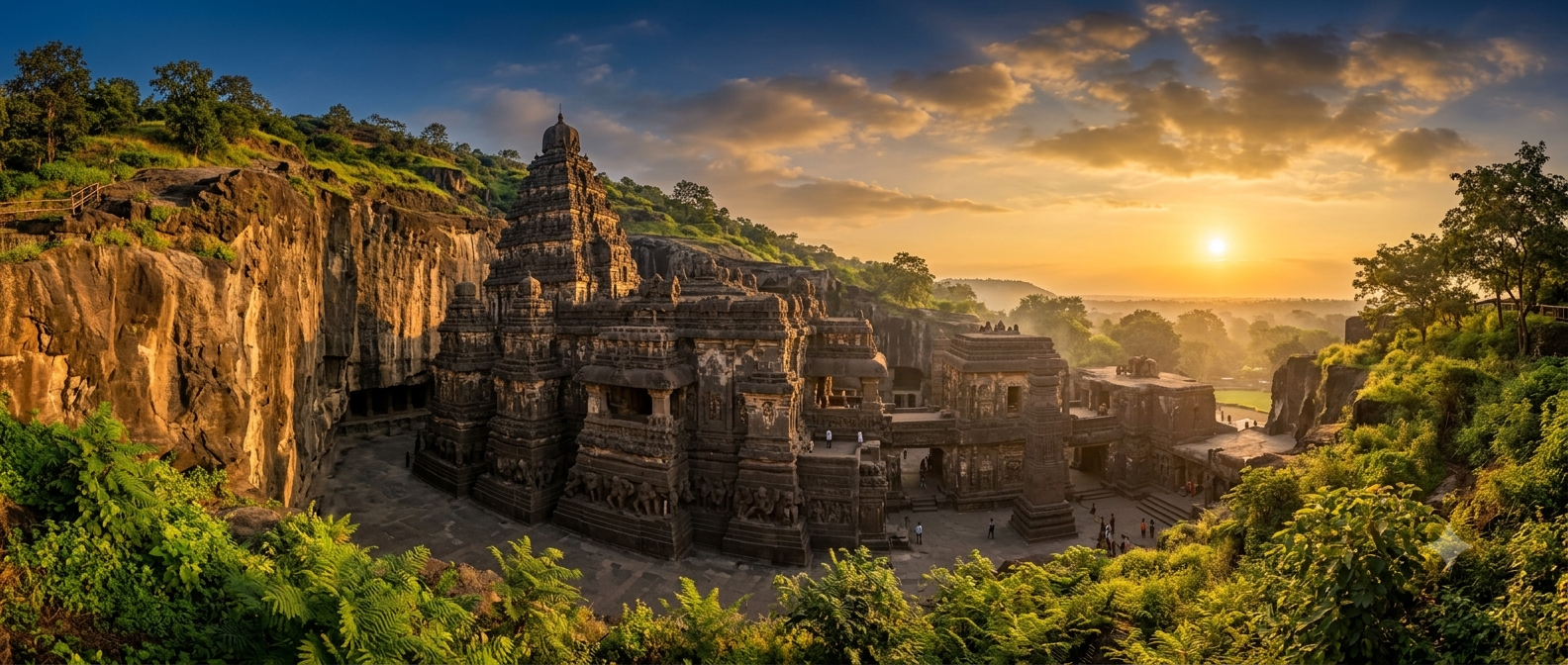
Ellora Caves Travel Guide: Discover India’s Extraordinary Rock-Cut Wonder
Introduction
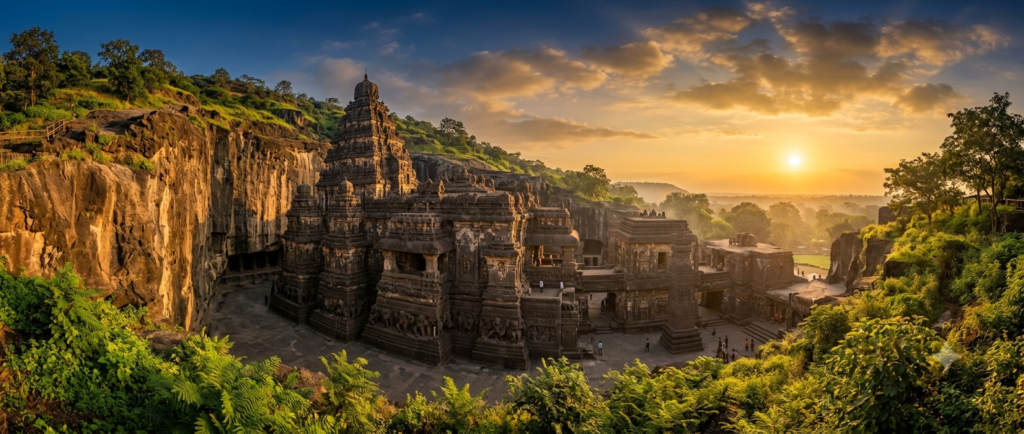
Hidden among the rugged basalt hills of Maharashtra lies one of the greatest architectural achievements in human history—the magnificent Ellora Caves. Carved directly into solid volcanic rock over centuries, this extraordinary UNESCO World Heritage Site showcases the artistic brilliance, engineering mastery, and spiritual harmony of ancient India.
Unlike many historic monuments that were built stone by stone, the caves of Ellora were sculpted by removing millions of tons of rock with remarkable precision. The result is a breathtaking complex of monasteries, temples, prayer halls, and intricate sculptures that continue to amaze visitors from around the world.
The site is especially renowned for the awe-inspiring Kailasa Temple (Cave 16)—the world’s largest monolithic rock-cut temple. Entirely carved from a single rock, this architectural masterpiece represents one of the most ambitious engineering projects ever attempted without modern technology.
What makes Ellora truly unique is its celebration of religious coexistence. Within a single complex, visitors can explore 12 Buddhist caves, 17 Hindu caves, and 5 Jain caves, reflecting centuries of peaceful cultural exchange and artistic collaboration.
Today, Ellora stands as one of India’s most visited heritage destinations, attracting historians, architects, photographers, pilgrims, and travelers seeking to experience one of humanity’s greatest artistic accomplishments.
This comprehensive Ellora Caves Travel Guide covers everything you need to know, including history, architecture, major attractions, travel tips, photography advice, itineraries, and practical information for planning an unforgettable visit.
Why Ellora Caves Are One of India’s Greatest Heritage Sites
Few archaeological sites in the world demonstrate human creativity as powerfully as the Ellora Caves.
Rather than constructing temples using individual stones, ancient artisans carved these monuments directly from the surrounding mountain, transforming a solid cliff into one of the world’s most extraordinary religious complexes.
Every pillar, staircase, sculpture, shrine, corridor, and ceiling was meticulously shaped by hand using simple tools, yet the level of precision remains astonishing even by today’s engineering standards.
A Monument to Human Ingenuity
The sheer scale of Ellora is difficult to comprehend until experienced in person.
The complex stretches for over 2 kilometers, with each cave revealing a different chapter in India’s artistic and spiritual history.
Visitors can spend hours admiring:
- Massive prayer halls
- Intricately carved pillars
- Mythological sculptures
- Ancient monasteries
- Sacred shrines
- Beautiful courtyards
- Elaborate ceilings
Every cave tells a unique story through stone.
Harmony of Three Great Religions
Perhaps Ellora’s greatest legacy is its remarkable representation of religious tolerance.
Unlike many ancient sites dedicated to a single faith, Ellora brings together:
- Buddhism
- Hinduism
- Jainism
These three traditions flourished here across several centuries, leaving behind artistic masterpieces that continue to inspire visitors regardless of faith or background.
Highlights of Ellora
During your visit, you’ll discover:
- Kailasa Temple (Cave 16)
- Buddhist Monasteries
- Jain Temples
- Ancient Sculptures
- Rock-Cut Architecture
- Prayer Halls
- Stone Carvings
- UNESCO Heritage Landscape
The History of Ellora Caves
The Ellora Caves were created between the 6th and 10th centuries CE, making them one of India’s most significant archaeological sites.
Different ruling dynasties supported the construction of various cave groups over several centuries, allowing artistic styles and religious traditions to evolve side by side.
The earliest caves were Buddhist monasteries, followed by magnificent Hindu temples and finally elegant Jain shrines.
This gradual development transformed Ellora into a remarkable cultural and religious center.
The Rashtrakuta Legacy
The most famous monument at Ellora—the Kailasa Temple—was commissioned during the reign of the Rashtrakuta dynasty, most notably under King Krishna I.
Its construction remains one of the greatest engineering achievements in world history.
Rather than carving horizontally into the hillside, craftsmen excavated the temple from the top downward, removing enormous quantities of rock to reveal the complete structure.
This technique required extraordinary planning, precision, and architectural knowledge.
Centuries of Artistic Excellence
Over hundreds of years, thousands of artisans, sculptors, engineers, and craftsmen contributed to the creation of Ellora.
Their work reflects:
- Exceptional craftsmanship
- Religious devotion
- Mathematical precision
- Architectural innovation
- Rich storytelling through sculpture
Many carvings remain remarkably well preserved despite the passage of more than a thousand years.
UNESCO World Heritage Significance
In 1983, UNESCO recognized Ellora Caves as a World Heritage Site, acknowledging its outstanding universal value.
Today, it is considered one of the finest surviving examples of ancient Indian rock-cut architecture.
UNESCO praised Ellora for:
- Artistic excellence
- Architectural innovation
- Religious harmony
- Cultural importance
- Historical significance
The designation has helped preserve the site while introducing millions of international visitors to India’s remarkable heritage.
A Global Cultural Treasure
Ellora is frequently studied by:
- Archaeologists
- Historians
- Architects
- Engineers
- Art historians
- Conservation experts
Its influence extends far beyond India, serving as an important reference for ancient engineering and religious art worldwide.
The Three Great Cave Complexes
One of Ellora’s defining features is the presence of three distinct religious traditions within a single archaeological site.
Buddhist Caves
The 12 Buddhist caves occupy the southern section of the complex.
These caves feature:
- Monasteries (Viharas)
- Meditation halls
- Prayer chambers
- Beautiful Buddha sculptures
- Multi-story architecture
Many served as residential monasteries for monks.
Hindu Caves
The central portion contains 17 Hindu caves, including the world-famous Kailasa Temple.
These caves depict:
- Shiva
- Vishnu
- Durga
- Ravana
- Episodes from the Ramayana
- Mahabharata
- Various Hindu mythological narratives
The sculptural richness of these caves is extraordinary.
Jain Caves
Located at the northern end, the 5 Jain caves are known for their elegance, symmetry, and intricate carvings.
Visitors will notice:
- Detailed ornamentation
- Peaceful meditation halls
- Tirthankara sculptures
- Beautiful ceilings
- Fine decorative motifs
These caves beautifully represent Jain ideals of simplicity and spiritual discipline.
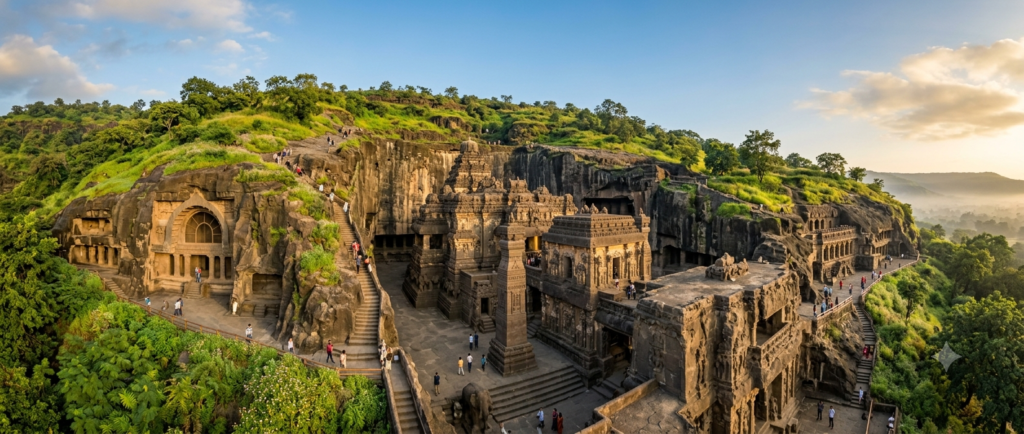
A Living Legacy of India’s Ancient Civilization
More than a thousand years after they were carved, the Ellora Caves continue to inspire travelers with their unmatched artistry, spiritual significance, and architectural brilliance.
Every sculpture, corridor, and temple reflects centuries of devotion, creativity, and cultural exchange, making Ellora not just a destination but a journey through the very soul of India’s ancient civilization.
Exploring the Three Cave Groups
The Ellora Caves are arranged from south to north, making it easy for visitors to explore the site in chronological order of construction.
Each section represents a different religious tradition while showcasing unique architectural styles, artistic techniques, and spiritual philosophies.
Walking through the complex feels like traveling across several centuries of Indian history.
Buddhist Caves (Caves 1–12)
The southernmost section contains the earliest caves at Ellora.
Built between the 6th and 7th centuries CE, these caves primarily functioned as monasteries where Buddhist monks lived, studied, meditated, and taught.
Visitors can admire:
- Spacious monasteries (Viharas)
- Meditation chambers
- Multi-storey cave complexes
- Prayer halls
- Intricate Buddha sculptures
- Beautiful stone pillars
Highlights
Cave 5
One of the largest monasteries featuring an enormous assembly hall with long stone benches believed to have been used for teaching.
Cave 10 – Vishvakarma Cave
Often called the Carpenter’s Cave, this magnificent prayer hall is among Ellora’s most celebrated Buddhist monuments.
Highlights include:
- A towering seated Buddha
- Elegant vaulted ceiling
- Ribbed stone roof resembling wooden architecture
- Excellent acoustics
The cave remains one of the most photographed locations within the complex.
Kailasa Temple (Cave 16) – The Crown Jewel of Ellora
At the heart of Ellora stands one of humanity’s greatest engineering achievements—the spectacular Kailasa Temple.
Dedicated to Lord Shiva, this breathtaking monument is the largest monolithic rock-cut temple in the world.
Unlike conventional temples built using separate blocks of stone, Kailasa was carved entirely from a single rock by removing approximately 200,000 tonnes of basalt.
The sheer scale and precision continue to amaze engineers, architects, and historians today.
A Temple Carved from the Top Down
Perhaps the most astonishing feature of Kailasa Temple is its construction technique.
Instead of carving horizontally into the cliff, ancient craftsmen began at the top of the mountain and worked downward, gradually revealing the complete temple.
This required extraordinary planning because even a small mistake could not be corrected.
The final masterpiece includes:
- Multi-level courtyards
- Monumental gateways
- Massive elephant sculptures
- Pillared halls
- Stone bridges
- Temple towers
- Shrines
- Intricate carvings
Every element was carved directly from living rock.
Mythology Brought to Life
The walls of Kailasa Temple depict numerous scenes from Hindu mythology.
Visitors can identify beautifully sculpted episodes from:
- Ramayana
- Mahabharata
- Shiva Purana
- Vishnu legends
- Durga mythology
Among the most famous sculptures is Ravana Shaking Mount Kailash, which dramatically portrays the demon king attempting to lift Lord Shiva’s sacred mountain.
The level of artistic expression is truly extraordinary.
Architectural Marvel
Architects around the world continue to study Kailasa Temple because of its remarkable design.
The monument demonstrates:
- Precise engineering
- Perfect symmetry
- Advanced drainage systems
- Intricate structural planning
- Exceptional sculptural artistry
Even after more than a thousand years, many carvings remain remarkably well preserved.
Hindu Caves Beyond Kailasa
Although Cave 16 receives most of the attention, the surrounding Hindu caves are equally fascinating.
These caves contain magnificent sculptures dedicated to various Hindu deities.
Visitors will discover:
- Shiva
- Vishnu
- Parvati
- Durga
- Ganesha
- Nataraja
- River goddesses
- Celestial beings
Each cave offers unique architectural and artistic features worth exploring.
Cave 15 – Dashavatara Cave
Originally built as a Buddhist monastery and later converted into a Hindu temple, Cave 15 beautifully illustrates the evolution of religious traditions at Ellora.
Its impressive sculptures depict:
- Vishnu’s ten incarnations
- Mythological scenes
- Decorative pillars
- Spacious halls
The cave provides fascinating insights into India’s rich religious history.
Cave 21 – Rameshvara Cave
Known for its elegant carvings, Cave 21 showcases graceful female figures, river goddesses, floral motifs, and beautifully decorated entrances.
It is often regarded as one of the finest examples of early Hindu rock-cut architecture.
Jain Caves (Caves 30–34)
Located at the northern end of the complex, the Jain caves represent the final phase of Ellora’s development.
Although fewer in number, they display exceptional artistic refinement.
These caves reflect the Jain emphasis on:
- Spiritual discipline
- Simplicity
- Meditation
- Non-violence
- Balance
Cave 32 – Indra Sabha
The most famous Jain monument at Ellora is Indra Sabha.
Despite its name, the cave has no connection to the Hindu god Indra.
Highlights include:
- Multi-storey architecture
- Intricate pillars
- Beautiful Tirthankara sculptures
- Lotus ceilings
- Delicate carvings
- Peaceful courtyards
Many visitors consider it one of the most elegant caves in the entire complex.
Artistic Elegance
Compared to the grand scale of the Hindu caves, Jain architecture emphasizes detail.
Visitors will notice:
- Finely carved ceilings
- Decorative columns
- Ornamental doorways
- Meditating figures
- Symmetrical layouts
The precision of these carvings demonstrates extraordinary craftsmanship.
Best Time to Visit
Ellora Caves can be visited throughout the year, but certain seasons provide a far more comfortable experience.
October to March
This is widely regarded as the ideal time to visit.
Weather remains pleasant with:
- Comfortable daytime temperatures
- Clear skies
- Excellent photography conditions
- Easy exploration of the extensive cave complex
This period is particularly suitable for families and international travelers.
Monsoon (July–September)
The surrounding hills become lush green, creating spectacular scenery.
The cool weather and dramatic clouds make photography especially rewarding.
However, occasional rainfall may make walking surfaces slippery.
Summer (April–June)
Temperatures can become quite high during the afternoon.
Visitors choosing this season should arrive early in the morning to avoid peak heat.
Timings & Entry Information
Visitors should always verify the latest information before planning their trip, as timings and ticket prices may change.
General Visitor Information
- Open from morning until evening
- Closed on Tuesdays
- Separate entry fees apply for domestic and international visitors
- Additional charges may apply for professional videography
Online booking options are available through official tourism portals.
How to Reach Ellora Caves
Ellora enjoys excellent connectivity from major cities in Maharashtra.
By Air
The nearest airport is:
Chhatrapati Sambhajinagar (Aurangabad) Airport
Approximately 35 km from Ellora.
The airport has regular flights connecting Mumbai, Delhi, Hyderabad, Bengaluru, and other major Indian cities.
By Train
The nearest major railway station is:
Chhatrapati Sambhajinagar Railway Station
From there, taxis and buses provide convenient access to Ellora.
By Road
Ellora is well connected via state and national highways.
Regular transport options include:
- Government buses
- Private buses
- Tourist coaches
- Rental cars
- Taxis
Road travel from Aurangabad typically takes around 45–60 minutes.
Suggested One-Day Ellora Itinerary
Morning
- Arrive at opening time
- Explore Buddhist Caves
- Visit Vishvakarma Cave
Mid-Morning
- Spend ample time at Kailasa Temple
- Explore surrounding Hindu caves
Lunch
Enjoy authentic Maharashtrian cuisine at a nearby local restaurant.
Afternoon
- Explore Jain caves
- Photography session
- Museum (if open)
- Local handicraft shopping
Evening
Return to Aurangabad or continue onward to nearby attractions such as:
- Grishneshwar Jyotirlinga Temple
- Daulatabad Fort
- Bibi Ka Maqbara
Visitor Tips
To fully enjoy your visit:
- Wear comfortable walking shoes.
- Carry drinking water.
- Wear a hat and sunscreen.
- Allocate at least 5–6 hours for exploration.
- Respect archaeological structures.
- Avoid touching ancient carvings.
- Hire a licensed guide for deeper historical insights.
- Carry a wide-angle camera lens for architecture photography.
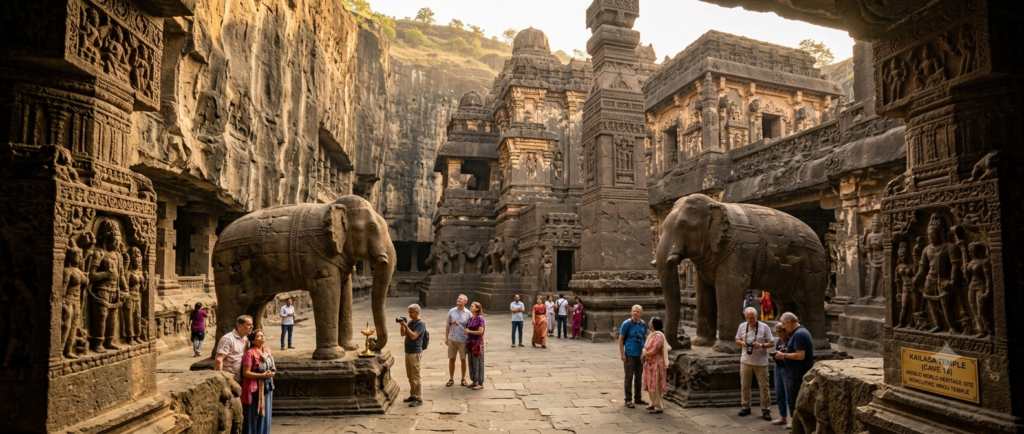
Responsible Heritage Tourism
Ellora Caves are far more than an archaeological attraction—they are a priceless record of India’s artistic, spiritual, and architectural legacy. Every sculpture, pillar, and prayer hall has survived for more than a thousand years, making responsible tourism essential for preserving this extraordinary monument.
By respecting the site and following conservation guidelines, every visitor contributes to protecting Ellora for future generations.
Respect the Ancient Monuments
The sculptures and carvings at Ellora are incredibly delicate despite their appearance.
Visitors should:
- Avoid touching carvings and sculptures.
- Never climb on heritage structures.
- Stay within designated visitor pathways.
- Follow instructions from Archaeological Survey of India (ASI) staff.
Even minor physical contact can gradually damage these irreplaceable works of art.
Photography with Responsibility
Photography is encouraged, but visitors should remain mindful of the heritage environment.
Remember to:
- Avoid blocking walkways.
- Respect other visitors.
- Follow photography regulations in restricted areas.
- Never use equipment that may endanger the monuments.
Capturing memories responsibly ensures everyone can enjoy the experience.
Support Local Communities
A visit to Ellora also supports nearby communities.
Consider:
- Hiring licensed local guides.
- Purchasing authentic local handicrafts.
- Dining at local restaurants.
- Supporting responsible tourism businesses.
These choices help sustain the regional economy while encouraging heritage conservation.
Photography Tips
Ellora offers endless opportunities for photographers, whether capturing monumental architecture, intricate sculptures, or dramatic landscapes.
Best Time for Photography
Early Morning
Ideal for:
- Soft golden lighting
- Fewer visitors
- Architectural photography
- Wide landscape shots
Late Afternoon
Perfect for:
- Warm side lighting
- Long shadows
- Detailed stone textures
- Cinematic compositions
Recommended Equipment
- DSLR or Mirrorless Camera
- Wide-angle lens (16–35mm)
- Standard zoom lens (24–70mm)
- Polarizing filter
- Tripod (where permitted)
- Extra batteries
- Memory cards
Best Photography Locations
- Kailasa Temple Courtyard
- Upper viewpoints overlooking Cave 16
- Vishvakarma Cave interior
- Jain Cave entrances
- Stone elephant sculptures
- Rock-cut corridors
- Cliff panoramas
Each location offers unique perspectives of Ellora’s remarkable architecture.
Packing Checklist
Preparing well ensures a comfortable visit, especially since exploring the entire complex involves several hours of walking.
Clothing
✔ Comfortable walking shoes
✔ Lightweight
Frequently Asked Questions (FAQs):
How many caves are there at Ellora?
The Ellora complex consists of 34 rock-cut caves, divided into:
- 12 Buddhist caves
- 17 Hindu caves
- 5 Jain caves
Each group represents a distinct period of artistic and religious development.
Why is Kailasa Temple so famous?
Kailasa Temple (Cave 16) is the largest monolithic rock-cut temple in the world. It was carved entirely from a single rock, making it one of humanity’s greatest architectural and engineering achievements.
How much time is required to explore Ellora?
A complete visit generally requires 5–6 hours.
Travelers with a strong interest in history, archaeology, or photography may wish to spend an entire day exploring the site.
Are guides available?
Yes.
Licensed local guides are available at the entrance and provide valuable insights into the history, mythology, architecture, and symbolism of the caves.
Hiring a knowledgeable guide greatly enhances the overall experience.
Can Ellora and Ajanta be visited on the same day?
Although technically possible with a rushed schedule, it is not recommended.
Both UNESCO World Heritage Sites deserve dedicated time.
Most travelers prefer:
- One day for Ellora
- One separate day for Ajanta
This allows for a more relaxed and rewarding experience.
Is Ellora suitable for children?
Yes.
Families often enjoy exploring the caves together.
Children are especially fascinated by:
- Massive stone temples
- Giant elephant sculptures
- Mythological carvings
- Cave architecture
Parents should supervise younger children, particularly around steps and uneven surfaces.
Are food and restrooms available?
Yes.
Basic visitor facilities, including restrooms, drinking water, and food stalls, are available near the entrance area.
Conclusion
The Ellora Caves are far more than an archaeological site—they are a timeless celebration of human creativity, devotion, and engineering brilliance. Carved painstakingly into solid volcanic rock over centuries, this UNESCO World Heritage Site continues to inspire millions with its breathtaking temples, monasteries, sculptures, and artistic masterpieces.
From the awe-inspiring Kailasa Temple to the serene Buddhist monasteries and intricately decorated Jain shrines, every cave tells a story of faith, craftsmanship, and cultural harmony. Few destinations in the world offer such a remarkable combination of architecture, history, spirituality, and artistic excellence in a single location.
Whether you are a history enthusiast, photographer, architecture lover, or curious traveler, Ellora promises an unforgettable journey into the heart of India’s ancient civilization.
A visit here is not simply about seeing monuments—it’s about experiencing one of humanity’s greatest achievements carved forever into stone.
🌍 Explore More
“Civilizations leave behind more than monuments—they leave stories carved into stone, waiting for every traveler to rediscover them.”
🌍 Explore More: BlueJay Explorations
📖 Read more travel stories: TravelAnecdotes.com
📸 Follow the journey on Instagram
👍 Follow us on Facebook
🎥 Watch cinematic travel stories on YouTube